
What could the undisputed world boxing champion, a scientist who has dedicated his life to fighting cancer, a businessman who transformed one of the region’s best-known wineries into a driving force for change in wine production across the Balkans, a man at the top of the global beauty industry, a man managing markets in the new digital economy, a pioneer of the blockchain revolution, a multiple world and European athletics champion, the creator of one of the most successful video games, an actor, an entrepreneur building a digital media brand and a fashion influencer witnessing the transformation of the fashion industry in the digital age possibly have in common? Their professions could hardly be more different. But strip away the titles, positions, medals, numbers and spotlights, and what remains are people – and the decisions they made when the outcome was still uncertain.

After two days of this year’s Connectuj.me in Podgorica, the question was not only what we had heard from people whose names had long since crossed the borders of their home countries. Far more interesting was another question: despite working in completely different fields, just how similar are their stories? Listen to them on the same stage for two days and you begin to realise how often they return to the same things: discipline, risk, failure, perseverance, responsibility, trust, people and that moment when you have to decide whether to stay where you are or try for something bigger. Perhaps that was the most important connection of this year’s Connectuj.me.
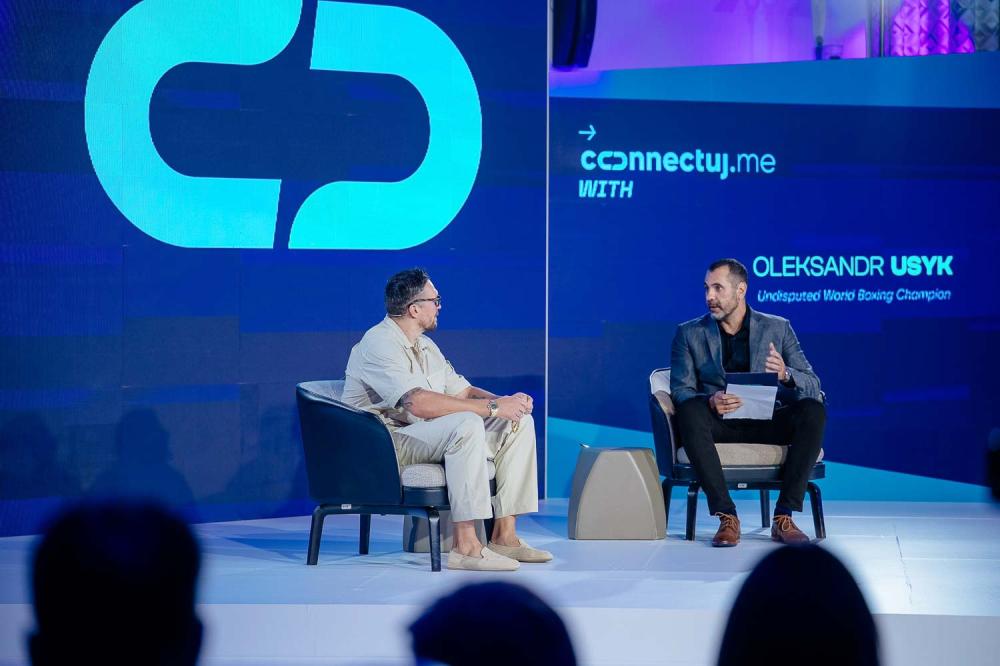
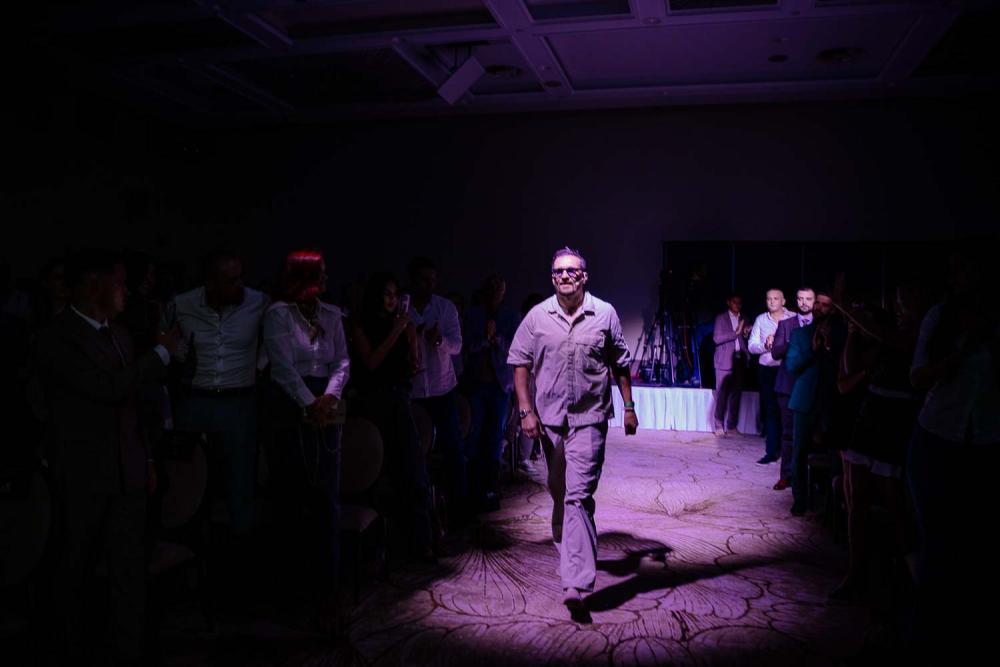
This year’s Connectuj.me 2026 platform was opened by Oleksandr Usyk, the undisputed world boxing champion. In an exclusive conversation, “Legacy of a Champion,” he spoke about performing under immense pressure, discipline, faith, leadership and sport’s ability to unite a nation, as well as how the greatest victories are often achieved far beyond the boxing ring.
When you are sitting in front of a man whose victories are watched by millions around the world, it is easy to reduce the conversation to titles, belts and major fights. But far more interesting than victory itself is what comes before it – the years of work the public never sees, the ability to withstand pressure when only one thing is expected of you – victory – and the discipline that does not exist only when the spotlights are on. That theme, in different forms, would return throughout both days of Connectuj.me 2026.
The public usually sees the result first. Whether intentionally or not, Connectuj.me spoke far more about what lies behind the result.
A story from an entirely different world came from Vladimir Cmiljanović, founder of Swiss Rockets. A junior handball player for the Yugoslav national team, he left for Lemgo, Germany, with 100 Deutsche Marks in his pocket, before receiving an offer from Basel, where handball enabled him to complete his chemistry studies and pursue his childhood dream – finding a cure for cancer. He is one of the world’s most highly regarded scientists, whose groundbreaking invention in oncology brought him international recognition and numerous global awards, while Switzerland honoured him in 2016 with the country’s highest economic distinction.
Listening to his story immediately after that of a boxing champion makes it clear just how many different meanings the word “fight” can have. One takes place in the ring, another in a laboratory. But neither leaves room for shortcuts.
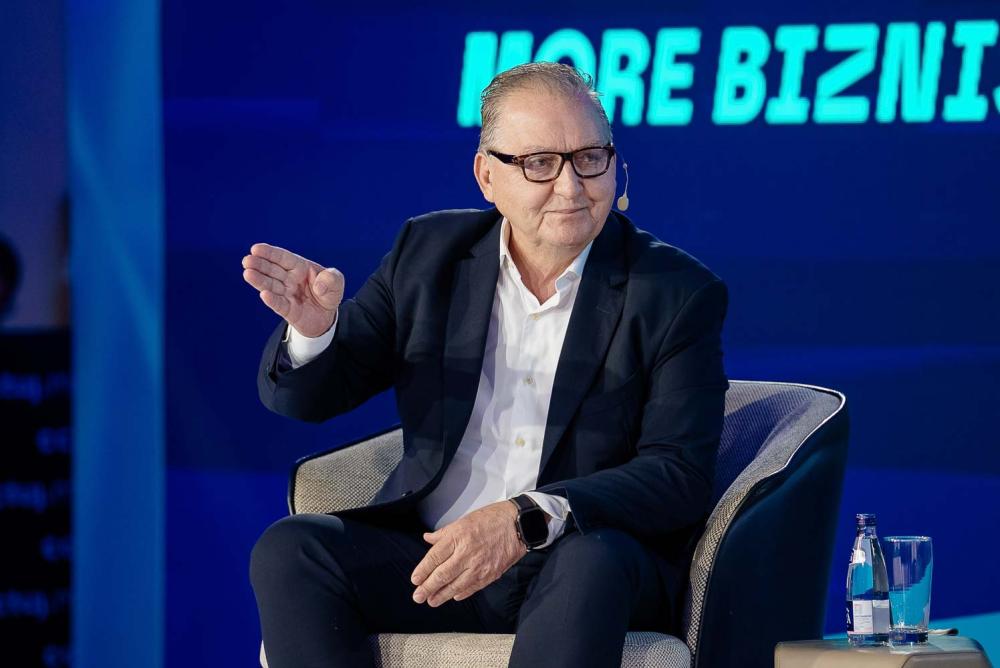

That stories of global significance can emerge from this region was also demonstrated by Svetozar Janevski, a businessman from North Macedonia, who, following a series of successful business ventures, acquired a majority stake in the Tikveš winery. Under his leadership, Tikveš became a driving force for change in wine production throughout the Balkans. For countries such as ours, this is a particularly interesting story. Because what we often lack here is not a good product. What we lack is the decision about what we want that product to become.
Having tradition is not the same as turning it into a contemporary product. Having quality is not the same as building an internationally recognised brand around that quality. And it is precisely in that space between what we possess and what we manage to create from it that perhaps one of the most important lessons lies – not only for business, but also for Montenegro’s tourism industry.
Grzegorz Woznicki, General Manager of L’Oréal for the Adria-Balkan region, shared with the audience the strategic thinking of the world’s leading beauty brand, while Iva Radić, founder of Journal.hr, and Danijela Dimitrovska, a leading fashion influencer in the region, raised the question of how the digital revolution has transformed the fashion scene. Perhaps no other industry demonstrates quite so clearly how rapidly the rules of visibility are changing today.
In the past, reaching an audience almost inevitably meant going through major media outlets, fashion houses and institutions. Today, an individual can become a media outlet, a digital platform can grow into a major brand, and the audience is no longer merely the final recipient of a message – it is its commentator, editor, distributor and often its harshest judge. The channels have changed. But the hardest part remains: how to build trust and how to preserve it.

When Time in the Room Passes Faster Than on the Clock
What cannot be seen from the programme or the list of prominent names is the atmosphere in the room. Throughout both days, the audience’s attention barely wavered. Panels and conversations followed one another with few long breaks, yet time seemed to pass unnoticed. Those present remained focused on the speakers, and the audience’s reactions clearly showed that what came from the stage was not being received as just another conference message. There were emotions, moments of silence, spontaneous applause and that rare kind of concentration that cannot be created through protocol – it simply happens when an audience genuinely wants to hear the person in front of them.
Connectuj.me was not conceived as an event where connection ends the moment the microphones are switched off. Quite the opposite. After the programme on both evenings, a business cocktail reception was organised, and that was when the dynamic shifted. The formal concentration of the conference hall gave way to more relaxed conversations. People discussed what they had just heard, met others they had not known before, exchanged contacts and ideas, and approached speakers who only moments earlier had been separated from them by the distance between the stage and the audience. Perhaps it was then that the name Connectuj.me took on its fullest meaning. Because connecting is not only about bringing a major international name to Podgorica. It is also about creating a space where people can meet, talk and perhaps turn that encounter into something that, at the moment they meet, no one can yet predict.
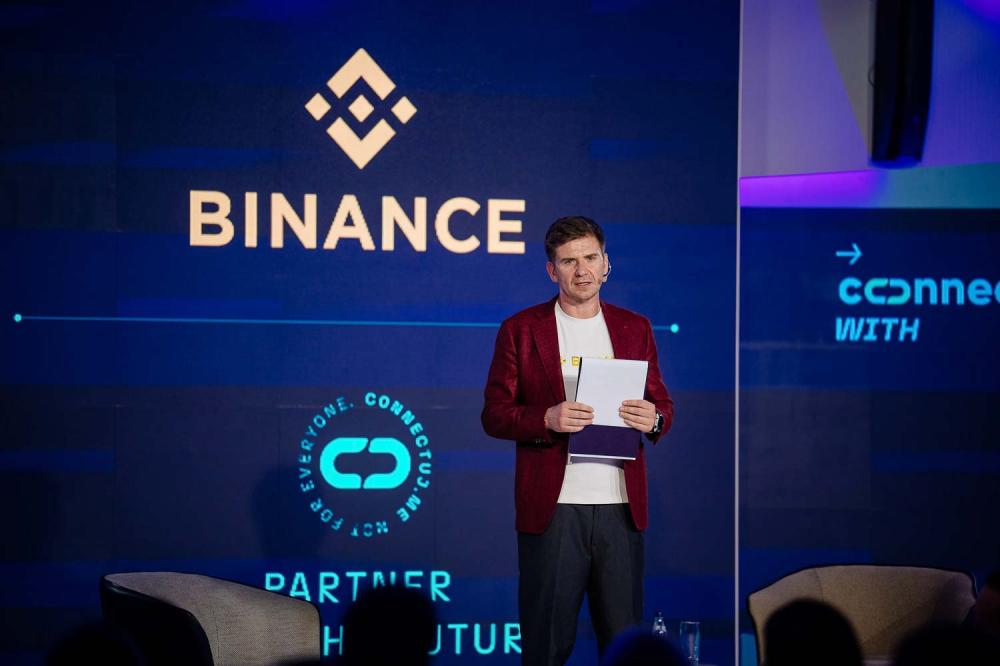
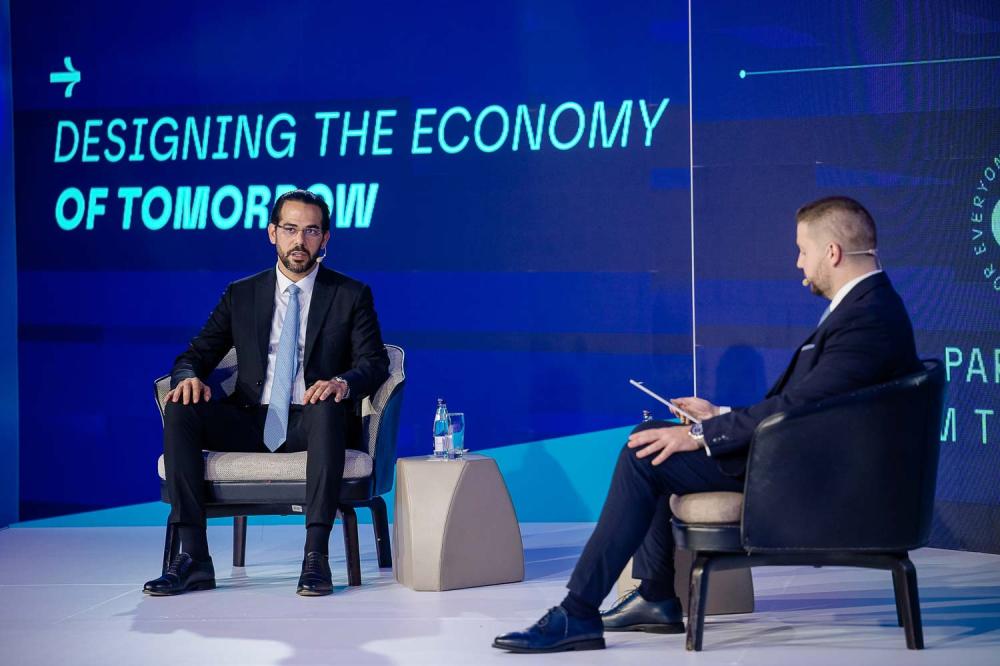

On the second day, the Connectuj.me 2026 stage opened towards a world changing so rapidly that what we considered the future only yesterday is already becoming the present. The programme was opened by Kyrylo Khomiakov, who oversees Central and Eastern Europe and Central Asia at Binance.
Gabriel Abed, a pioneer of the blockchain revolution, adviser to world officials and central banks, entrepreneur, diplomat and one of the most influential voices in the world of digital currencies, presented his vision of the economic future and explained how, from his position as Chairman of the Board of Binance, he is helping lay the foundations of the modern global economy. For a text like this, it is not essential that after one conversation we all understand blockchain, digital currencies or every mechanism of the new economy. What matters more is understanding the scale of the change. The conversation is no longer about whether technology will change money, markets and the way we do business, but how quickly it will do so and how ready we will be to change along with it.
And then, from the digital economy, just a few steps across the same stage – the human body and its limits. Multiple world and European athletics champion Ivana Španović spoke about mental discipline, years of sacrifice, injuries that break the body and the irrational public expectation that you must always be the best. Perhaps sporting stories are among the easiest to misunderstand. We see a few seconds of a jump. The result. The medal. The photograph from the podium. We do not see the thousands of training sessions that did not end with a medal. We do not see the mornings when the body says it cannot, but the calendar says it must. We do not see rehabilitation, doubts or the expectations that grow with every previous success.
What happens when success is no longer a surprise, but something everyone expects from you?


Branko Milutinović, co-founder and CEO of Nordeus, who today leads Take-Two Interactive’s portfolio of sports games – the world’s largest publicly traded video game company – spoke about how “Top Eleven,” the game he created with his colleagues, conquered the global market and propelled Nordeus into the very top tier of the international gaming industry. For a small country and a small region, stories like this always carry additional weight. Not because we should keep repeating the phrase that “we can do it too”, but because they show just how profoundly the digital economy has changed the meaning of geography. In the past, where you were born or where you launched a company largely determined the size of the market you could reach. Today, a product created just a few hundred kilometres from Podgorica can have users across the globe. Geography has not disappeared. But it is no longer the boundary it once was. And perhaps that is precisely why it matters that conversations like these take place here as well.
The two-day programme was closed by Milan Marić, one of the region’s most popular actors, with a conversation that left the audience considering whether, in the present moment, we are “overinformed, uninformed or misinformed.” It was an almost perfect question with which to conclude an event whose very name contains the idea of connection.
We live in a time when it seems we have never been more connected. A phone is enough to “reach” almost any part of the world in a matter of seconds. There has never been more information, communication has never been faster, and our ability to reach people we once could not even imagine meeting has never been greater. But being technically connected still does not mean that we understand one another. Just as having someone’s contact details in your phone does not mean you have a relationship with them. Perhaps, then, the greatest value of Connectuj.me lies not only in the impressive list of people it brought to Podgorica over the course of two days. And perhaps the most important message of this year’s Connectuj.me is very simple: the distance between Podgorica and the world is not measured only in kilometres. Sometimes it can be shortened by one good conversation, one encounter and one contact that, at the right moment, can change far more than we ever planned.
Behind Connectuj.me is Goran Delić, its creator, who once again remained true to the idea of putting the platform ahead of himself. That, perhaps, is where its success is most evident – because the spotlight is not on those who created it, but on the people, stories and connections it has managed to bring together.
Usyk builds victories in the ring, but speaks about faith, discipline, responsibility and strength demonstrated beyond it – through the Usyk Foundation and humanitarian aid. Cmiljanović searches for answers in science. Janevski builds business through wine. Woznicki manages a major market in the beauty industry. Iva Radić is building a digital media brand. Danijela Dimitrovska is experiencing the transformation of the contemporary fashion scene. Khomiakov manages markets in the new digital economy. Abed thinks about its future. Španović pushes the limits of what the human body can achieve. Milutinović turned an idea from the region into a global gaming success story. Marić works with acting, stories, information and the ways in which we understand them.