

Trends once lasted for entire seasons. Today, they last about as long as the average reel – just enough time for us to notice them, photograph them, post them and replace them with something new the very next day. Yesterday we were queuing for Dubai chocolate, today we are ordering matcha lattes with oat milk, and tomorrow the internet will already have a new favourite.
-1000x600-fixwidth.jpg)
In a world where algorithms dictate desire, a perfectly logical question arises – have we finally grown tired of fleeting sensations?
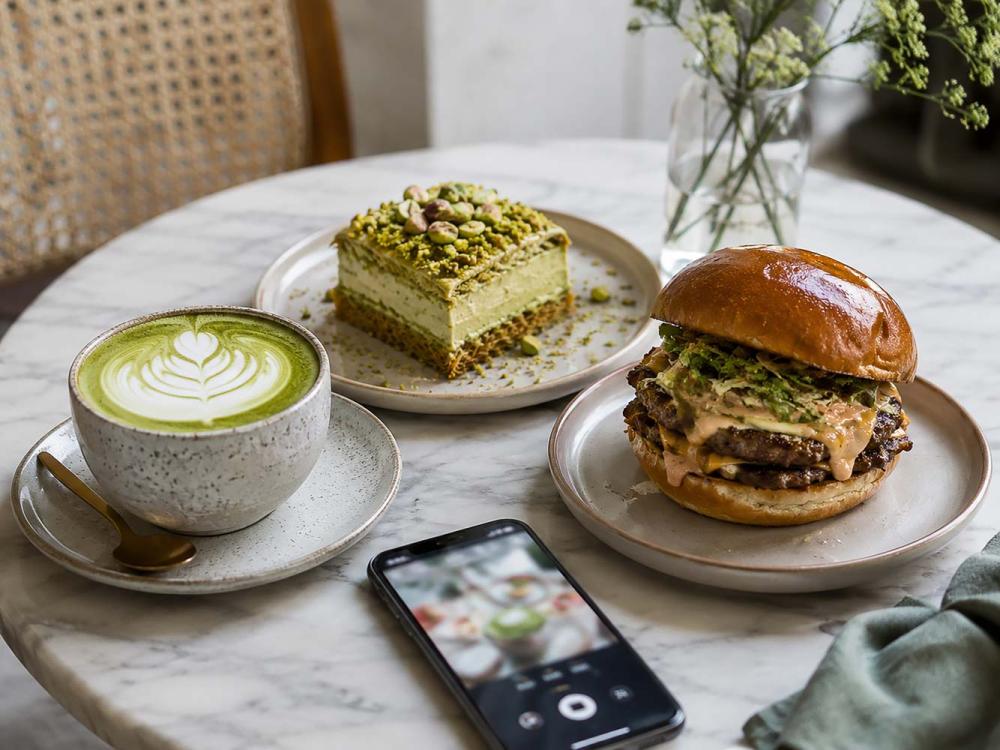
It seems that creating a trend has never been easier. All it takes is one viral post, a few influencers and an aesthetic attractive enough to catch the eye. The product does not necessarily have to be revolutionary – it is far more important that it looks good in a photograph. That is how smash burgers became more than just burgers, pistachios found their way into almost every dessert, croissants were filled with anything that could fit between two layers of pastry, and cafés and restaurants around the world began to look increasingly alike: beige tones, wavy mirrors, dried flowers, terrazzo tables and, of course, the obligatory “Instagram corner”.
Some will say that this is simply the natural course of culture and the market. Trends inspire, encourage creativity and bring fresh energy. And indeed, many of them have left their mark. Without them, we probably would not have discovered numerous small brands, new flavours or interesting ways of preparing food. The problem begins when form completely overshadows substance, and a product becomes more important for how photogenic it is than for what it actually offers.
How many times have we visited a place that looked perfect on social media, only to be met with average coffee, indifferent service or an experience that ended the moment we put our phones away? How many times have we ordered a dessert that looked spectacular but failed to live up to expectations in taste? That is where fatigue begins. Not fatigue with new ideas, but with the feeling that we are constantly being sold the same story in different packaging. The paradox of the modern consumer is that we have never had more choice, yet rarely have we felt less surprised. When we see ten new “must-try” recommendations every day, none of them feels special anymore. What once felt like a discovery has become just another item on an endless list of things we are told we “have to try”. And when everything is spectacular, nothing really is.
-1000x600-fixwidth.jpg)
.jpg)
It is not only producers or hospitality businesses that are to blame. Social media platforms operate on a simple principle – they reward what is new, fast and visually striking. The algorithm does not ask whether something will still be good six months from now. It only cares whether it will attract attention today. That is why trends change at dizzying speed, and what seemed essential yesterday can already feel outdated tomorrow.
Psychologists often associate this phenomenon with so-called “hedonic adaptation” – our tendency to quickly become accustomed to something that initially delighted us. The excitement is short-lived, so we immediately start searching for the next dose of novelty. In the digital age, this cycle has never moved faster. We keep scrolling, looking for a new place, a new flavour, a new destination and a new sensation, convinced that the next one will finally be worthy of our attention. What is particularly interesting is that trends are no longer limited to food or fashion. They shape the way we travel, decorate our homes, choose restaurants and even spend our free time. Cafés from Lisbon to Tokyo often look almost identical. Boutique hotels use the same tones, the same details and the same aesthetic. Even holidays have started to resemble one another because everyone is searching for the same “Instagrammable” shot.
.jpg)
.jpg)
Ironically, in the age of individuality, everything has become remarkably similar. We all want to be original, yet we often end up choosing exactly what millions of others are choosing. Originality is increasingly measured by the number of views rather than by personal taste. Still, an interesting shift has become noticeable in recent months. There is more and more talk about slower living, local products, craftsmanship, small family businesses and experiences that are not created solely for social media. People are once again looking for places with character, food with a story and products that do not fall out of fashion the moment the algorithm decides it is time for something new.
Interestingly, the brands that never chased trends now seem the freshest of all. Good coffee will always have its audience. A great restaurant will not depend on a single viral dish. A book is no less valuable because it never became a TikTok sensation. A local pastry shop that has been making the same cake for decades can often leave a stronger impression than a dessert that conquered the internet for seven days. Authenticity, it turns out, has a much longer shelf life than virality.
Perhaps we have finally entered an era in which we ask ourselves less often “what is popular right now?” and more often “will I still like this a year from now?” It is a small but important shift in the way we think. We are increasingly choosing experiences we will remember, not merely photograph. We are chasing recommendations that promise spectacle less and appreciating places we genuinely want to return to more. Because true quality has one characteristic that no trend can imitate – it does not require constant proof. It does not depend on the number of views or likes, nor on whether the algorithm happens to push it this week. It endures because of the experience it leaves behind. That is precisely why we keep reading certain books for decades, take friends back to the same restaurants and associate particular flavours with our most beautiful memories.
.jpg)

.jpg)