


From standing barefoot on salt crystals and swimming in the sea to salt rooms and breathing in sea air—we explore what sea salt can truly do for our bodies, where its benefits are supported by evidence, and where the myths begin.
-1000x600-fixwidth.jpg)
There is something almost instinctively soothing about contact with the sea. The scent of salty air, the feeling of crystals beneath your feet, skin that feels firmer after a swim, and hair that naturally forms effortless beach waves—all of this contributes to the belief that sea salt possesses special powers. For centuries, it has been used to preserve food, prepare therapeutic baths, care for the skin, clean surfaces, and perform various traditional rituals. Today, it is once again in the spotlight thanks to the growing popularity of wellness trends. However, there is an important distinction between a beneficial natural ritual and claims that sound too good to be true. Sea salt may offer certain practical and cosmetic benefits, but it should not be presented as a miracle cure, a means of "detoxifying" the body, or a substitute for medical treatment.
Sea salt is produced through the evaporation of seawater. Like ordinary table salt, it consists primarily of sodium chloride. Depending on its origin, processing method, and level of refinement, it may also contain small amounts of magnesium, calcium, potassium, iron, and other trace minerals. These minerals can influence the salt's colour, flavour, and texture. However, their concentrations are generally too low for sea salt—whether consumed in food or briefly applied to the skin—to serve as a meaningful source of minerals for the body. Therefore, sea salt is not automatically "healthier" than table salt, particularly when considering its sodium content.
Salt is essential for normal bodily function. Sodium plays a key role in transmitting nerve impulses, muscle contraction, and maintaining fluid balance. Problems arise when we consume too much of it. The World Health Organization recommends that adults consume less than five grams of salt per day—approximately one level teaspoon from all sources, including processed foods. In other words, sea salt may be an appealing culinary choice because of its flavour and texture, but coarse crystals, natural origins, or a pink colour do not change the effects of sodium.
-1000x600-fixwidth.jpg)
.jpg)
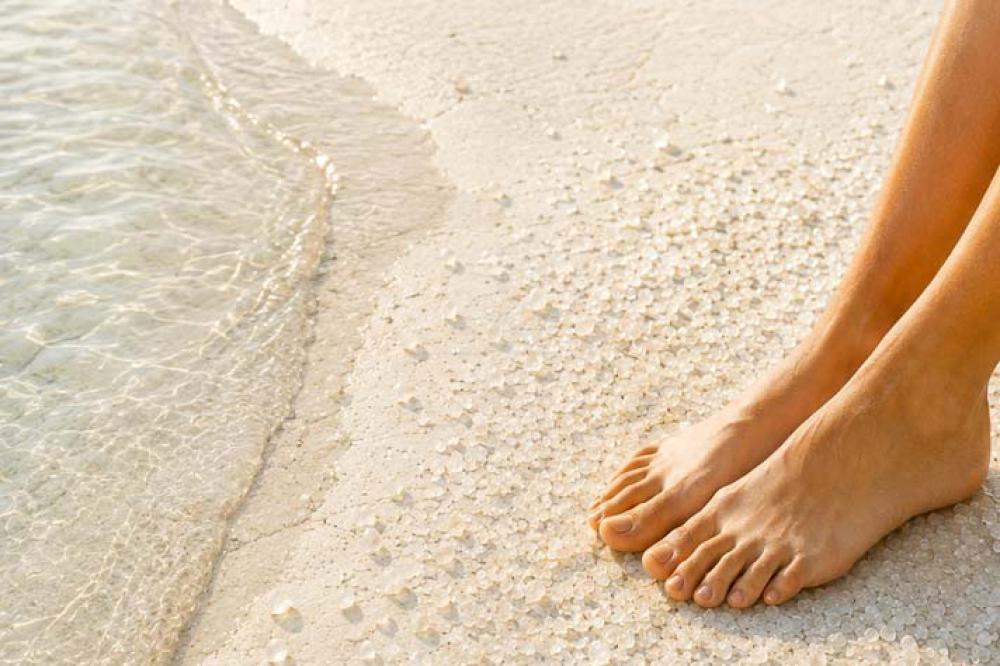
One of the latest wellness trends is salt stomping—standing or gently walking barefoot on coarse sea salt, rock salt, or Epsom salt spread across a shallow tray.
Supporters claim the practice reduces stress, improves sleep, boosts circulation, decreases inflammation, and helps "detoxify" the body. However, there is no convincing clinical evidence supporting such broad claims. The skin serves as a highly effective protective barrier. It is not a sponge through which toxins can be removed or significant amounts of minerals absorbed within a few minutes.
Similarly, there is insufficient scientific evidence to support claims that magnesium from Epsom salt (magnesium sulphate) is absorbed through the feet in amounts capable of improving sleep, reducing stress, or benefiting muscle function. That does not mean the ritual itself is without value. Its benefits are likely much simpler.
Standing on uneven salt crystals provides strong tactile stimulation to the soles of the feet, which contain numerous nerve endings. Attention naturally shifts away from work, phones, and racing thoughts toward physical sensations beneath the feet. This mindful awareness of the body can function as a simple form of grounding.
If someone spends ten quiet minutes without screens, breathing calmly in dim lighting, they may genuinely feel more relaxed. The benefits are therefore more likely to come from the pause itself—the ritual, sensory experience, and slowing down—than from any special chemical properties of salt.
Many people notice that after swimming in the sea their skin feels tighter and smoother. Seawater can remove surface oils, sweat, and dead skin cells, while sea salt crystals used in cosmetics act as a natural mechanical exfoliant. Sea salt scrubs are particularly useful for rougher areas such as heels, elbows, and knees. By removing dead surface cells, the skin temporarily feels softer, while applying moisturiser or body oil afterwards helps retain hydration.
However, what feels refreshing for one person may cause irritation, redness, or excessive dryness for another. Salt has hygroscopic properties, meaning it attracts water and can weaken the skin's natural protective barrier—especially if seawater is left to dry completely on the skin. For this reason, it is advisable to rinse off with fresh water after swimming, gently pat the skin dry, and apply a moisturising lotion or cream while the skin is still slightly damp. This is particularly important for people with dry, sensitive, or eczema-prone skin.
-1000x600-fixwidth.jpg)
.jpg)
Sea salt sprays have become popular because they create texture, volume, and a matte finish. Salt absorbs some of the hair's moisture and natural oils, increasing friction between strands and making it easier to achieve tousled "beach waves." This works especially well for fine, straight hair that lacks natural volume.
However, sea salt is not a moisturising product. Frequent use can draw moisture from the hair, leaving it rough, brittle, tangled, and more prone to breakage. The risk is greater for coloured, bleached, curly, very dry, or chemically treated hair, whose protective structure is already compromised. After swimming in the sea, salt remains on both the hair and scalp. Combined with sun exposure, wind, and frequent tying back, it can contribute to damage. It is therefore advisable to rinse hair thoroughly with fresh water after swimming. Wet hair with fresh water before entering the sea as well—pre-soaked hair absorbs less saltwater. A leave-in conditioner or protective hair treatment can also help minimise damage.
When discussing inhaling salt, it is important to distinguish between three different things: spending time by the sea, rinsing the nose with saline or seawater solutions, and halotherapy in salt rooms.
Being by the sea may subjectively make breathing feel easier and promote relaxation. Coastal air can contain microscopic droplets of saltwater, but the feeling of improvement is often the result of several combined factors: spending time outdoors, resting, exercising, different humidity levels, cleaner air away from city pollution, and slowing down daily routines. This should not be confused with inhaling dry salt particles in a controlled environment.
Halotherapy involves sitting in a specially designed room where a device disperses microscopic salt particles into the air. Advocates suggest it may help ease breathing, loosen mucus, and relieve symptoms of certain respiratory conditions. Some studies indicate possible symptom relief, but the overall quality and quantity of scientific evidence remain insufficient for salt rooms to be considered a standard medical treatment.
Systematic reviews consistently conclude that larger, better-designed clinical studies are still needed. For most healthy individuals, occasional sessions in a salt room are unlikely to cause serious problems, although they may trigger coughing or mild airway irritation. People with asthma, chronic obstructive pulmonary disease (COPD), severe respiratory disorders, or active infections should consult their physician before trying halotherapy.
Most importantly, halotherapy should never replace prescribed inhalers or other medical treatments. Ultimately, perhaps the greatest benefit of sea salt has little to do with mysterious mineral energies. Its true value may lie in reminding us to slow down. The scent of the sea, the sound of waves, a warm bath, a foot massage, or simply a few quiet moments can all signal to the body that it is time to rest. Salt may enrich the ritual—but it is the ritual itself, together with mindfulness and moderation, that gives it real meaning.
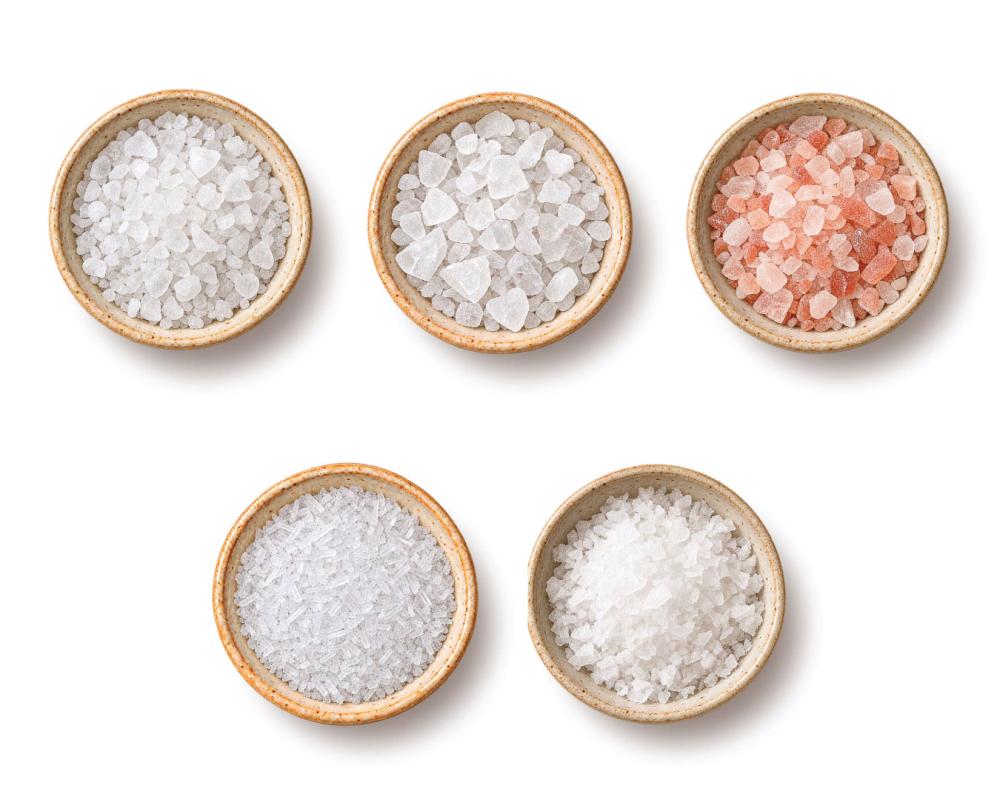
Although they are all commonly referred to as "salt," their origins and composition differ.
Sea salt is produced through the evaporation of seawater. It may be fine or coarse, white, grey, or naturally tinted by trace minerals and impurities. Its texture depends on where and how it is harvested.
Rock salt is mined from underground deposits formed by ancient evaporated seas. It occurs naturally as the mineral halite and is also composed primarily of sodium chloride.
Himalayan pink salt is a type of rock salt. Its distinctive pink colour comes from trace minerals, particularly iron compounds. Although it contains various minerals, the quantities are generally too small to provide meaningful health advantages over other types of salt.
Fleur de sel ("flower of salt") is a delicate layer of fine crystals that forms on the surface of salt ponds and is harvested by hand. It is prized for its delicate texture and flavour and is usually sprinkled over finished dishes rather than used in cooking.
Epsom salt, despite its name, is not sodium chloride at all—it is magnesium sulphate. It is primarily used in baths. While a warm bath alone can help relax muscles and create a sense of wellbeing, there is currently insufficient scientific evidence that magnesium from Epsom salt is absorbed through the skin in amounts capable of producing significant systemic effects.

.jpg)
.jpg)