
Currently, there are twenty of us actively involved in this, with our associates. There also people from other creative industries, says proudly Vesna Rakočević adding that she is particularly glad because even her children Stefan and Jelena, members of the third generation, enthusiastically pursue their family tradition!
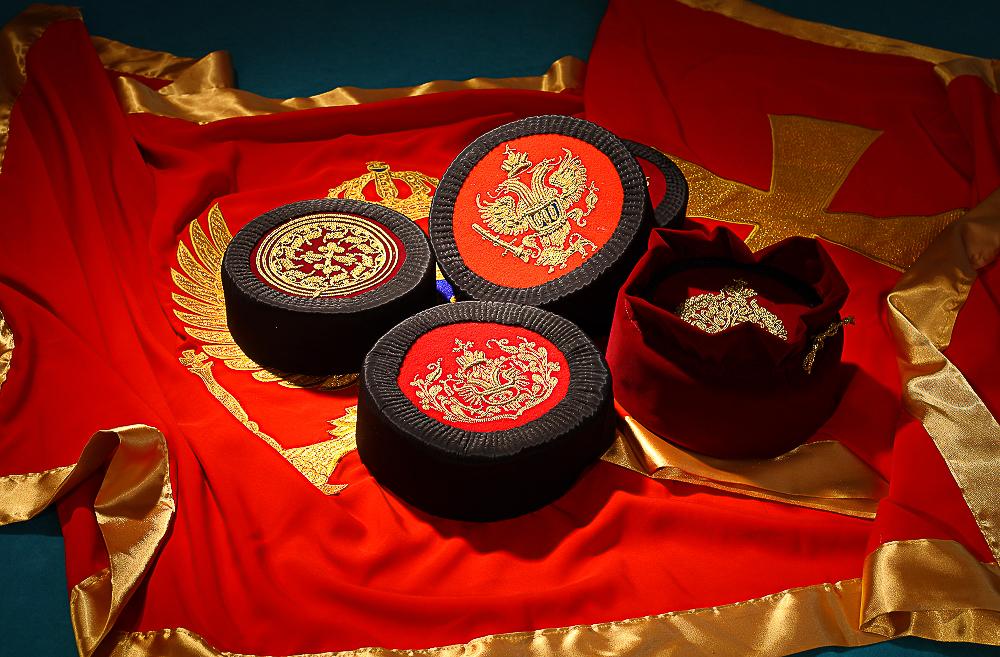
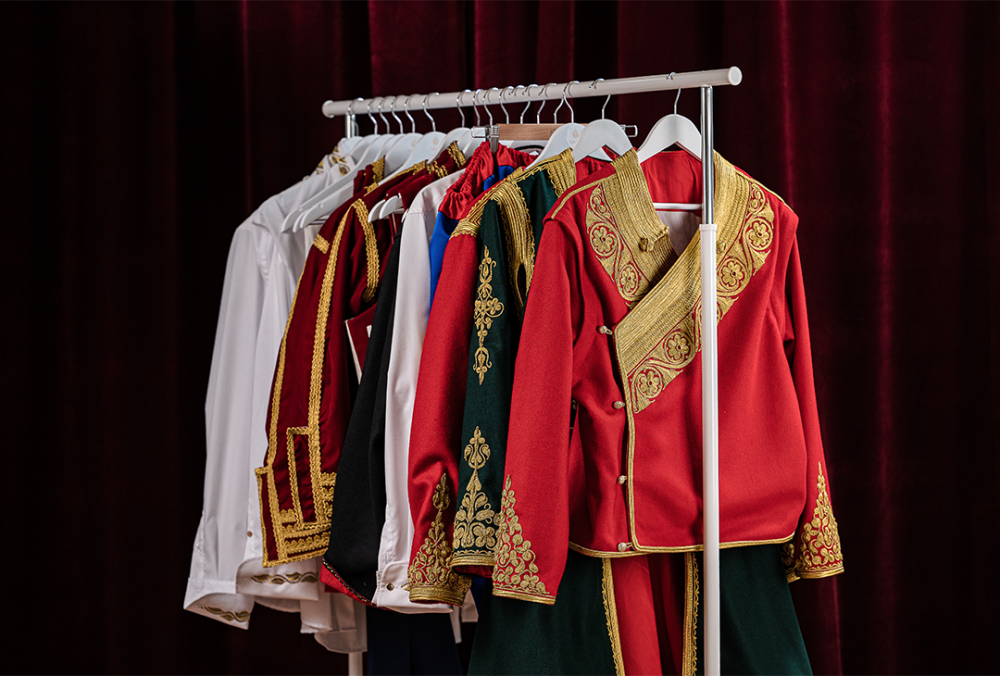
By mid-twentieth century in the territory of Montenegro festive national costume used to be a status symbol, only to be a part of the rich cultural heritage today. Everyday clothing of rural population used to be made locally by master craftsmen “abadžije”, while the festive costume would be made by the craftsmen called “terzije” and “srmadžije” whose meticulous work had marked the tradition of our country. They would use the finest fabrics to embroider festive folk costumes: Montenegrin, Boka, Moslem and Albanian, and decorated them using golden and silver filaments. Very few craftsmen make festive costume nowadays mainly for folk ensembles, tradition lovers and foreigners who purchase our folk costume with great enthusiasm.
GOLD MEDALS FOR GOLDEN COSTUME
Multitude of data on the folk costumes have been preserved thanks to travelogue writers who travelled in this area, preserving thus the data in their works. They couldn’t stop wondering how a small and poor nation could have such expensive and richly made costumes.
Montenegrin folk costume is exceptionally luxurious, elegantly cut, of daring combination of colours with rich golden needlework. At numerous festivals of folklore, it was rewarded as the most beautiful and richest.
The folk costume of Boka Kotorska delights at the first glance with its simplicity and graciousness. The contrast between black fabric and golden ornaments leaves nobody indifferent. Moslem population also liked to embellish their costumes very much. Wealthy Moslems wore robes made of silk and velvet, and their women tailored their costumes using the finest materials. Even the Albanians were not immune to gold-embroidered xhamadans and weapons decorated with fine silver filaments. A female Albanian garment, “Xhubleta” in particular attracts attention and inspires admiration due to the precision of craftsmanship and richness of motifs. “Xhubleta” has recently been designated a part of UNESCO cultural heritage. Silver-decorated belts and fancy decorations ordained pretty women of Malësia e Madhe.
There used to be two types of folk costumes: the older one, made of homemade fabric and the more recent one, made of “čoja”. Garments made of coarse homespun fabric used to be worn by the majority of people until the beginning of the 20th century, while those made of “čoja” were worn by chieftains and wealthy people. Many would not regret giving their cattle or land to purchase expensive costume hemmed with silver filaments and gold to proudly wear it at important occasions. At the end of the 19th century, Prince Nikola of Montenegro issued a decree to prohibit wearing precious costumes to all but chieftains and civil servants. This ban produced no result since people continued their own way.
In the motifs and ornaments on the costumes, regardless of national background, one notices strong oriental influence, both in patterns and in the choice of materials. Materials would mainly be procured in the East. Nowadays, when it comes to making folk costumes the problem is not only the shortage of craftsmen, but in finding proper materials. For this, one needs to be in touch with the manufacturers in the country and in the region…
FAMILY STORY GOING BACK FIVE DECADES
The Rakočević family from Bijelo Polje has been cherishing the ancient skill for more than five decades. Batrić - Baćo and Radmila - Mika Rakočević embarked on this path in the 1970-ies. The “Rakočević” handicraft is a nice family undertaking which has now been pursued by the second and third generation.
Vesna Rakočević, daughter to Batrić and Radmila, has been managing the workshop for quite a long time.
- From a small workshop where odd folk costume would be made, today, after so many years of work we continue expanding and improving our operation. Making folk costumes is the pillar of our business, but over time even other creative industries have found their place under our roof. We have a whole line of protocol gifts which rely on golden embroidery. Our framed golden needlework or embroidered silk scarfs are often representative gifts our statesmen give to important guests on the occasion of high-level meetings. We also make state symbols, coats of arms and flags, which unlike many others comply with legislation and standards. Fashion and culture, cooperation with designers and artists add a special nuance to our golden embroidery, says Vesna adding that all that exceeds home manufacturing, so that they decided to develop the brand “Zlatni vez” (“Golden embroidery”) which was and still is a thread which connects their entire work.
Skilled hand of the Rakočevićs for five decades have embroidered folk costumes which can be found in all countries of the world, whether as gifts which in the most original way show the beauty of Montenegrin culture and tradition or as being ordered by our people in diaspora. They are particularly proud of the costumes produced for numerous cultural-artistic groups, theatres in the country and abroad.
- Through numerous workshops and training activities, as well as projects, we tried to imprint on the interesting and specific cultural heritage map of Montenegro all cultural wealth we have, which we have to be proud of, says Vesna Rakočević.
The quality and originality of the products made by “Zlatni vez” have been highly appraised by the experts, ethnologists and art historians like Zorica Mrvaljević, Anđa Kapičić and Petar Ćuković.
From time to time, the return to tradition is also visible at weddings and other celebrations. In recent times, the number of young people who get married dressed up in folk costumes has grown adding additional shine to it.
From one year to another people get more and more interested in our work. I am particularly glad that more and more people are interested in learning some of the crafts which are either directly or indirectly related with what we do. Currently, there are twenty of us actively involved in this, with our associates. There also people from other creative industries who are involved in this process, proudly says Vesna Rakočević at the end of our interview adding that she is particularly glad because even her children Stefan and Jelena, members of the third generation, enthusiastically pursue their family tradition!
.jpg)
.jpg)
.jpg)