

In hotels and restaurants around the world, staff uniforms have become much more than work clothing. They are the visual identity of a brand, the first impression a guest remembers, and a discreet symbol of style, elegance, and professionalism.
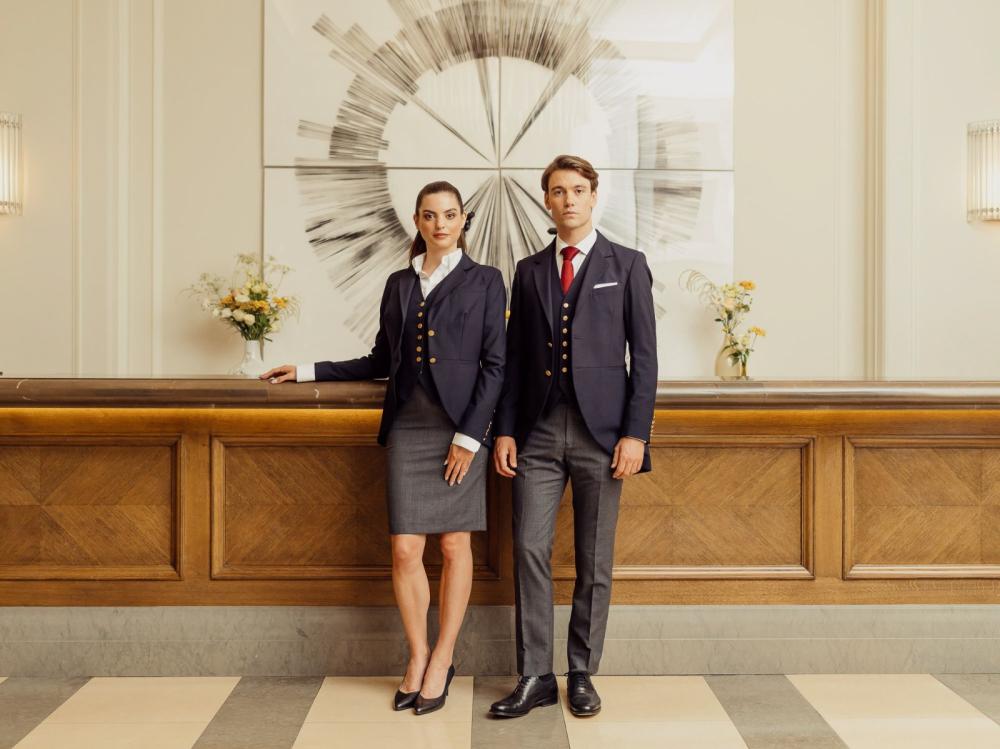
The moment a guest steps into a hotel or restaurant, the experience begins long before the first cocktail arrives or the room door opens. The eye lingers on the space, the light, the details—but also on the people who bring that space to life. At that moment, the staff uniform becomes part of the setting. It is the first signal of style, professionalism, and the character of the place.
In modern hospitality, a uniform is no longer merely practical clothing that distinguishes staff from guests. It is a carefully designed element of visual identity, just as important as the interior or menu design. That is precisely why luxury hotels and restaurants increasingly hire fashion designers to create uniforms that reflect the philosophy of the brand.
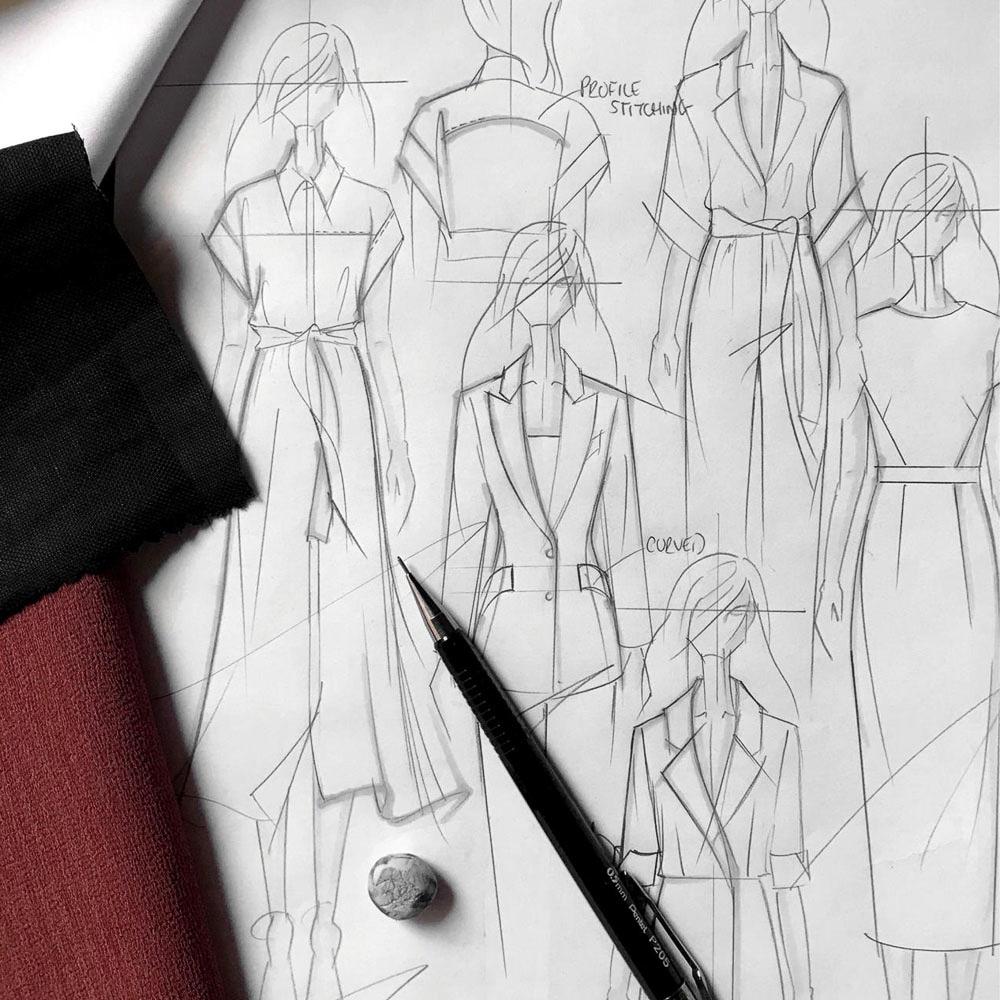
One of the most famous examples comes from the world of high fashion. The legendary designer Giorgio Armani created uniforms for luxury hotels and restaurants as part of his Armani/Casa concept, bringing minimalist elegance and perfectly tailored silhouettes. Karl Lagerfeld, during his career, designed uniforms for luxury hotel projects in Europe, while fashion houses such as Givenchy and Balenciaga have participated in designing uniforms for prestigious hospitality projects and exclusive airlines. When high fashion enters the world of hospitality, the line between workwear and a fashion piece almost disappears.
In hotels such as London’s Claridge’s or the legendary Ritz in Paris, uniforms are almost part of tradition. Elegant cuts inspired by classic British or French aesthetics recall the golden age of luxury travel. Receptionists, concierge staff, or restaurant managers look like characters from an old film about aristocratic journeys across Europe—impeccably styled, yet never overly conspicuous.
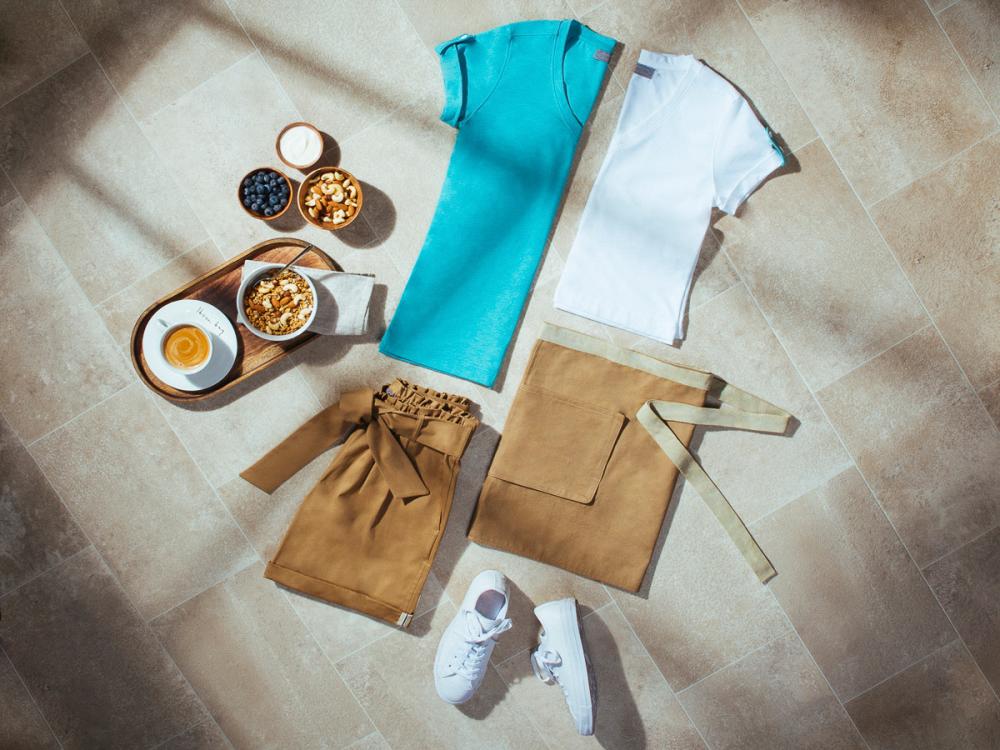
In contrast, modern design hotels often choose a completely different approach. In boutique hotels from Berlin to Tokyo, uniforms are often inspired by contemporary fashion: minimalist shirts, aprons made of coarse cotton, and cuts resembling urban street style. Such an approach gives the staff authenticity and character, and adds an extra dose of creativity to the space.
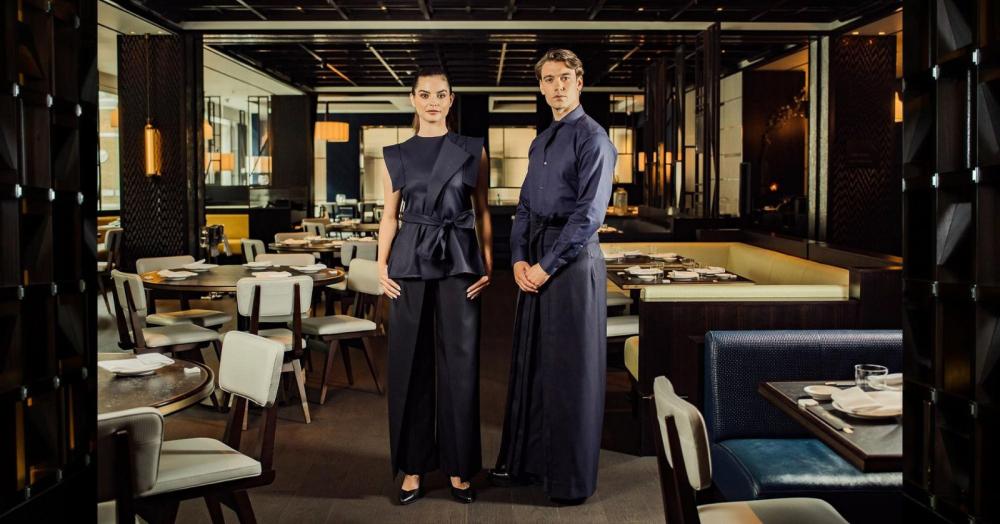
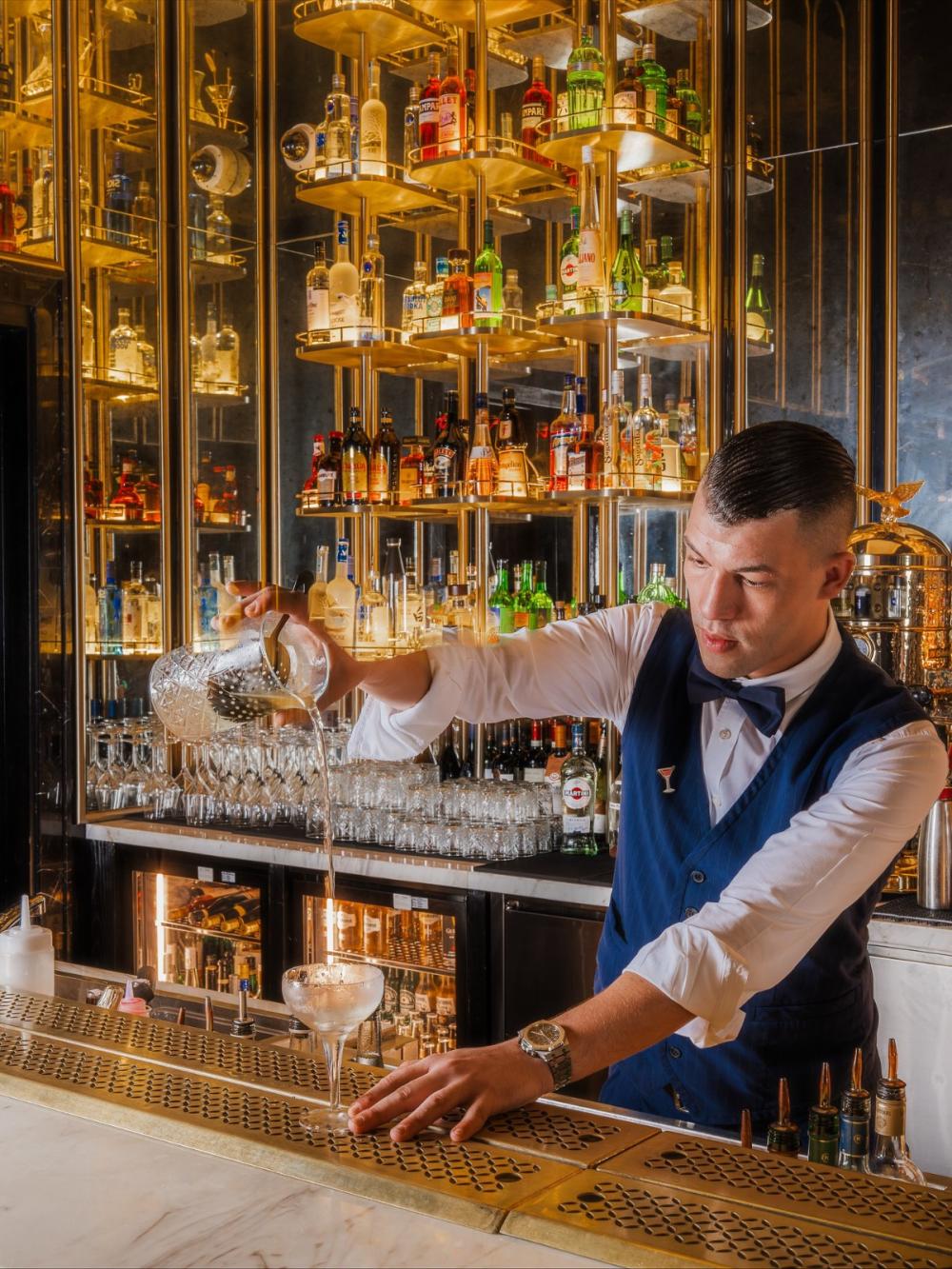
A particularly interesting segment of hospitality uniforms can be found in restaurants and cocktail bars. Fine dining restaurants most often choose classic elegance—dark suits, waistcoats, discreet ties, or scarves that emphasize the sophistication of the space. In modern gastronomic concepts there is increasing creativity: bartenders wear leather aprons, waiters linen shirts, and sommeliers often have uniforms inspired by the tailoring traditions of old European craftsmanship.
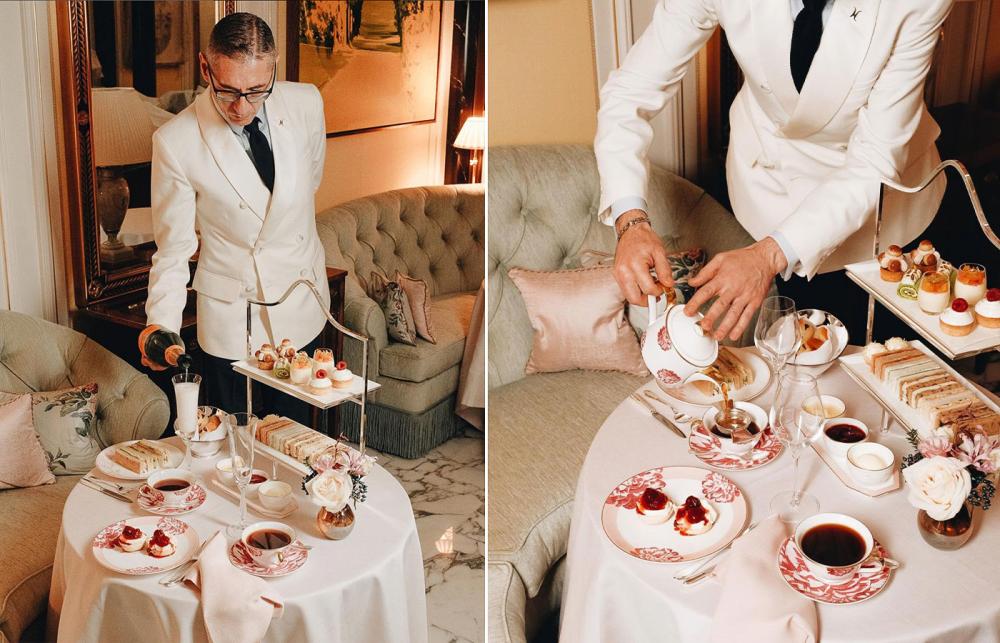
Uniforms often follow the architecture of the space. If a restaurant is minimalist, the uniforms will be clean and simple. If the space radiates the warmth of natural materials, linen, cotton, or leather details will appear in the uniforms. It is precisely this harmony between the space and the staff that creates a sense of carefully considered aesthetics.
Colors play an equally important role. Dark blue and black symbolize elegance and authority, while shades of sand, olive, or white often create a more relaxed Mediterranean atmosphere. In luxury coastal resorts, light tones and natural materials are frequently used, reflecting the landscape around the hotel—sea, stone, and sun.
Interestingly, in contemporary hospitality uniforms are increasingly viewed through the lens of comfort and sustainability. Materials are breathable, cuts are flexible, and many hotels use sustainable fabrics such as organic cotton or recycled fibers. The idea is simple—staff who feel comfortable and confident in their uniforms provide better service.
Montenegro, as a destination increasingly attracting luxury tourism, is also beginning to develop a recognizable style when it comes to uniforms. In hotels along the Montenegrin coast, elegant uniforms inspired by the Mediterranean lifestyle are becoming more common. Light linen shirts, neutral colors, and minimalist cuts blend perfectly with the landscapes of the Bay of Kotor, Budva, or Sveti Stefan.
In such an environment, the uniform becomes more than workwear—it becomes part of the story of the destination. Guests who come on holiday remember the atmosphere of the place, the people who welcome them, and the style that defines the space. That is why uniforms have the power to shape the experience almost as much as architecture or gastronomy.
In the end, perhaps their greatest value lies precisely in that discreet elegance. A good uniform never dominates the space, but complements it perfectly. It speaks of professionalism, style, and attention to detail. In the world of luxury hospitality, where the perfect experience is built from the smallest elements, the uniform is a quiet yet recognizable signature of the brand—a fashion detail a guest may not notice immediately, but will certainly remember.
.jpg)

.jpg)
.jpg)