

Consistent quality, estate-owned vineyards, and a blend of tradition with modern enology have positioned Vinarija Aleksandrović as one of the most recognizable wine brands in the region, while premium labels and the development of wine tourism continue to open a new chapter of success. How did Aleksandrović Winery become a regional symbol of quality?
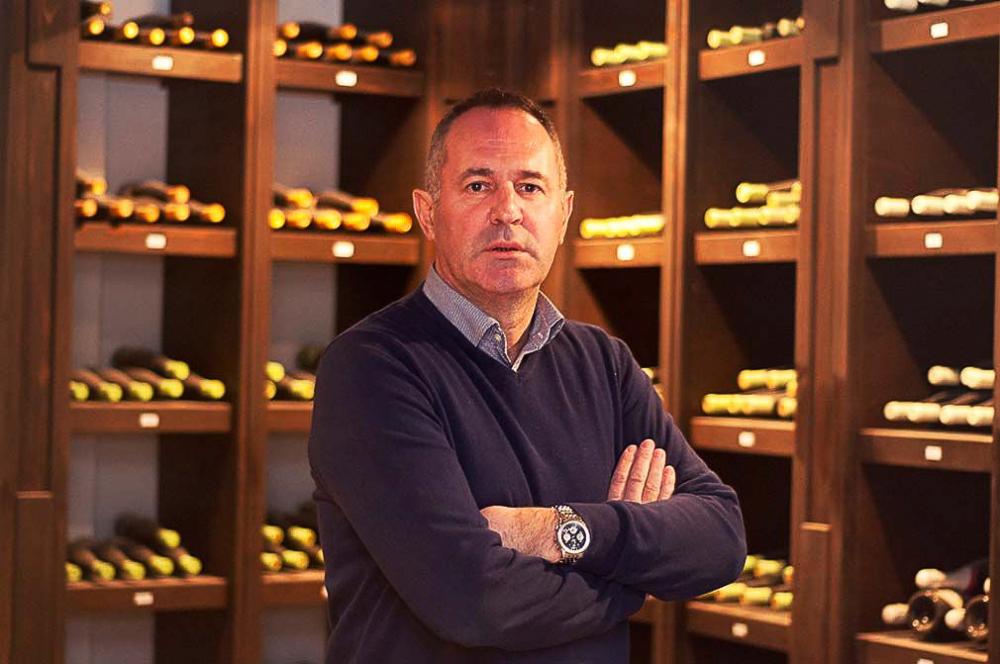
C.M: Today, Aleksandrović Winery is one of the most recognizable wine brands in the region. What do you consider the key to that success?
Vinarija Aleksandrović has been present on the regional market for 30 years, and the continuity of quality — which the market has clearly recognized — comes from our vineyards, our vision, and our constant advancement in the field of enology. This has enabled us to maintain consistent quality and, on the other hand, an excellent price-to-quality ratio. These are perhaps the most important factors that guarantee the longevity of a winery and wine production itself.
Our production is based on our own vineyards and manual labor, and it is very important to emphasize that we exclusively produce wine from grapes grown in our own vineyards, which is in itself a guarantee of quality. Of course, weather conditions and natural challenges also affect quality and production, but through years of work in our vineyards, careful selection of grape varieties, and choosing different vineyard locations, we have managed to respond to many of the challenges nature brings and preserve quality.
Therefore, consistency of quality, a good price-to-quality ratio, regular work in the vineyards, and customer satisfaction explain the growth of the Aleksandrović brand both in the region and, I would say, in export markets as well.
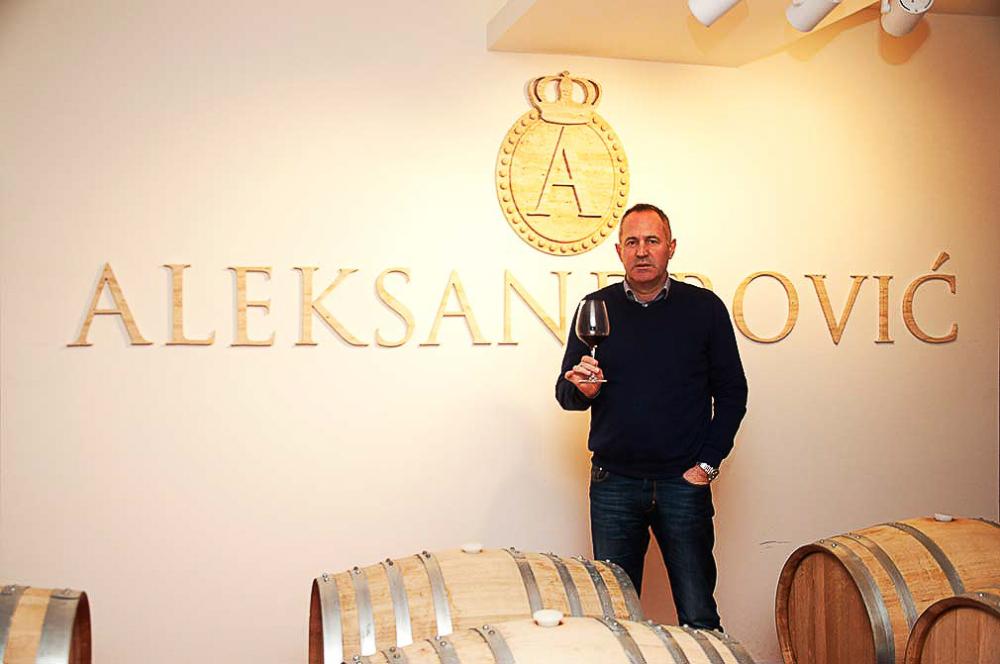
C.M: How has the Balkan wine scene changed in recent years, and do consumers today better understand and seek premium wines?
The scene is changing day by day — that is undeniable. What I can observe is that wine consumer education is constantly growing, thanks largely to the media, wine magazines, specialized websites, wine fairs, and sommelier courses, all of which contribute to a growing number of educated consumers seeking quality wines.
Compared to the market 10–15 years ago, today we have a very clear picture of which wineries and producers have achieved a certain level of quality, and the best among them have stood out. It is evident where work is being done in the vineyards, where quality improvements are being made, and where the latest knowledge in enology and viticulture is being applied.
It is also important to note that in Montenegro, Serbia, and throughout the region, more and more people are entering grape and wine production. However, the number of new wineries is not accompanied by an increase in vineyard areas, and I believe this is the biggest problem. For a country or region to build a strong wine identity, it must have grapes from that region and more vineyards. Only then can wines develop a true identity, and without that there can be no success either domestically or internationally.
C.M: In recent years, you have introduced several important innovations and premium labels. Which new label are you especially proud of?
This is a process that should never stop because every vintage and every new year brings new challenges and new approaches, both in viticulture and winemaking.
Among our newer labels, I would certainly highlight Aberdar. It represents a special approach to Chardonnay production and is the wine that marked 2025 with its market release. Aberdar is something new that positioned Aleksandrović Winery among the top wineries working directly in vineyards and relying on their own vineyards, scientific expertise, and careful selection of the best exposures and vineyard plots.
The enological approach is also extremely important, as we applied a combined production technology partially inspired by red wine production and aging in oak barrels. The most important thing today is to follow modern trends where wine quality relies on the grape variety, vineyard, and terroir, while the touch of oak should remain minimal, allowing the wine to fully express its variety and terroir. These are the most important things to focus on in the future because the market recognizes and appreciates such wines.
C.M: Your wines have won important international awards. How important are awards today?
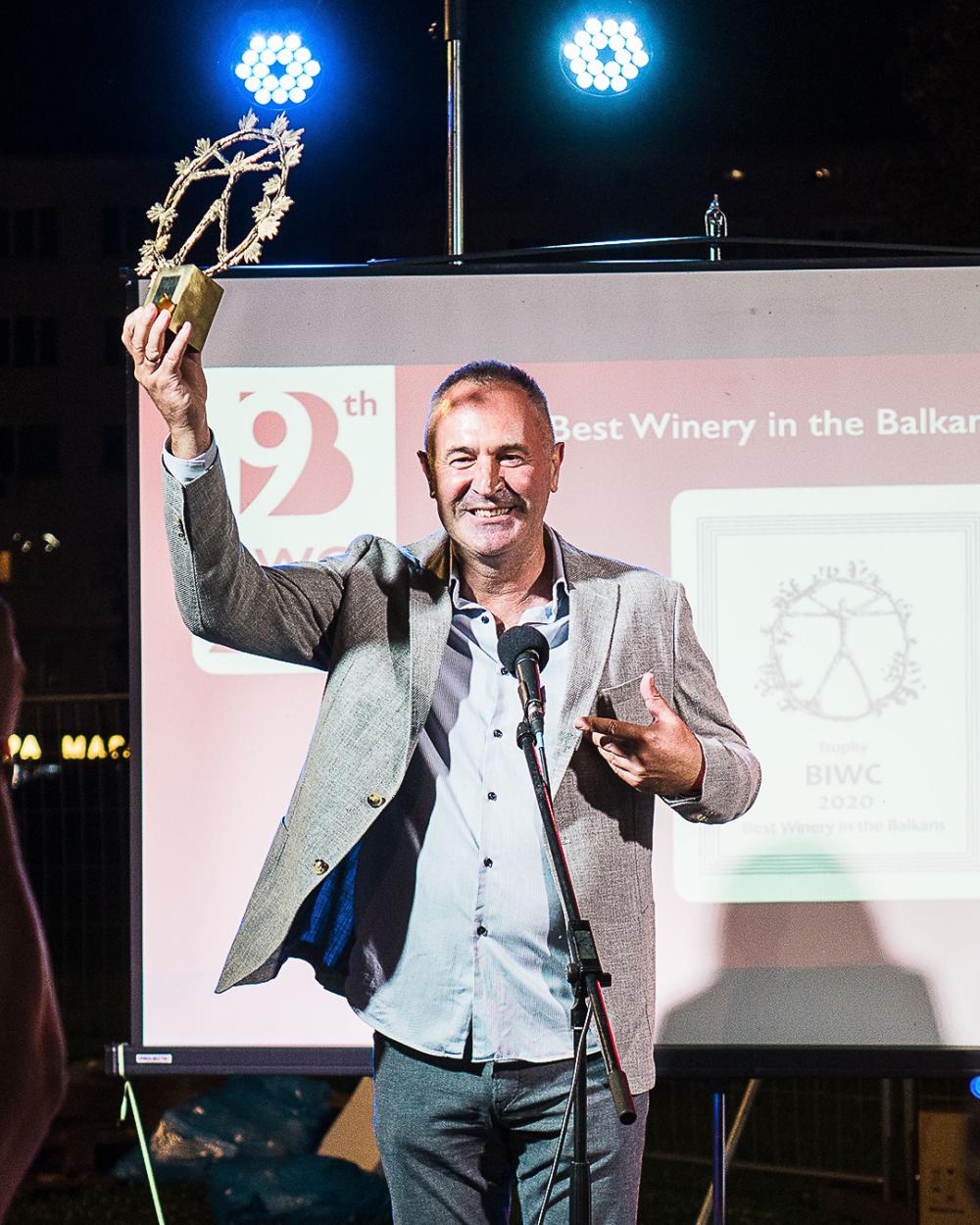
Awards are always welcome because they confirm whether you are doing something right. Competitions and awards validate the direction you are taking. Today, there are many important wine competitions worldwide, and we especially value competitions in Japan, as well as Decanter in Europe, Italy, and England. Every medal and every award is a challenge to become even better.
One of our recent recognitions was the award for Rodoslov at the Wine Vision fair, where it was declared the best wine of the fair and competition with 96 points, which is certainly one of our most valuable awards. On the other hand, we have also won gold medals at Decanter and in Japan. The number of awards changes from year to year, and every vintage brings new medals. Our goal is for the Aleksandrović wine range and brand to maintain continuity of quality, which is essential for long-term survival in the market.
C.M: How difficult is it to balance tradition with modern trends?
Precisely that combination of tradition and modern trends is the winning formula because one cannot exist without the other. You must rely on tradition because it is the foundation, and the positive experiences inherited from previous generations are invaluable and should serve as the basis for future success.
At the same time, the latest scientific knowledge in viticulture and winemaking must also be incorporated continuously because without it there is no progress. As the saying goes: “Even if you are on the right path, if you stand still, others will run you over.”
Tradition is the foundation, but without new knowledge and implementation of modern practices there can be no advancement. You must constantly improve production and stay one step ahead of others.
C.M: You have been present on the Montenegrin market since 2002. How has the market changed?
We have been present in Montenegro since 2002 — for 24 years now — and naturally, much has changed. Today, almost all the world’s most famous wine labels are present here, alongside regional wines. Distributors, hotels, restaurants, sommeliers, and the media have all contributed to the development of the wine scene, helping raise consumer awareness and increase demand for quality wines.
Most importantly, wines with a good price-to-quality ratio are increasingly occupying significant positions in the market.
C.M: Which wines are favorites among Montenegrin consumers?
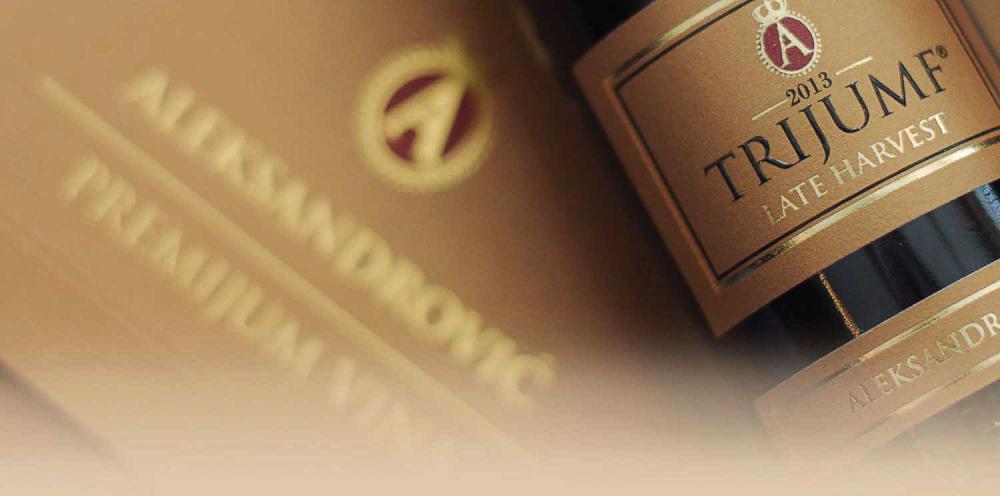
In Montenegro, white and rosé wines are the most sought after due to Mediterranean cuisine and the coastal lifestyle — wine follows food. I would especially highlight Trijumf as the leader among white wines and the leading wine from our portfolio in Montenegro, followed by Trijumf Rosé, which has secured a strong position over the past few years. Among red wines, Rodoslov and Regent stand out.
Interest in sparkling wines has also been growing in recent years, and we currently produce three different sparkling wines using the traditional Champagne method.
Overall, the broader picture shows that wine follows food. Montenegro, with its seafood-oriented cuisine, naturally gravitates toward elegant wines — whites, rosés, and lighter-bodied reds. That is what the Montenegrin market appreciates and demands.
C.M: Is there one wine you would call the “star” of Aleksandrović Winery — a label that best represents the philosophy and identity of your winery?
Certainly Trijumf Gold, the leader among our white wines, which has marked the last ten years. Among red wines, that would definitely be Rodoslov.
I would not complicate the story much further. Every wine from Aleksandrović Winery has its own identity, coming from our vineyards, our philosophy, and our approach to both viticulture and winemaking. That is what we rely on, and the market clearly recognizes it. In a way, that is also the answer to your first question — it is the secret of success.
C.M: Wine tourism is becoming an important part of the luxury гастрономic experience today. How important is wine tourism for Aleksandrović Winery?
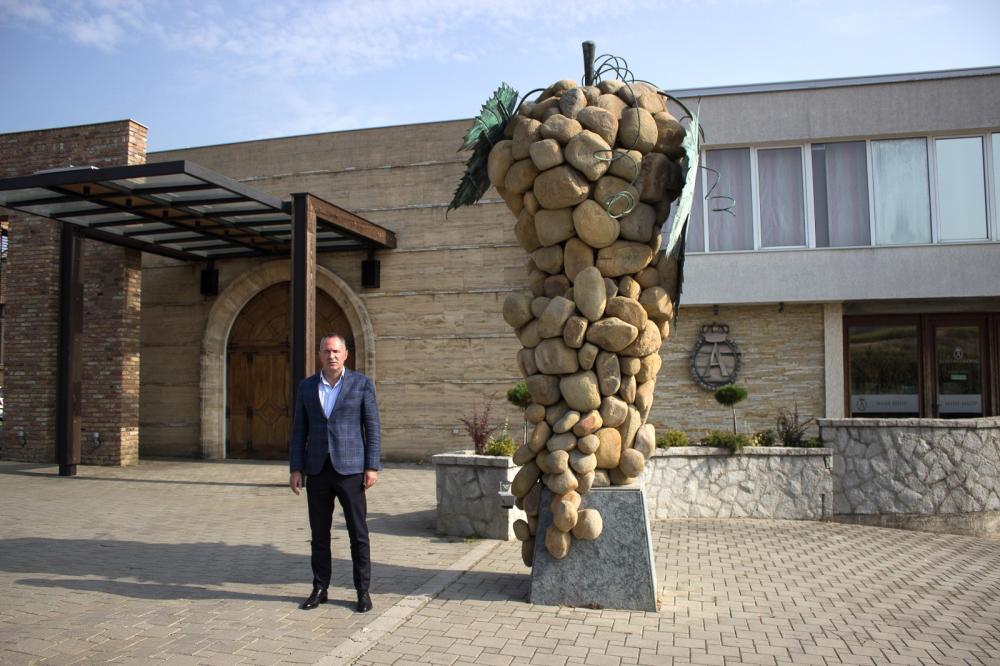
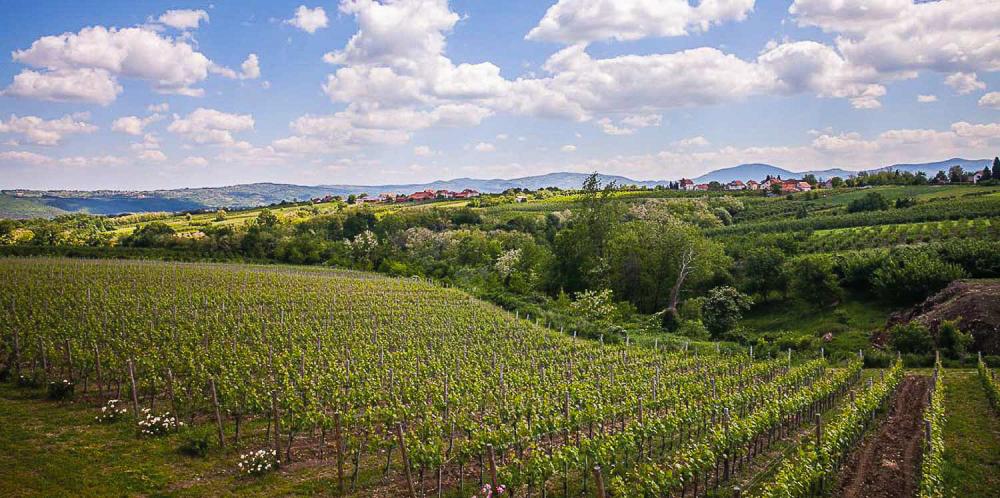
Wine tourism is the future. Every year, we welcome between 12,000 and 13,000 visitors. People love wine because wine brings people together, and the combination of Šumadija, nature, and vineyards creates a truly special experience.
We embraced this entire concept as a challenge, inspired by positive examples from Tuscany, Piedmont, and other wine regions. Over the past ten years, Aleksandrović Winery has invested heavily in wine tourism. We currently have a tasting hall for up to 100 guests, a conference room, 11 rooms within the winery complex, and two villas with swimming pools located in the heart of the vineyards. We are also developing the Aleksandrović Wine Resort, a boutique hotel within the winery complex featuring 24 rooms, a wine bar, restaurant, conference facilities, wellness and spa center, all with stunning vineyard views overlooking Šumadija.
We are located in an excellent position — just one hour from Belgrade and one hour and ten minutes from the international airport. In addition, Oplenac, Topola, Aranđelovac, monasteries, and other wineries together create a strong tourism offer that should, in the coming years, position the Šumadija wine region as one of the leading wine regions in the Balkans.
C.M: What are your expectations for the coming period?
Every new vintage brings a new wine and a new experience. At the same time, we are working intensively on indigenous grape varieties, especially improving the quality of Prokupac, our native grape variety, which will certainly attract increasing attention in the future through both quality and style development.
We are also continuing to develop wine tourism, as I mentioned earlier, and much of our focus is directed there now.
But most importantly, our vineyards remain our greatest challenge. We cultivate around 90 hectares of vineyards, and from them we draw our strength, quality, and vision, which we later bottle into our wines. There is still so much ahead of us. This is the kind of work where you truly have to live it — go to bed with it and wake up with it — and the wine will recognize and reward you for that. So will the market.
Continuous work on quality and maintaining a strong price-to-quality ratio — which I constantly emphasize — are extremely important, as is building the entire concept around our own production and vineyards.
Today, you often see an unnatural phenomenon: expensive and beautiful wineries that do not own vineyards. That is not natural. It is far better to invest in an excellent vineyard. The winery itself does not have to be overly luxurious or expensive — what matters is a great vineyard, because it is the vineyard that rewards you with exceptional wine quality.
You may have a beautiful and expensive winery, but without a great vineyard, there can be no truly outstanding wine.