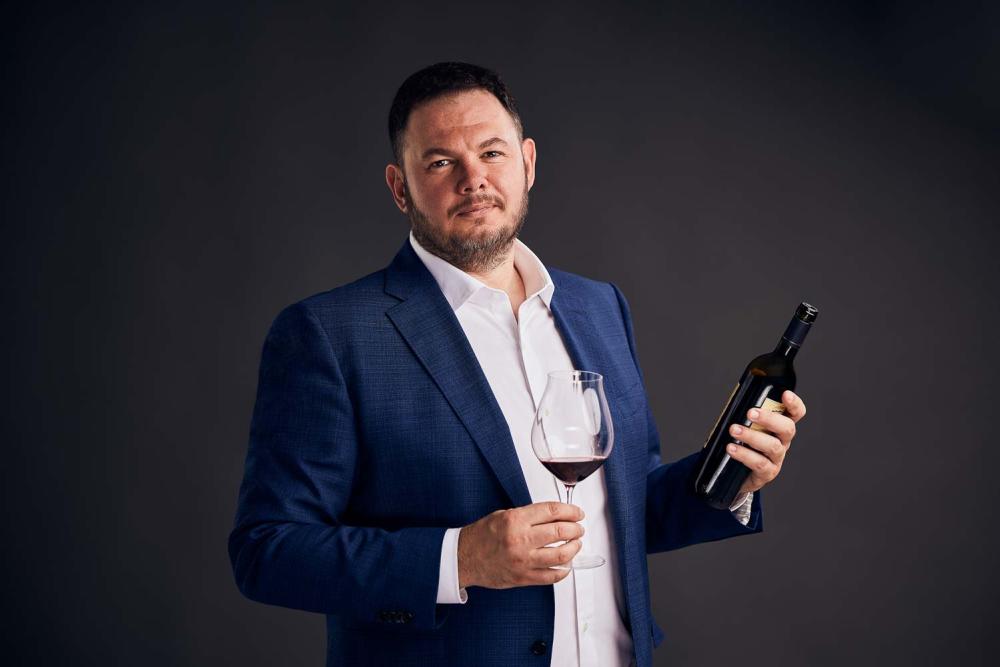
Journalist, founder of Vino & Fino magazine, international wine judge and, most recently, a member of the team led by James Suckling, one of the world’s most influential wine critics, Igor Luković talks about the development of wine culture in the region, his experience judging at prestigious international competitions and the potential of Montenegrin wines.

C.M: How did your journey into wine begin, and what attracted you to this world?
– In the early 2000s, I launched two small gastronomy magazines with a group of friends. As I visited restaurants and became more familiar with that culture, I also developed an interest in wine. At the time, the renaissance of wine culture in our region was only just beginning. So, in 2004, I decided to enter the industry and opened a wine shop in Novi Sad. Alongside that business, I brought together the first group of people to complete certified sommelier training, and we effectively became the founders of the Vojvodina Sommelier Association, which later began operating as a branch of SERSA – although I was never actually a sommelier myself. The first wines I sourced and tasted back then opened up an entirely new world for me. Accessing information was nowhere near as easy as it is today, and general knowledge about wine was limited. That is why it was exciting, and still is, to follow the development of the wine scene and grow alongside it.
C.M: Could you briefly tell us about your professional journey and how you combined your love of wine with journalism?
– After studying literature, I completed a two-semester postgraduate specialist programme in journalism and began my career as a journalist. However, wine and food have always been my passion. After five years in the wine trade, I realised I was not cut out for that kind of business because, somehow, the wine itself, the people and the stories behind it always mattered more to me than how much money I would make. And that is hardly a recipe for commercial success in retail. So I returned to what I do better and launched Vino & Fino magazine in 2011. That also brought my first wine tastings and judging engagements, initially locally, then regionally and eventually internationally. First BIWC, then Mundus Vini, followed by the IWC in London and finally Decanter. Alongside numerous other, smaller wine competitions, some of which I initiated myself, such as GROW du Monde, or regional competitions such as the OB Wine Trophy.
C.M: How much has wine culture in Serbia and the Balkans changed in recent years?
– It has changed at an incredible pace, and it continues to evolve. Following the transition away from the socialist system of large state-run agricultural enterprises, winemakers across the Balkans, including Serbia, were practically starting from scratch, relying on little more than the surviving traces of local tradition. Progress was faster in some places and slower in others, but what we have witnessed over the past two or three decades has been an extraordinary flourishing of the industry. We have, quite literally, watched a renaissance unfold. Today, we are talking about great, serious wines in our region, exploring terroirs and grape varieties just as they do everywhere else in the world. There is certainly still plenty of room for progress and development. This is particularly important today, when the global wine industry is facing significant challenges.
C.M: What skills are essential for someone to become a judge at Decanter?
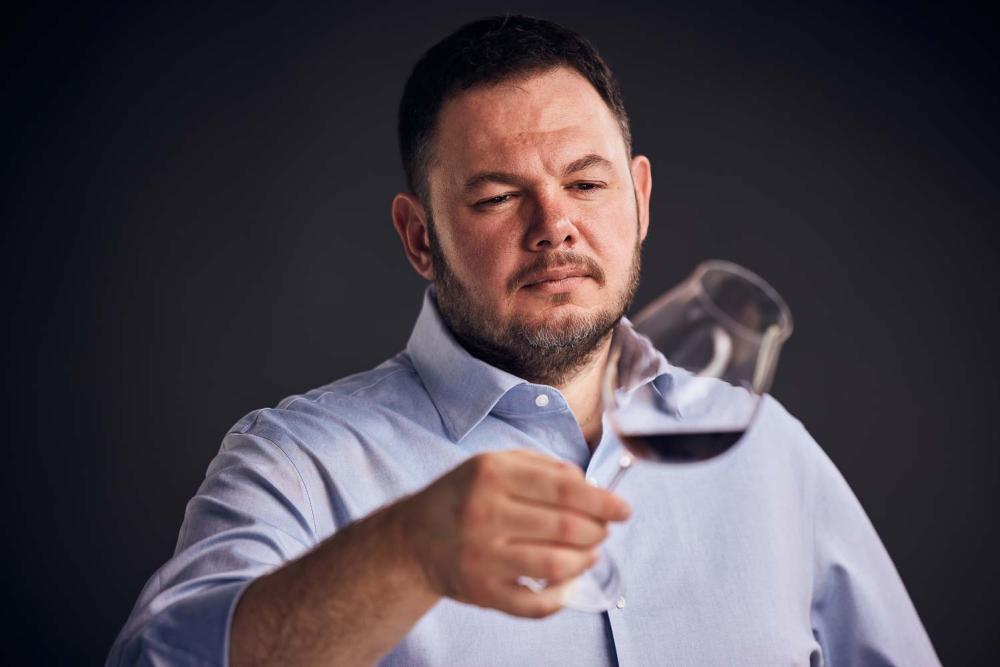
– First and foremost, they need to be a good and consistent wine judge (laughs – editor’s note). That comes primarily from experience, knowledge and an understanding of what they are tasting. Wine judging must go far beyond personal preferences and individual taste. In other words, “I like it” or “I don’t like it” simply does not work. A good wine judge must also know how to keep their ego in check, listen to other people’s arguments and defend their own position without becoming confrontational. They must not be easily influenced and must trust themselves above all – their own nose, palate and experience.
C.M: How did your collaboration with James Suckling come about? How different is that work from judging at Decanter?
– I spent several days travelling around Serbia with James, and the offer to collaborate came from him. Naturally, I was delighted to accept. Our initial agreement was that I would cover Central Europe and the Balkans, but my very next trip is already taking me to South Africa. This type of work is very different from all the major wine judging systems, including Decanter. When you judge as part of a panel, you belong to a group, and scores are determined through consensus and discussion whenever necessary. Here, it is just you and the wine, and your score is yours alone. Working with James is intense and demanding, the pace is fast, but it is exciting and different. His name opens doors throughout the wine world that would otherwise be far more difficult to access.
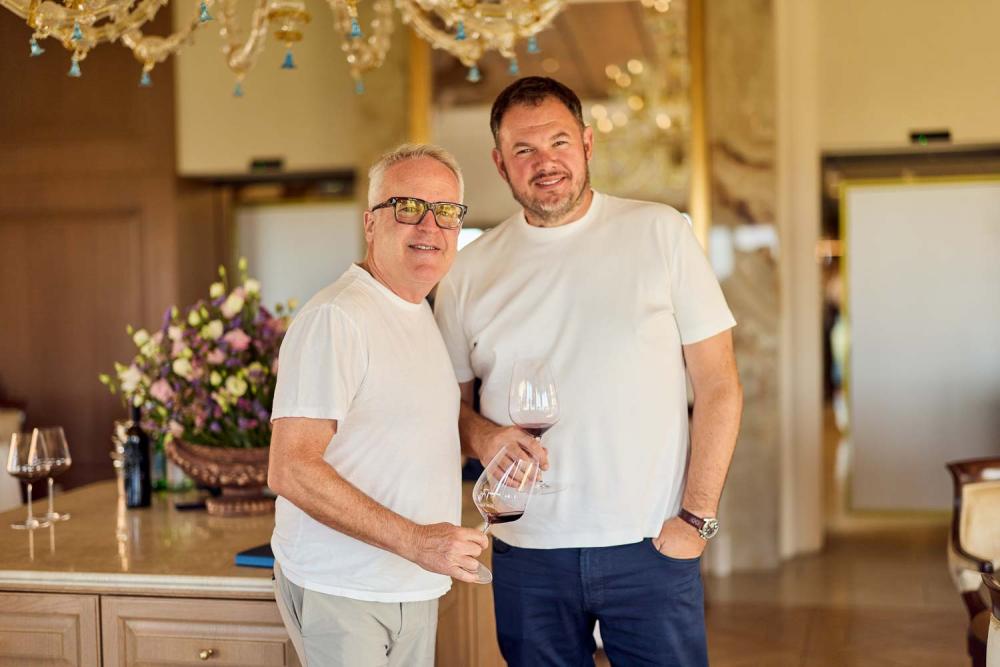
C.M: Can we expect Montenegrin wines to be reviewed by James Suckling as well? What would need to happen for that to become a reality?
– There is no particular strategy involved. I hope Montenegrin wines will come onto his radar, and I will do my best to contribute to that when the opportunity arises. His schedule is extremely demanding and his calendar is packed, but there is always time for new and undiscovered wine destinations.
C.M: How closely do you follow the wine scene in Montenegro? What do you see as its greatest strengths, and where is there room for improvement?
– I am always very interested in what is happening in Montenegro’s wine scene, although I sometimes feel I do not follow it closely enough. Vranac and Kratošija are undoubtedly Montenegro’s greatest assets, and there are several outstanding wines made from these varieties that are genuinely world-class. What surprises me is that there is still no consistent stylistic direction or clear focus on particular grape varieties when it comes to white wines. Of course, a good Chardonnay or Sauvignon Blanc occasionally stands out, and very rarely something made from a local variety. Montenegro’s winemaking heritage provides a strong foundation for development in that direction, particularly given its well-established summer coastal tourism. Offer visitors what they are looking for during summer by the sea – something local, authentic, white and fresh.