
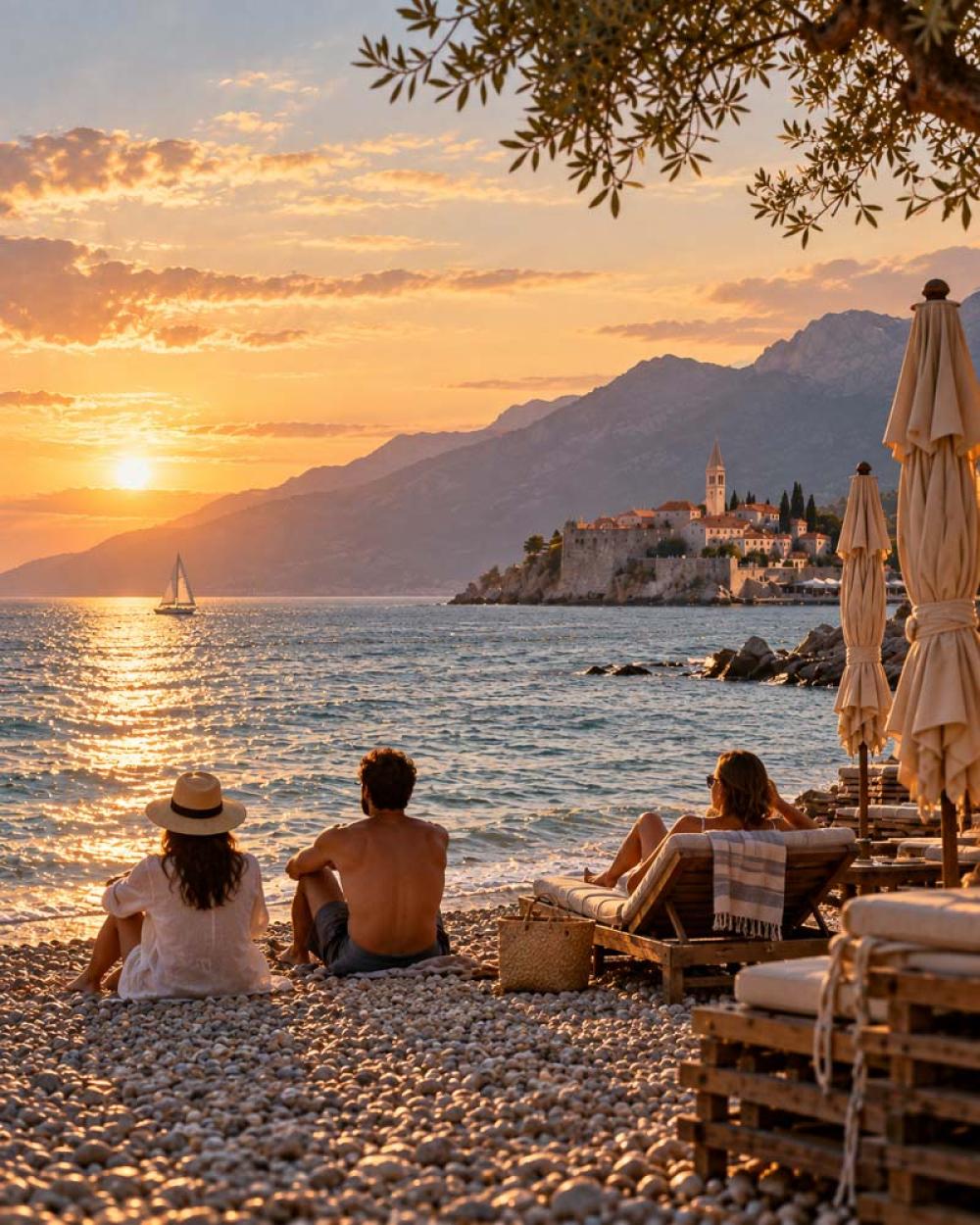
There is one sentence I heard several times in September, in different places and from different people: “We’re tired of the season.” I understand. Behind a single summer in tourism lie months of work, often without a day off, with staff shortages, long shifts, crowds, heat and the pressure to earn enough in just a few months to cover a much longer period. But the problem begins when that exhaustion starts to show in the service. When things that worked perfectly well until yesterday begin to shut down and when, consciously or unconsciously, we bring the season to an end ourselves. Here, the final whistle is often blown as soon as August is over — even though the match is still going on. We blow the final whistle on ourselves.
On the coast, people are still on the beaches in September. The sun is shining, the sea is warm, the guests are here. And yet, in some places you already get the impression that everything is winding down: the beach is not cleaned as it should be, the bar operates on a reduced basis – selling off its remaining stock of drinks – the place is untidy, the toilets are not maintained to the standard they should be, and one or two people are trying to do everything. Formally, the establishment is still open. In reality, the season is already over. The only person who hasn’t been told is the guest. And the guest has arrived. A guest who comes in September has not come “after the season”. They have come for their holiday and expect a level of service worthy of the price they are paying and the destination that invited them to visit.
At the beginning of September, I encountered the same problem in the north. On 4 September, twelve of us were travelling to accommodation we had booked in advance, with dinner arranged as part of our stay. On the day of our arrival, we received a message saying that they would not be able to prepare dinner after all. Not because they were busy or fully booked, but because they had some private work to take care of and simply did not have the time. Dinner can be found somewhere else, but when something has been agreed, the guest expects to receive it. Especially on 4 September. This is not a story about one dinner. It is merely a symptom. Do we actually have the capacity for a longer season? Because it is not enough to spend years saying that we want a pre-season, a post-season, year-round tourism and guests outside July and August. It is not enough to create campaigns featuring the sea in October, the coast in winter or the mountains in September. Someone has to open the door to those guests when they actually arrive. And not merely open the door. They have to welcome them as guests, not as people who have arrived too late.
We want a longer season — provided it doesn’t last too long. We want guests in October, yet by mid-September we are already starting to close. We want higher tourism revenues, but by the end of August we are exhausted. We want a different mix of visitors, yet our system still operates as though the tourism year begins in May and the final whistle is blown on 31 August.
And a guest arriving on 25 September does not feel that they have come “after the season”. That is when they are on holiday. They may have spent months planning the trip, paid for flights, a hotel and a rental car. They chose Montenegro because someone told them that September is the most beautiful time to visit. For them, this is the season. The guest does not know that the waiter has worked 70 days without a break, that the owner has not had a weekend off since May, or that someone in the kitchen is already mentally on holiday. Nor should they know.
Perhaps we have spent too long treating the extension of the tourist season as a marketing task. As though bringing people here were enough. Of course, with a lower volume of business, not everything has to operate as it does at the height of August. Nor should it. But whatever is open must operate properly.
To keep using sporting terminology: you don’t run a marathon at a sprinter’s pace.