

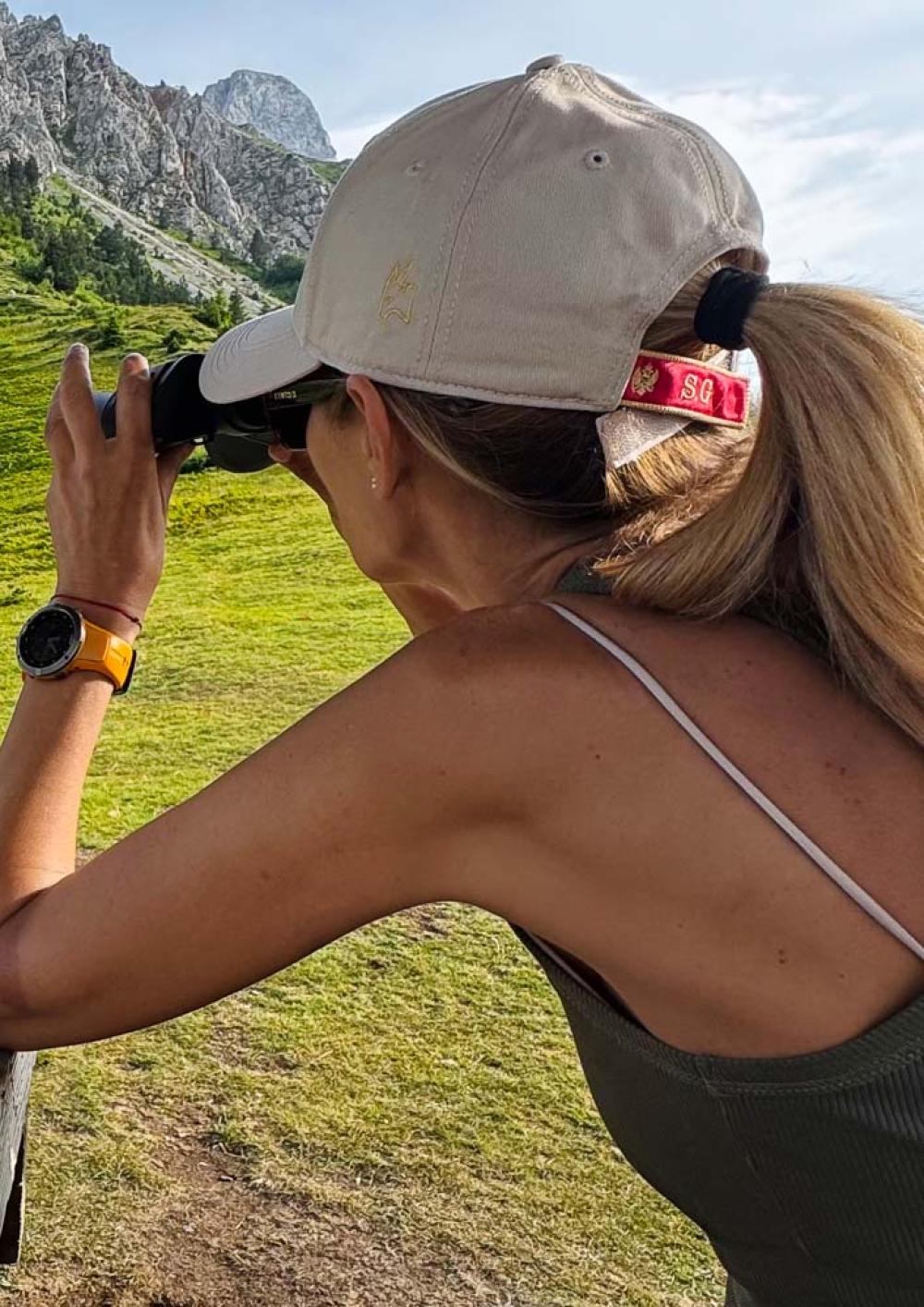
Herds of wild horses roaming freely across highland plateaus, pedigreed cattle grazing on open pastures, the scent of pine forests, carpets of wild blueberries, soaring mountain peaks and ridges reaching towards the sky, and countless wonderful people from around the world who cherish and respect nature. July in the Komovi Mountains. This is not a postcard. This is Montenegro.
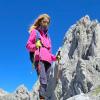
In the middle of July, I saw in the Komovi Mountains exactly what I had hoped to see. Car parks filled with vehicles from across Europe. People who had chosen the openness and tranquillity of the mountains. Campers who had traded hotel rooms for tents. Hikers. So many of them. From the first light of dawn, they set off with enthusiasm towards the peaks of Komovi – Kučki, Srednji, Ljevoriječki, Vasojevićki...
And something especially important – and worthy of praise: countless visitors, yet not a single piece of litter.
From the Komovi Mountains, the view stretches peacefully across one mountain range after another towards the horizon – Durmitor, Prokletije, Bjelasica, the Morača Mountains, and the Kuči Mountains. As you stand there looking across them, an eagle suddenly appears high in the sky. You catch sight of it for just a moment before it disappears into the heights once again. It does not seek attention or create a spectacle. It simply reminds you, if only briefly, that you are in a place where humanity is the guest and nature is the host.
As the world increasingly seeks destinations that offer authentic experiences, Montenegro already possesses them—in its mountains, forests, and people. And, of course, along its coast. More and more travellers are willing to cross thousands of kilometres not because of what has been built, but because of what cannot be built. They come for the mountains. For the crystal-clear sea. For the forests. For the mountain pastures. For the sense of freedom that only nature can provide. For star-filled skies untouched by light pollution. For the feeling that, if only for a few days, they are living a truly pure life. This is not a passing trend. It is a fundamental change in the way people travel today.
That is why I firmly believe that Montenegro's greatest tourism asset was not created through investment, but by nature itself—a heritage we have a duty to protect. Of course, we need quality hotels, roads, airports, hiking infrastructure, and well-developed accommodation. And I am delighted to see that northern Montenegro offers far more of these than it did only a few years ago. I am equally pleased to see local families restoring their mountain katuns, opening rural guesthouses, building small mountain lodges, and more and more young people recognising this as their future. This is exactly the kind of tourism development that gives meaning to everything we have spoken about for years—that people can remain in their home communities, earn a living through their own work, and contribute to the development of the places where they were born.
But there is one thing no investment can ever create. No investment can produce what nature has spent thousands of years creating. It cannot build the Komovi Mountains. It cannot create Durmitor. It cannot replicate Prokletije. It cannot paint the Tara Canyon. It cannot set wild horses galloping freely across mountain plateaus. It cannot reproduce, through any artificial fragrance, the scent of a pine forest after a summer rain. It cannot grow wild blueberries like those found on the plateaus of Komovi or Plav. It simply cannot.

-1000x600-fixwidth.jpg)
.jpg)