


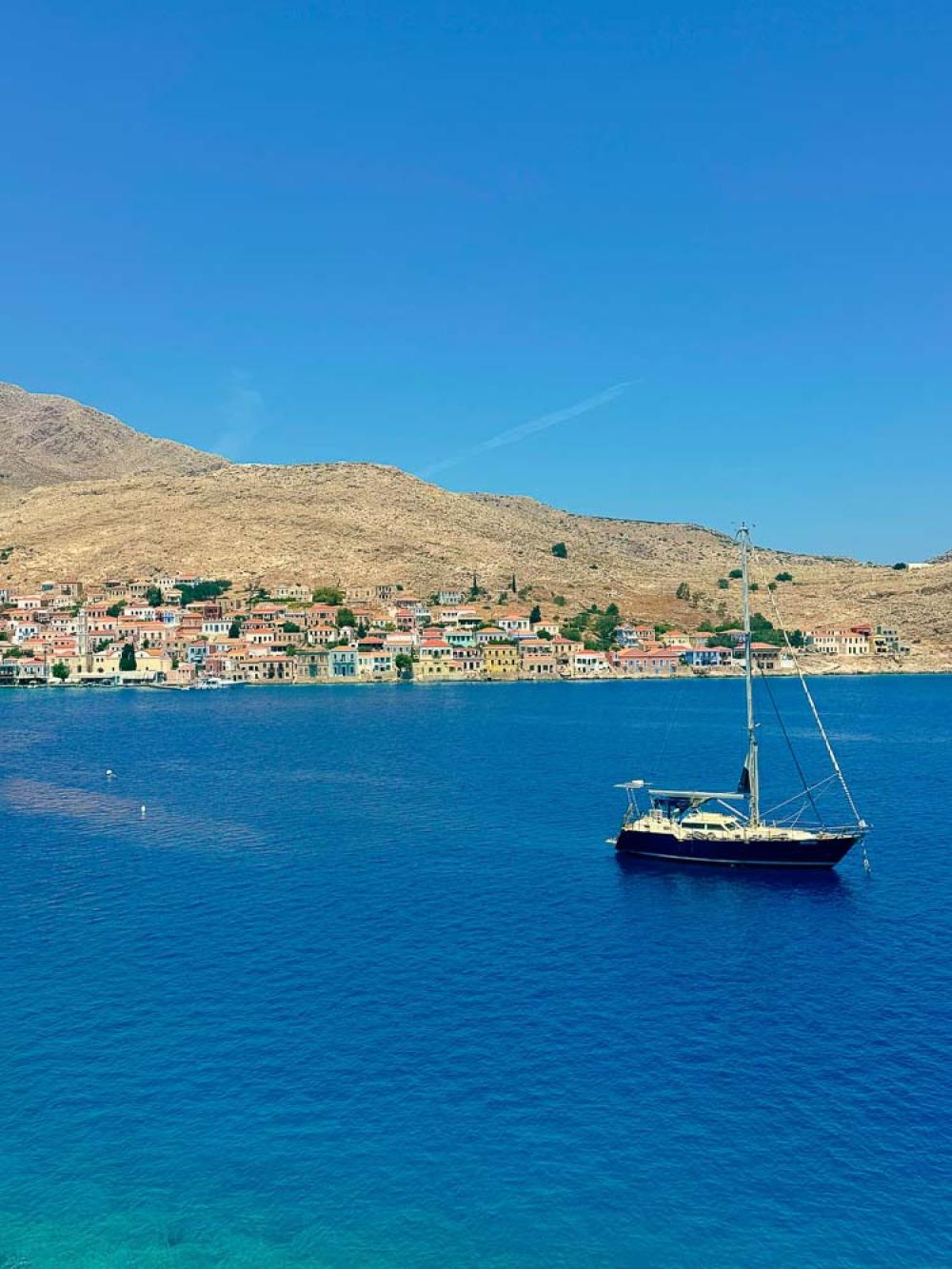
Reaching Halki (Chalki) is not the shortest journey, but that is precisely what makes the arrival so special. After flying via Tirana to Rhodes and taking a short ferry ride across the Aegean Sea, a quiet harbor gradually comes into view, framed by pastel-colored houses, crystal-clear waters, and the warmth of the Mediterranean. From the very first glance, it is obvious that every kilometer was worth the trip.
Some journeys begin only once we reach the destination. Others—the ones we remember the longest—unfold along the way, through airports, ports, changing landscapes, and that quiet feeling that the familiar world is slowly being left behind. The journey to Halki belongs to the latter.
The trip from Podgorica first takes you to Tirana, and then by plane to Rhodes. Even during landing, it becomes clear that you have entered a different rhythm: the air is warmer, the sun brighter, and the scent of the sea welcomes you before you even step outside. Yet the true transition between everyday life and travel happens only when you board the ferry. As the shores of Rhodes gradually disappear in the distance and the endless blue of the Aegean opens before you, the most beautiful part of the journey begins—the approach to an island that seems to exist outside of time.
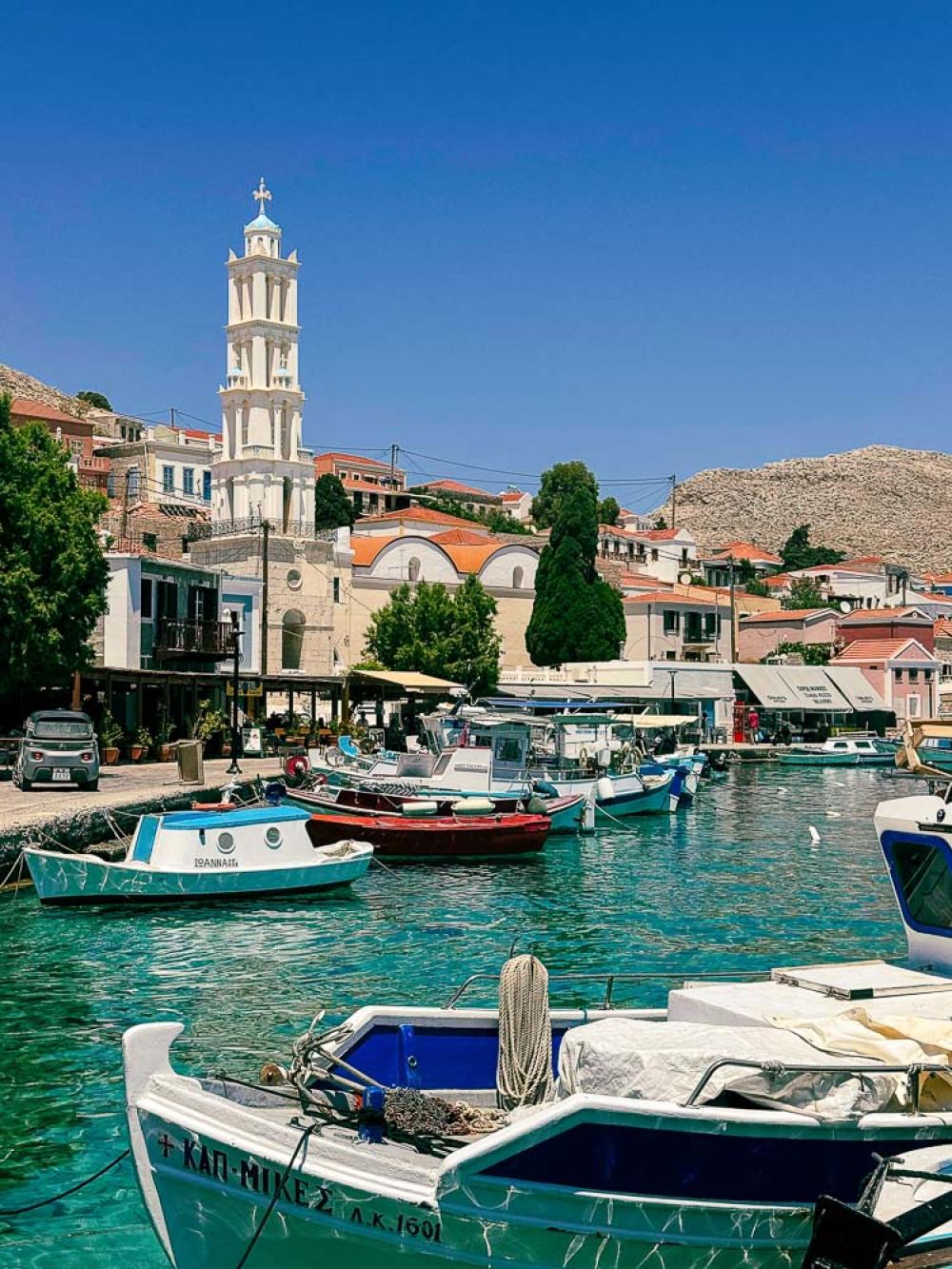
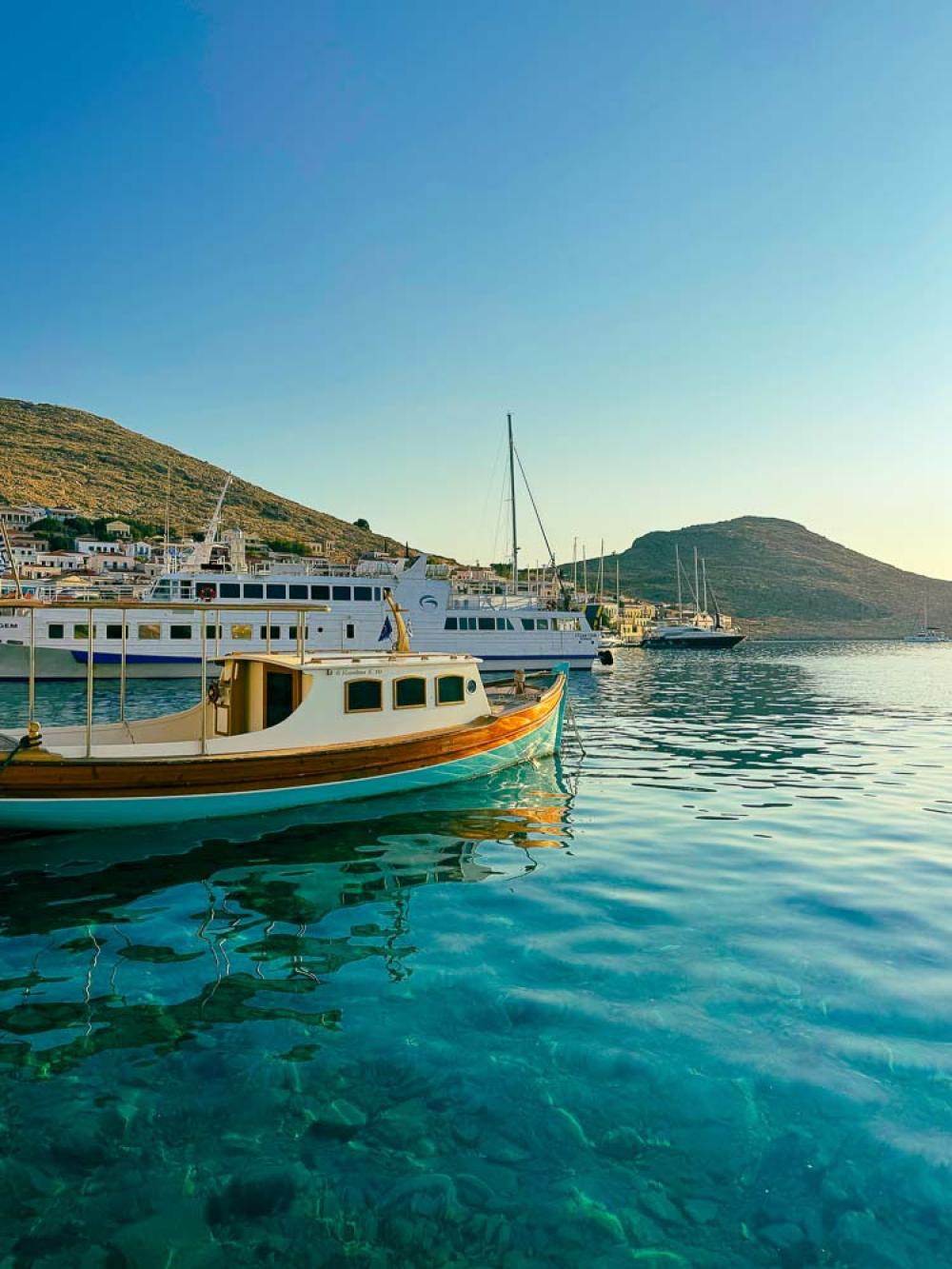
The ferry ride from Rhodes to Halki takes about an hour. Long enough for the noise of the city to fade away, yet short enough that impatience never has the chance to spoil the experience. When the first houses appear on the horizon, lined along the waterfront in shades of yellow, blue, pink, and sand, it is impossible not to be captivated. The scene feels almost unreal, as though someone had carefully arranged a tiny Mediterranean village solely to welcome travelers arriving by sea.
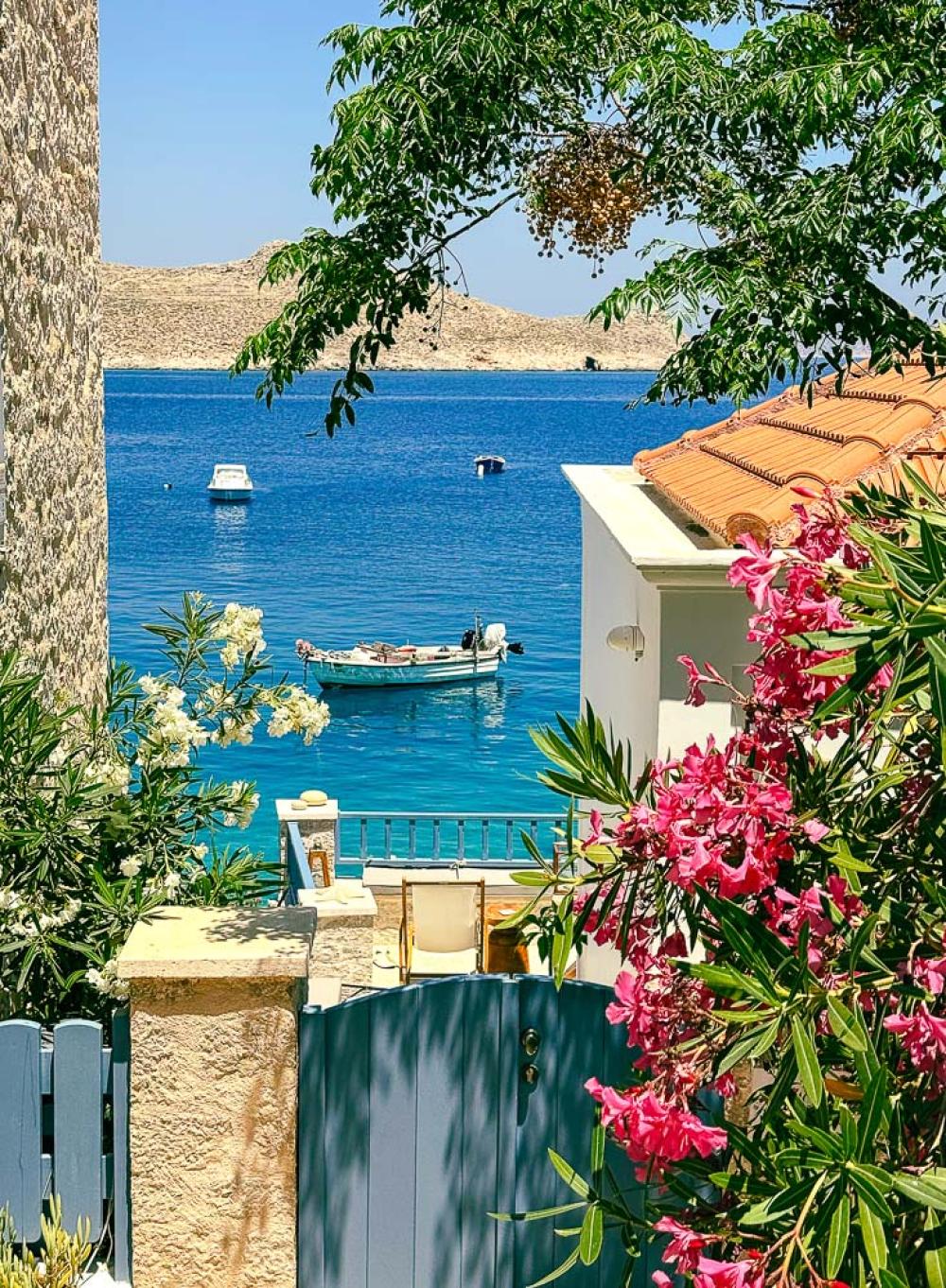
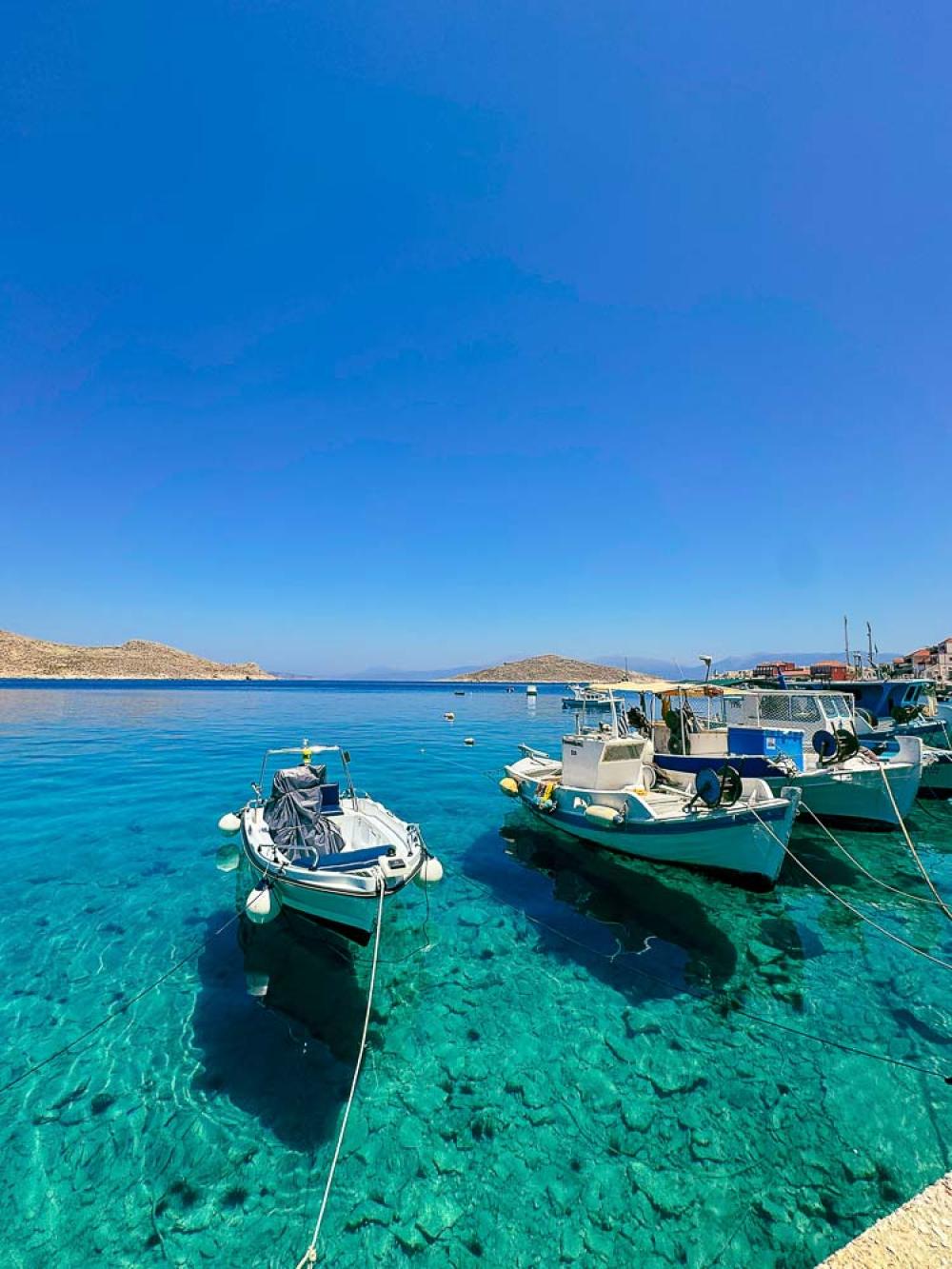
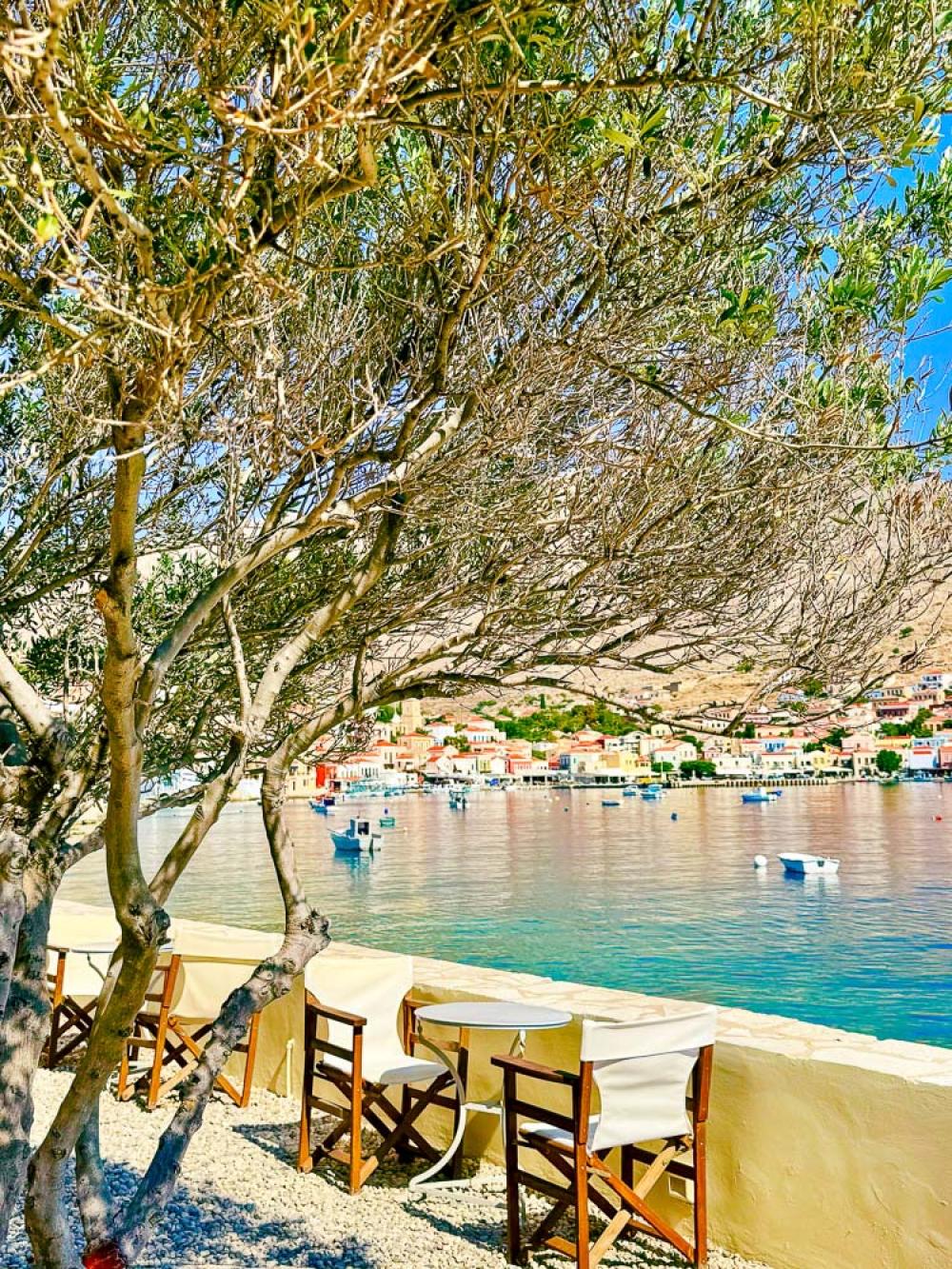
You arrive in Nimborio, the island’s main—and only significant—settlement. The harbor is small, peaceful, and so harmonious that within minutes you feel as if you have already been here before. The very first thing that catches your eye, however, is the color of the sea: completely transparent along the shore, gradually turning turquoise and emerald before deepening into a rich navy blue toward the open sea. The boats seem to float above the seabed rather than on the surface. Beneath them, rocks, fish, and slowly moving shadows are clearly visible in the calm, gentle water. There we were welcomed by our hotel host, the wonderful Yannis, who, during a short drive to the hotel, introduced us to the island and, with each passing day, made us feel completely at home.
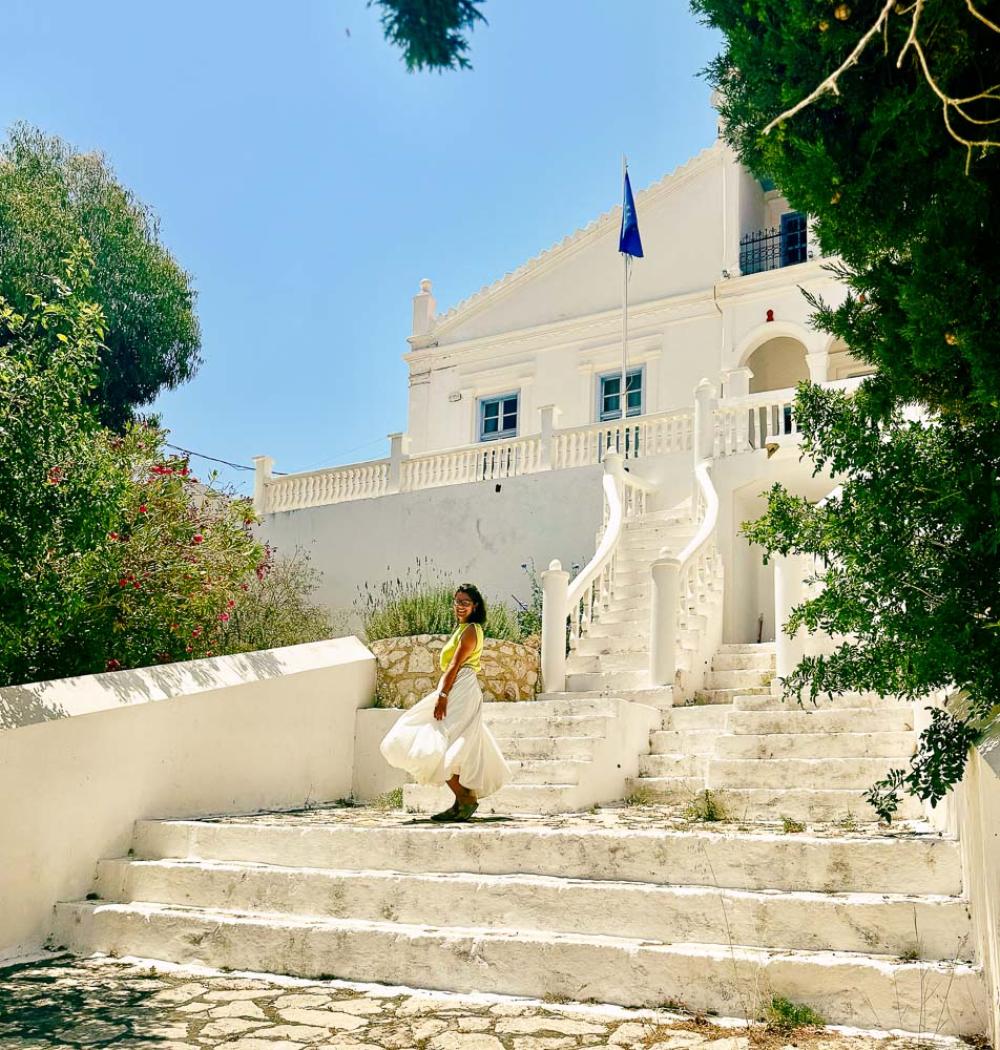
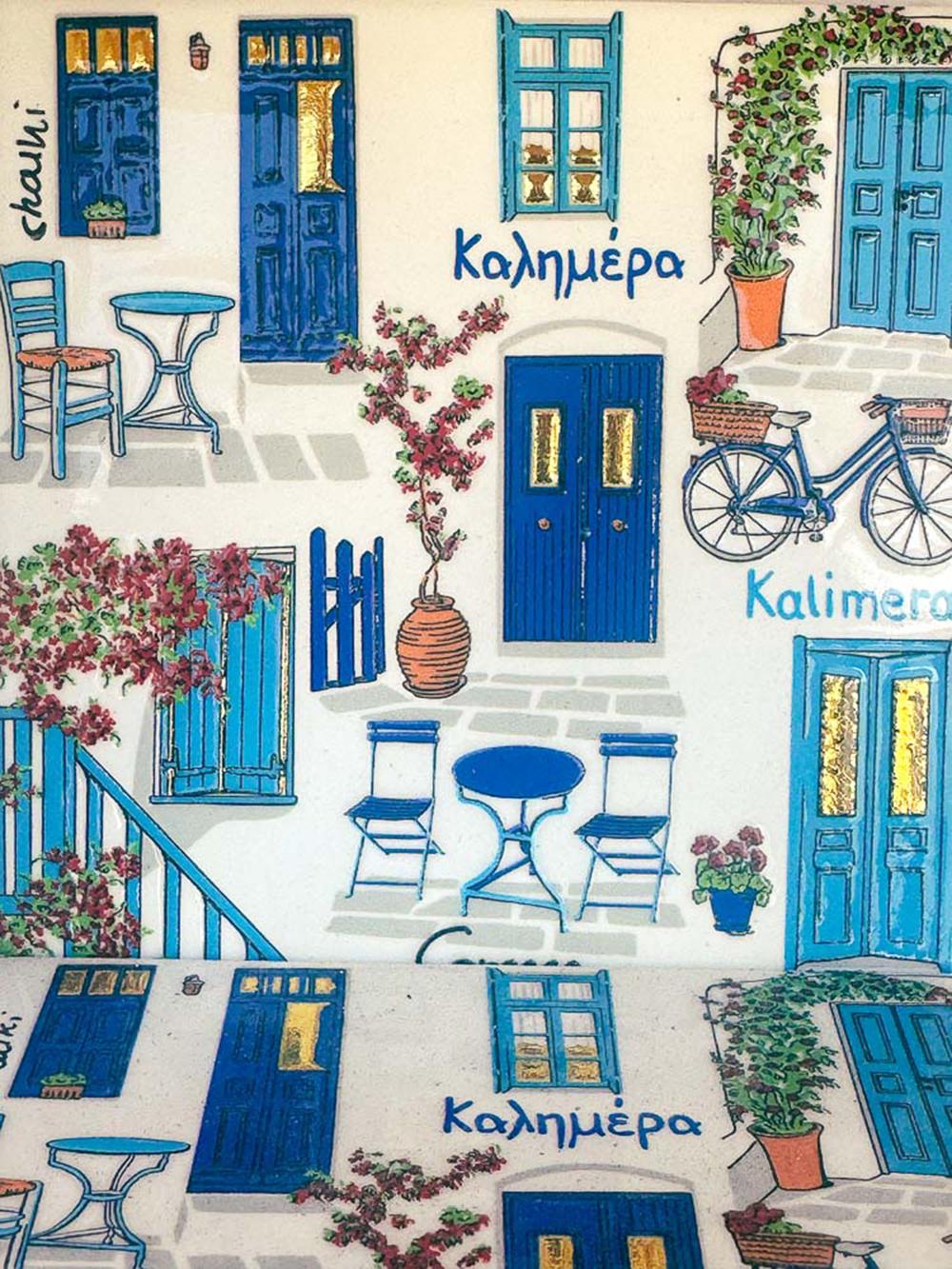
The neoclassical houses, colorful rooftops, narrow streets, and flower-filled terraces tell the story of a time when Halki prospered through maritime trade and seafaring. Rising above the harbor is the bell tower of the Church of Saint Nicholas, one of the island’s most recognizable landmarks. The church and the square in front of it are much more than attractions to photograph—they are the heart of daily life. People stop to chat, children play, and visitors slowly begin to understand the island’s rhythm. On Halki, nobody ever seems to be in a hurry.
It is also worth visiting Chorio, the island’s abandoned old village. The road leading there crosses a rocky, almost barren landscape, entirely different from the gentle beauty of the harbor. The remains of stone houses, ancient streets, and small Byzantine chapels remind visitors that the island once had a very different life. Above the settlement stand the ruins of a medieval castle. The climb may not be easy during the heat of the day, but the view from the top rewards every step. The sea stretches endlessly in every direction, while the silence is so complete that, for a moment, you forget how accustomed you are to constant noise.
Still, I find Halki most beautiful on days without a schedule. Pondamos Beach, just a short walk from the harbor, offers soft sand and calm, shallow waters. Ftenagia is rockier and more secluded, perfect for those days when swimming turns into hours of quiet relaxation by the sea. There are also small coves accessible only on foot or by boat. In these hidden spots, the water seems even clearer and time slows down even further. Here, it becomes easy to lose track of the hour—and for the first time, not care about it. What makes Halki truly special is not only its sea, houses, or landscapes. Above all, it is its people.
Hospitality on the island is never formal or forced. Your hosts remember how you take your coffee, the owner of a taverna recommends whatever arrived fresh from the sea that morning, and someone you met only the day before greets you like an old friend.
On small islands, there is little room for anonymity, but on Halki it never feels intrusive. On the contrary—it is comforting. After only a few days, you no longer feel like a tourist passing through but rather like a welcome guest. And then comes the food—one of the finest parts of every day.
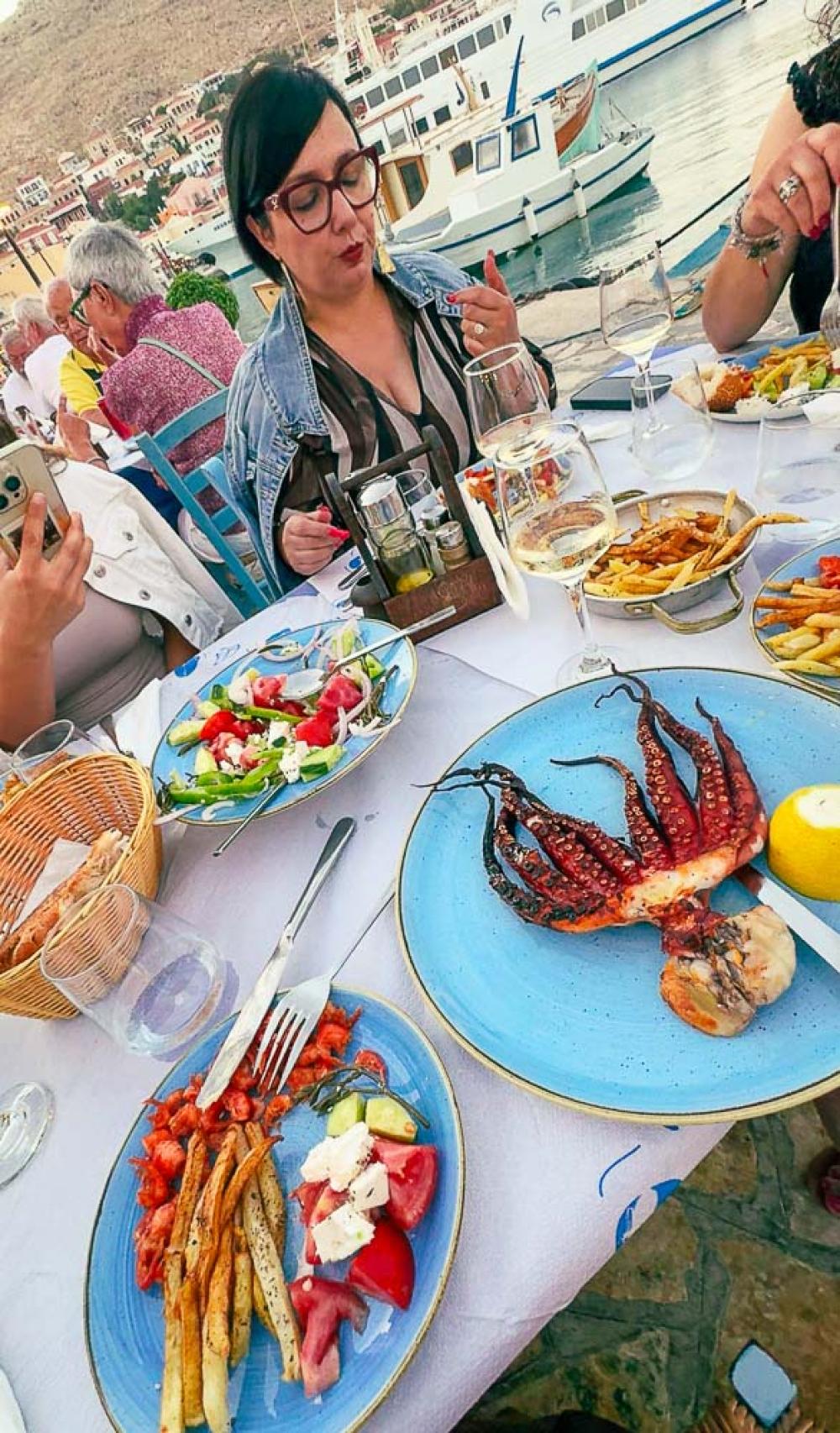
Fresh fish, grilled octopus, squid, shellfish, the shrimp for which Halki is famous, ripe tomatoes, olives, homemade bread, olive oil, and lemons. Everything is simple, fresh, and exceptionally prepared. Lunch by the sea easily turns into dinner. One more dish is ordered to share, then another glass of wine, followed by coffee. Nobody rushes you. As the lights from the waterfront reflect across the still harbor, it becomes clear that luxury does not always mean abundance. Sometimes luxury is simply having enough time to finish a conversation.
Halki is not an island of large hotels, loud music, or endless lists of attractions. Its beauty lies in the small moments: an early morning swim, the sound of church bells, the aroma of grilled fish, a quiet walk along the harbor, and greeting people whose names you have only just learned.
You leave Halki the same way you arrive—by ferry back to Rhodes. Yet somehow the return journey feels different. As the colorful houses become smaller and smaller in the distance, you realize that what you are leaving behind is not only a beautiful island, but also the feeling you experienced while you were there.
Halki does not try to impress at first sight. It never demands attention. Instead, it quietly wins you over with its peace, warmth, and simplicity. And it is precisely places like this that stay in your memory the longest.
If, during your stay on Halki, you feel like escaping for a day to one of the neighboring islands, several wonderful excursions can enrich your trip:
Alimia – An uninhabited island between Halki and Rhodes, perfect for a boat excursion, swimming in exceptionally clear bays, and exploring the remains of a former settlement.
Tilos – A peaceful island known for its untouched nature, hiking trails, and the harbor of Livadia. A day trip is possible when ferry schedules align.
Rhodes – The largest and liveliest nearby island. Its Old Town, medieval walls, museums, squares, and wide selection of beaches offer a completely different experience from the tranquility of Halki.
Travel Tip: Ferry and excursion boat schedules vary depending on the season and weather conditions, so it is advisable to check departure times a few days in advance.





.jpg)