


I returned to Edinburgh twice, to a city where centuries of history intertwine with everyday life between dark closes and wynds, colourful Victoria Street and the lively Royal Mile. From the mighty Edinburgh Castle to the views from Calton Hill, the Scottish capital reveals a new face at every turn. And when evening falls, the best way to discover it is exactly as the Scots do – in the warmth of an old pub, with a glass of good whisky and a story that lingers.
Some cities you visit once, while others draw you back. Not because you failed to see enough the first time, but because you felt the city still owed you something. Or perhaps you owed something to it. Edinburgh is one of those cities for me. I have been twice, and both times I had the same feeling – as though I had stepped into a vast film set from which someone had forgotten to remove the scenery. Except here, there is no scenery. Everything is real.
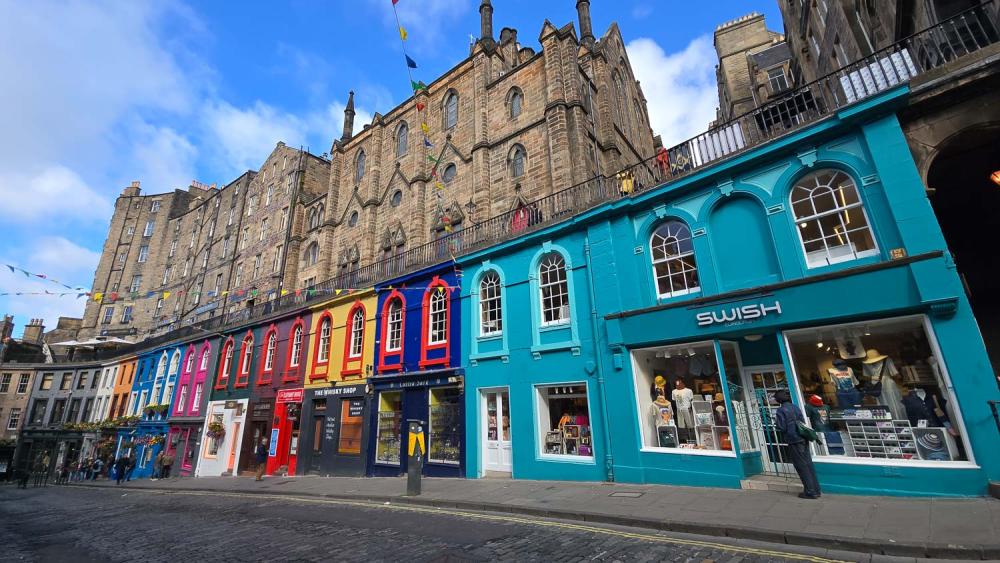
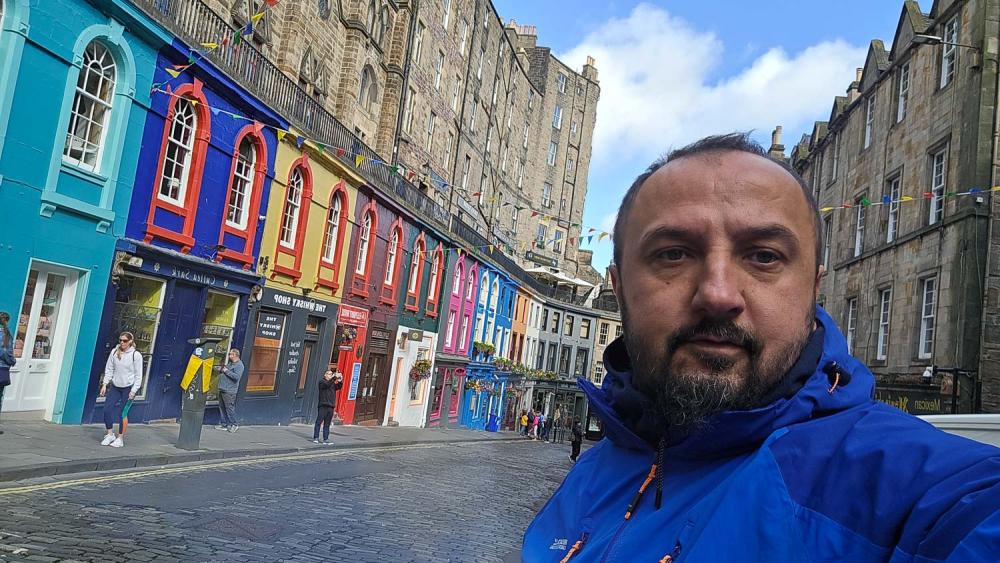
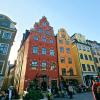
When you turn from the Royal Mile towards Victoria Street, one of those streets appears before you that instinctively makes you reach for your phone, even though you promised yourself that this time you would take fewer photos and look more. Victoria Street simply draws you in. Winding, steep, colourful and completely different from the grey walls of the Old Town. Built in the first half of the 19th century, today it looks as though someone took a paintbrush and decided to add a little colour to the serious Scottish city. Small shops line up one after another. The shopfronts are red, blue, green, yellow, pink and purple. The contrast is perfect. For years, people have repeated the story that this very street inspired Diagon Alley in the Harry Potter saga. Edinburgh is indeed closely associated with J. K. Rowling and the creation of her famous literary world, but I do not need that legend.
Victoria Street has enough magic even without the little wizard and his companions.
-1000x600-fixwidth.jpg)
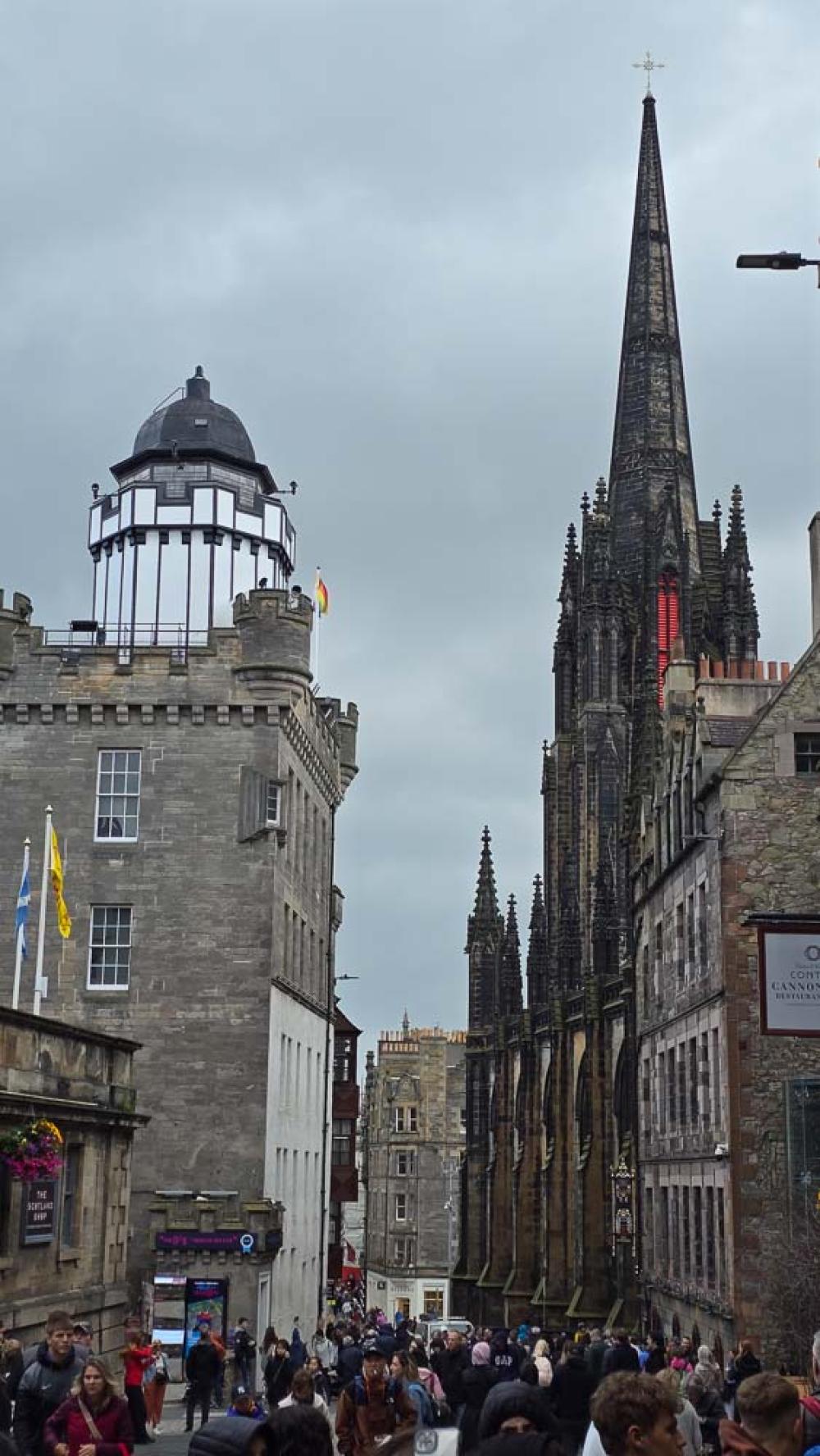
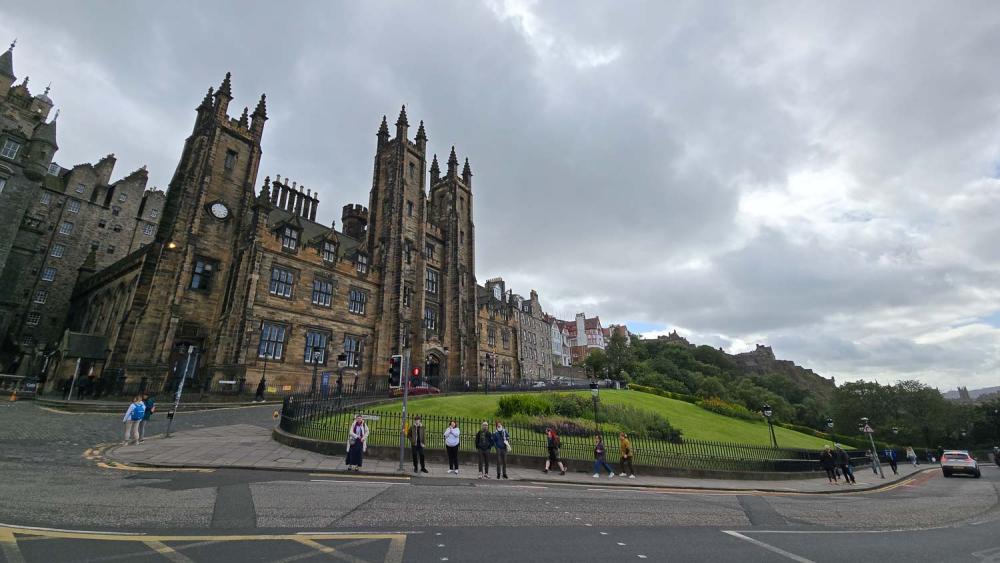
If Victoria Street is the most photogenic, then the Royal Mile is the street through which Edinburgh tells the story of its history. It connects two royal addresses – Edinburgh Castle at the top and the Palace of Holyroodhouse at the other end. Between them lies roughly one Scottish mile of history. What I love most here is peeking into the side streets. From the Royal Mile, narrow passages branch off in both directions – Edinburgh’s famous closes and wynds. At first glance they seem the same, but they once served different purposes: a close drew you in between tall stone houses, often ending in a dead end or courtyard, while a wynd was a passageway that led through the maze of the Old Town to another street. And when a narrow passage suddenly opened into a small courtyard surrounded by buildings, you found yourself in a court. It is precisely there, just a few steps away from the tourist bustle of the Royal Mile, that the Edinburgh I love most begins – dark, steep, slightly mysterious and incredibly photogenic.
.jpg)
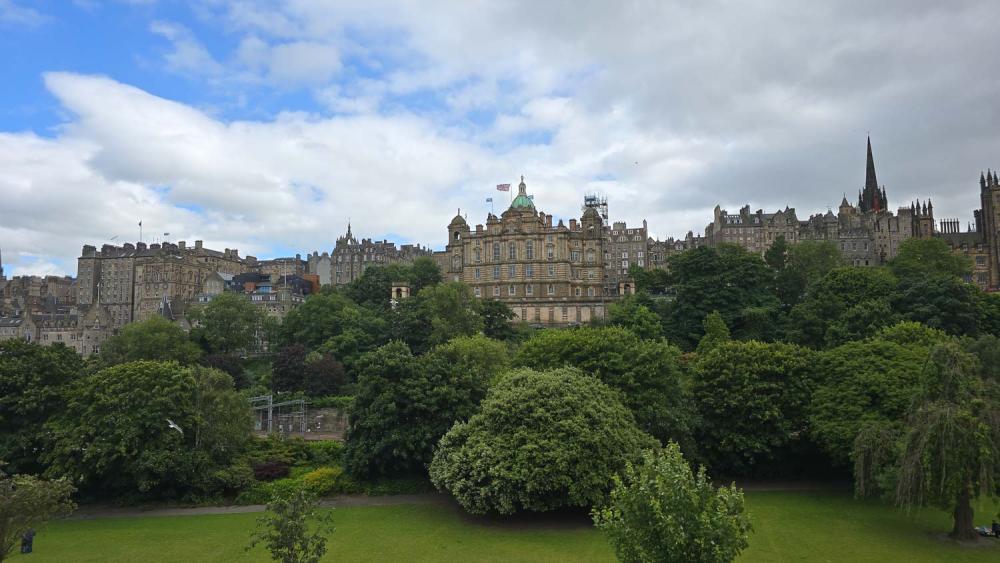
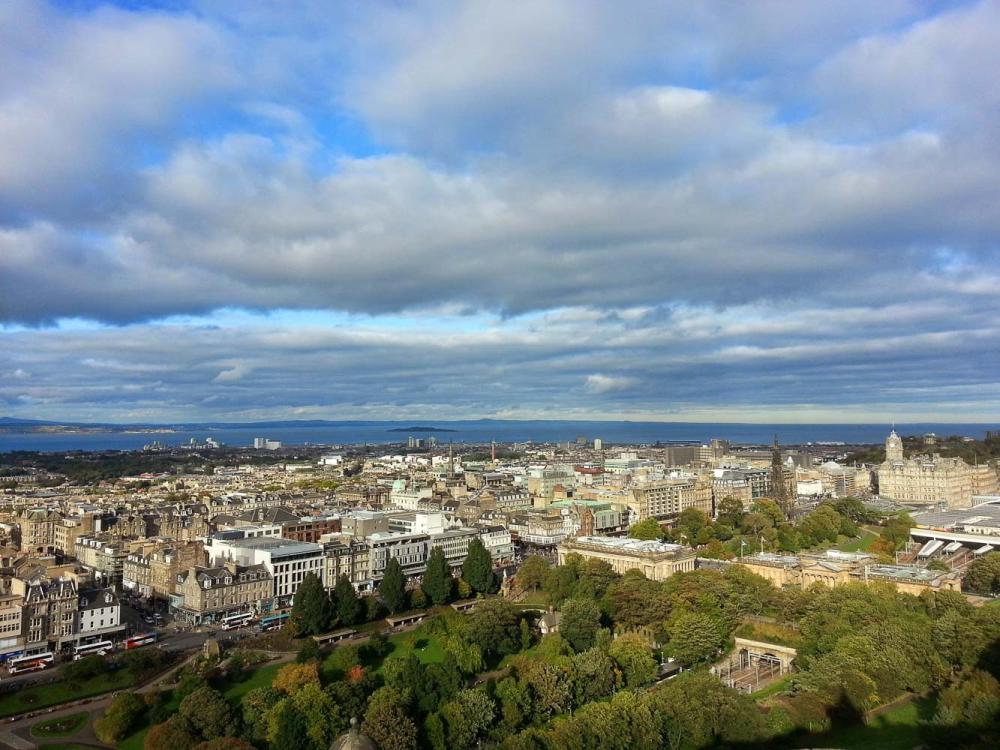
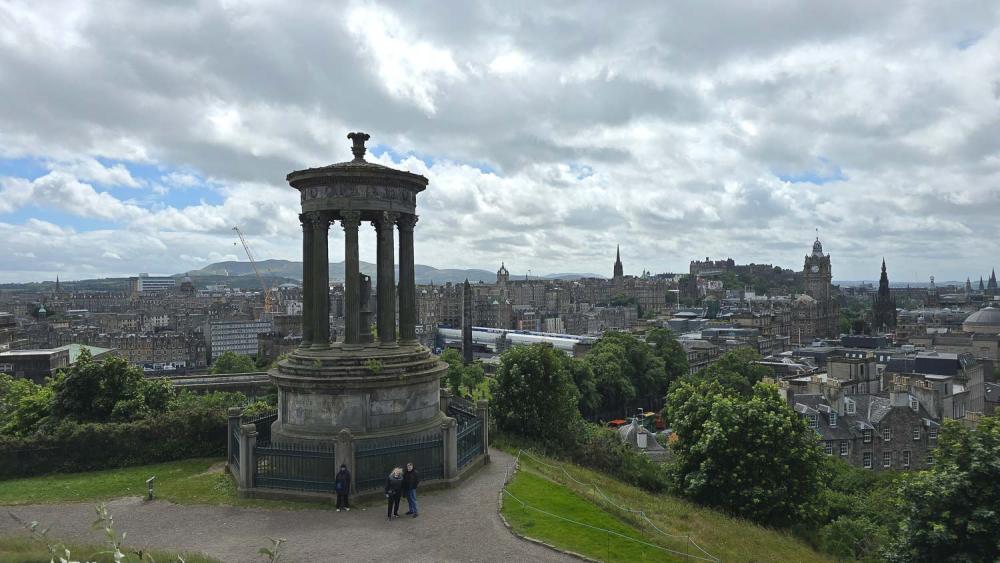
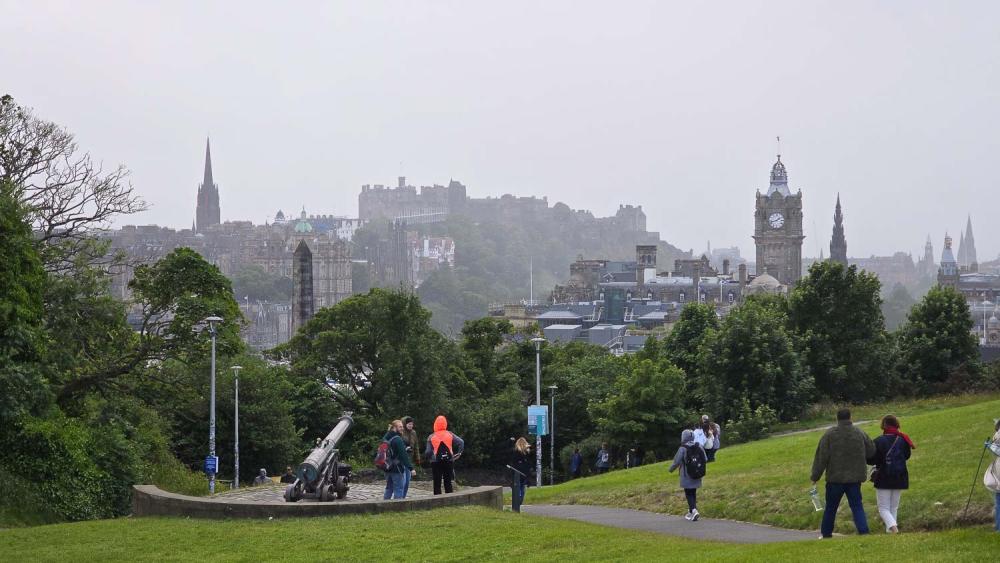
Edinburgh Castle seems to have grown straight out of Castle Rock. For centuries, kings, armies, sieges and wars came and went around it. The castle served as a royal residence, military fortress, garrison and prison. It is also home to the Honours of Scotland – the Scottish crown, sword and sceptre, the oldest Crown Jewels in Britain. But I admit that when I travel, the view from the place where history happened often fascinates me more than the historical dates themselves. There is one place I would tell anyone visiting Edinburgh for the first time to climb. Calton Hill offers the most beautiful view of the city. On one side, the Old Town and Edinburgh Castle on its rock. In front of you, Princes Street and the city rooftops, and on the other side, Arthur’s Seat. Further towards the horizon lie the Firth of Forth and the sea. Calton Hill is also home to several monuments that give the entire place an almost classical appearance: the National Monument of Scotland, the Nelson Monument, the Dugald Stewart Monument…
There is something unusual about Edinburgh. Most cities look much more beautiful when the sun shines on them. Grey suits Edinburgh perfectly. Dark stone, the fortress, Gothic towers, narrow passages and old pubs seem to call for clouds. And rain. Not the kind of Podgorica rain that decides to flood the city in half an hour. But Scottish rain – fine, annoying and persistent. The kind that eventually makes you give up on the umbrella and step into the first pub you find. And inside, a completely different story. Warmth. Wood. Dimmed lights. People talking. Someone laughing. Someone occasionally breaking into song. Outside, the wind drives people down the Royal Mile. And suddenly, you are in no hurry to go anywhere. Those moments often remain in my memory more vividly than the landmarks. You can read how old Edinburgh Castle is and who lived at Holyroodhouse. But you cannot learn the atmosphere of a city. You have to experience it.
The Scotch Whisky Experience is one of those places I wanted to visit because I have always seen food and drink as part of the journey. Through them, you get to know a country just as well as through its museums. Here, you quickly learn that whisky is not simply – whisky. It is the geography of Scotland poured into a glass. Every region has its own character. One smells of fruit and honey, another of spices, a third of smoke and peat. And you begin to understand the Scots. Here, you are guided through the story of production, regions and the different aromas of Scotch whisky, but I was particularly fascinated by the collection of bottles. Whisky of every imaginable age, distillery and label. That is when you realise that for the Scots, this is not merely a drink, but part of their national identity. And since I am a conscientious travel writer, it was only right not to leave all of this at the level of theory. Some things, after all, simply have to be tested through tasting.








.jpg)