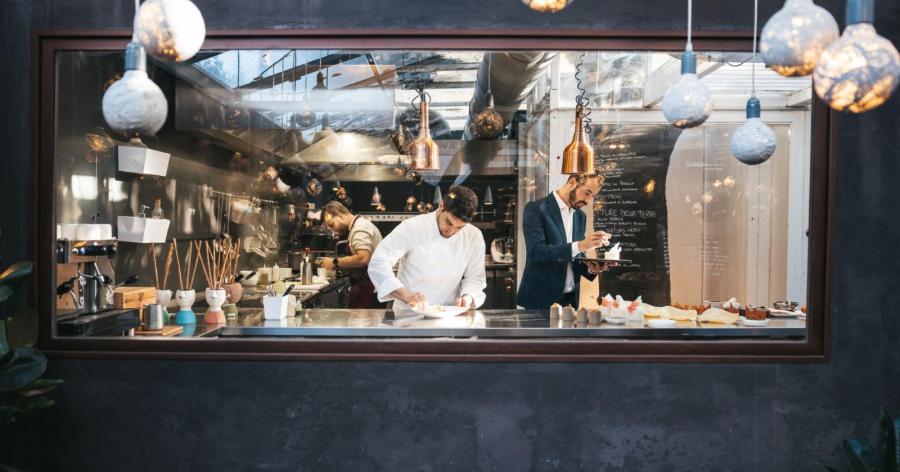


“The fishermen still cast their nets the same way their ancestors did, while the stone bridges continue to reflect in the river just as they have for centuries. As the river flows—calm, steady, and filled with memories—our restaurant stands as a small tribute to this place, where nature, tradition, and human stories have lived side by side for generations. Today, your footsteps, together with ours, become part of that same history,” say the team behind Casarogna Culinary Escape.
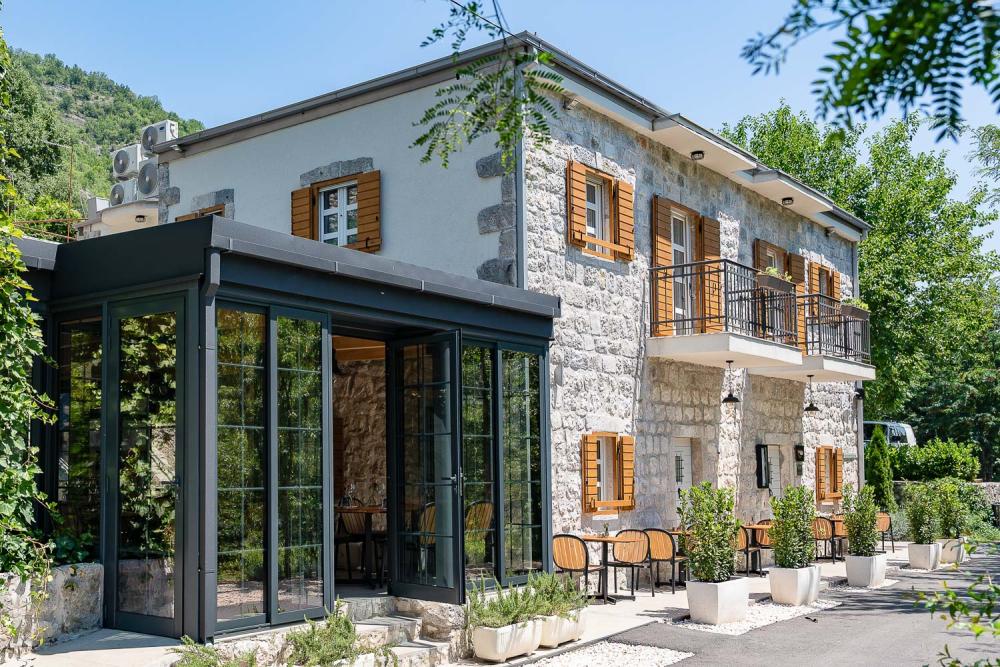
It is not unusual for me to travel to the far corners of Montenegro on the recommendation of friends and seasoned food lovers just to enjoy excellent food and a glass—or two—of fine wine. I first heard about Casarogna Culinary Escape while construction was still underway. The news that the restaurant had finally opened and that the food was spectacular came from Marsel Đuričković. His recommendations have always been trustworthy, so I wasted no time. Together with Saša and Igor, I headed straight to Rijeka Crnojevića to feast and sample a variety of culinary delights.
We were welcomed like family by two smiling hosts. Željko Vukićević, chef and owner, and Stefan Knežević, host and sommelier, entered this venture with tremendous enthusiasm. Even the restaurant's name reflects their business philosophy.
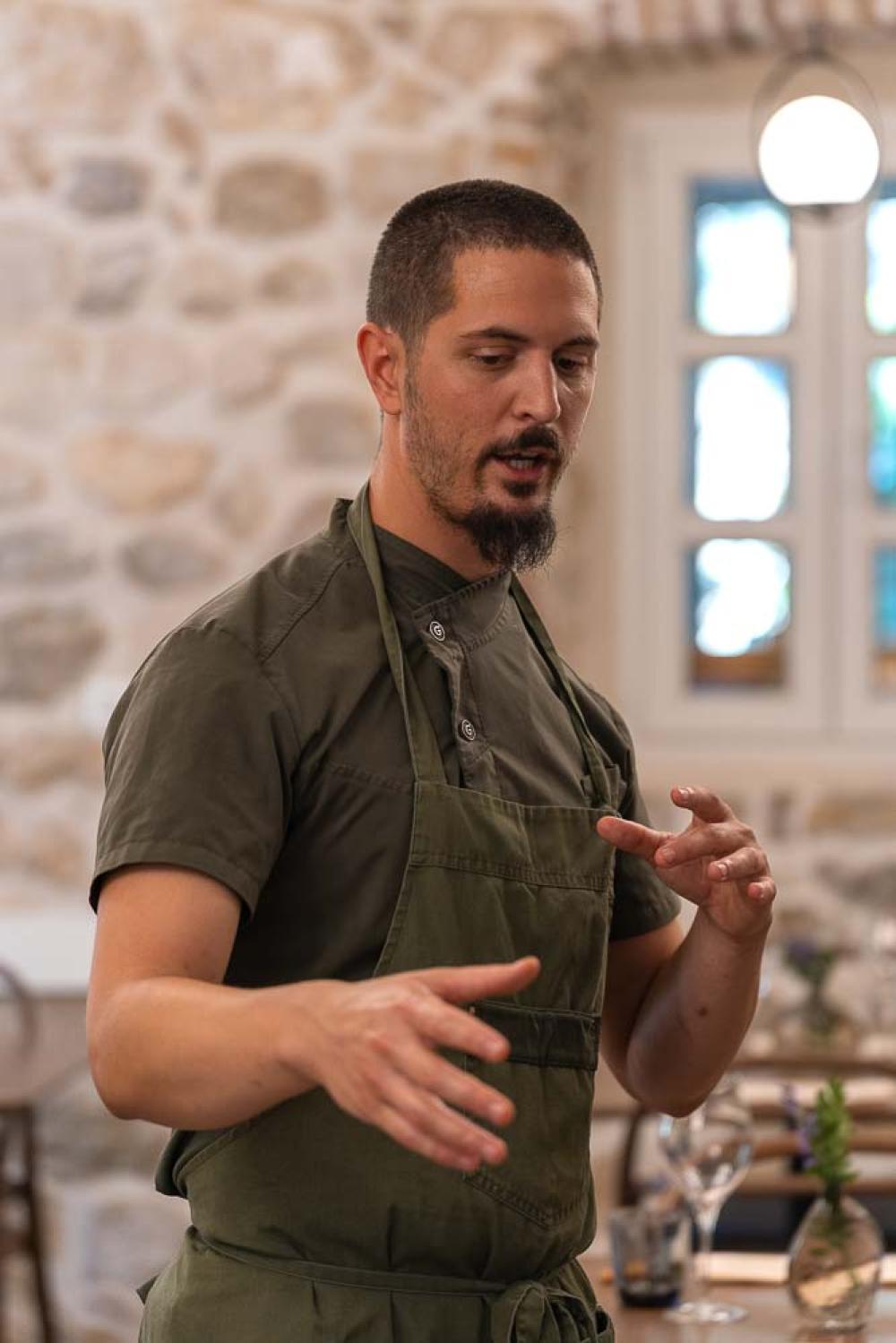
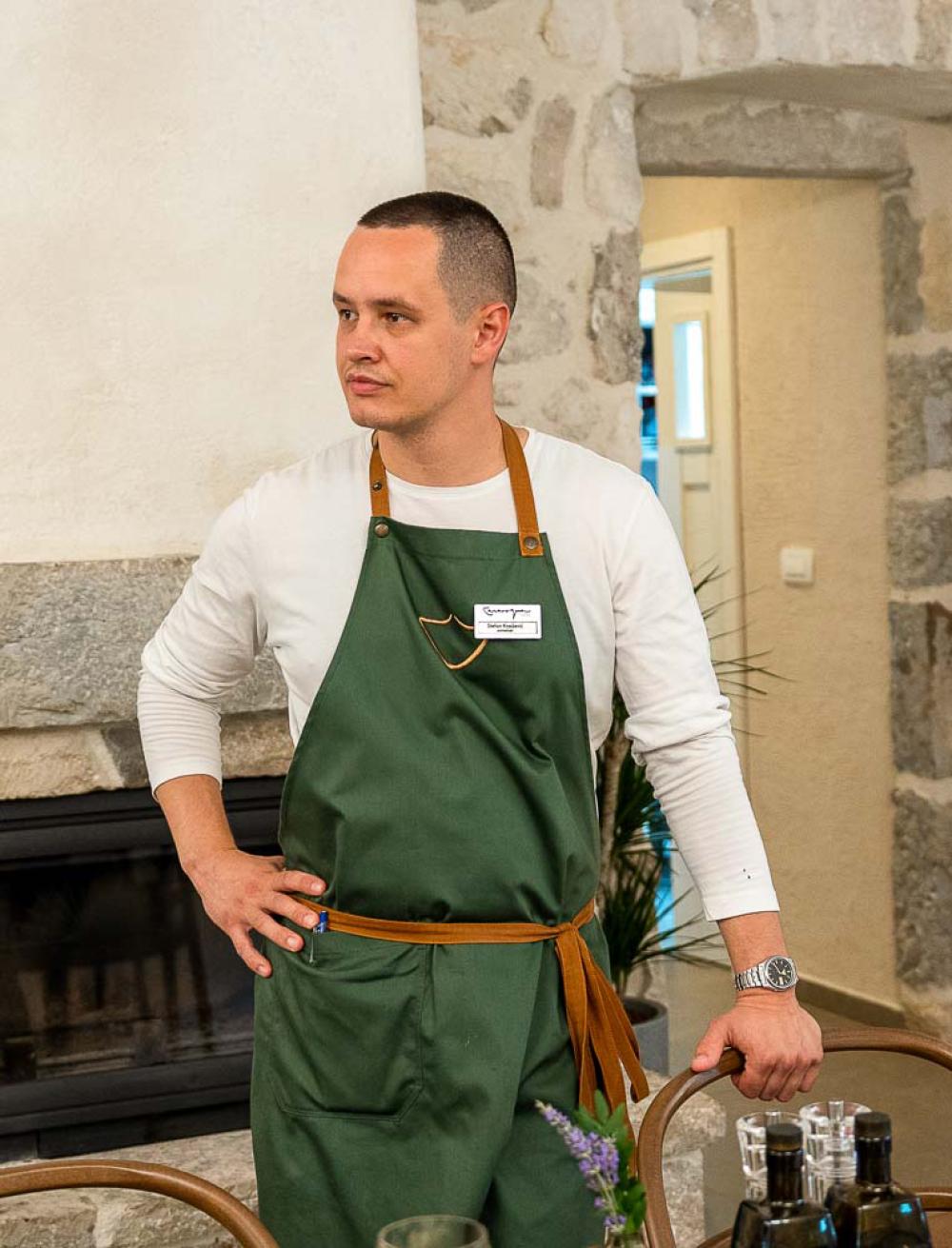
"Casarogna (originally Kasaronja, the Latin name Trapa natans) is the water chestnut that grows in Lake Skadar. For us, it represents the essence of uniqueness and sustainability that guides our philosophy. We create food from what is closest to us—from the lake, the rivers, the sea, and from the people who live here. That is why we work exclusively with micro-local and local producers, and why our menu always follows the seasons. Our bistrology is modern, thoughtful, and always driven by exceptional quality,"* Vukićević begins.
He started his culinary career at just eighteen years old. Later he graduated from culinary school and worked in top restaurants and hotels across Montenegro. His international journey led him to The Ritz-Carlton in the United States, followed by Qatar and Slovenia, before achieving his greatest professional success as Executive Chef in Croatia. There he earned recognition from Gault & Millau, Falstaff, was named among Croatia's Top 10 Young Chefs for two consecutive years, and received a Michelin Recommendation.
He eventually returned to Montenegro and transformed his family's renovated 1895 home into Casarogna Culinary Escape.
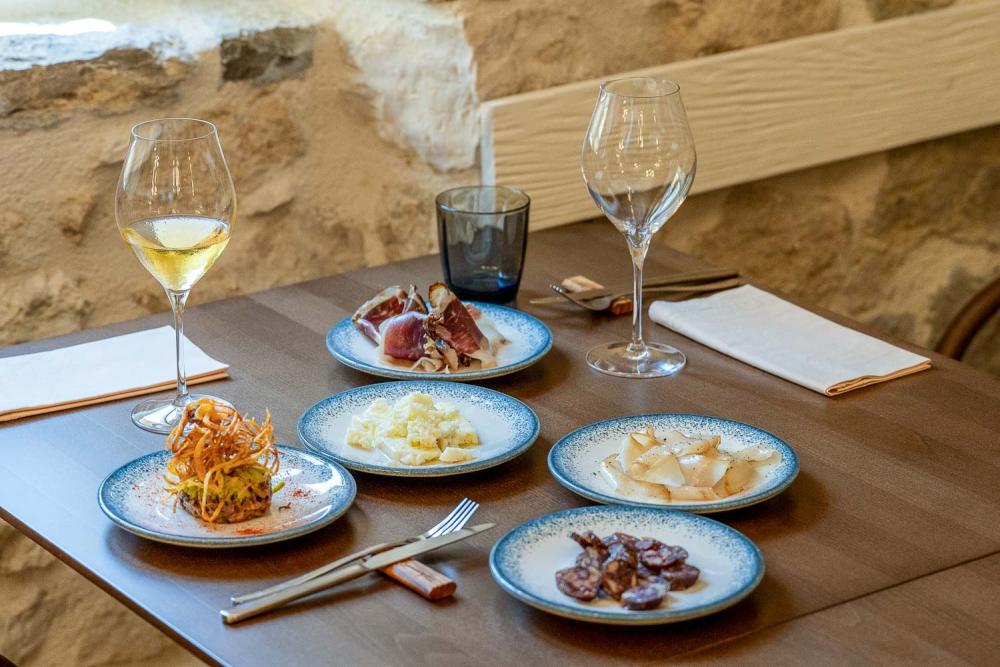
He had known Stefan Knežević for years, and the two had worked together before, which is why he invited him to help build this beautiful project.
"We reached an agreement very easily. From the very beginning we knew we wanted to support local and micro-local producers, especially local winemakers. Half of the labels on our wine list are Montenegrin wines. We wanted to represent as many producers, grape varieties, and styles as possible so everything would form a harmonious whole. Naturally, the list will continue to evolve as we introduce new labels. The market is always clear—what people enjoy and what passes the guests' test will remain on our wine list," says Knežević, who has over a decade of experience in hospitality and more than five years in the world of wine.
Knežević has been part of the teams at some of Montenegro's most prestigious hotels and restaurants, where he gained extensive knowledge of wines from around the world. His dedication and expertise earned him second place at the National Sommelier Championship. Today, all that knowledge is woven into the Casarogna Culinary Escape story.
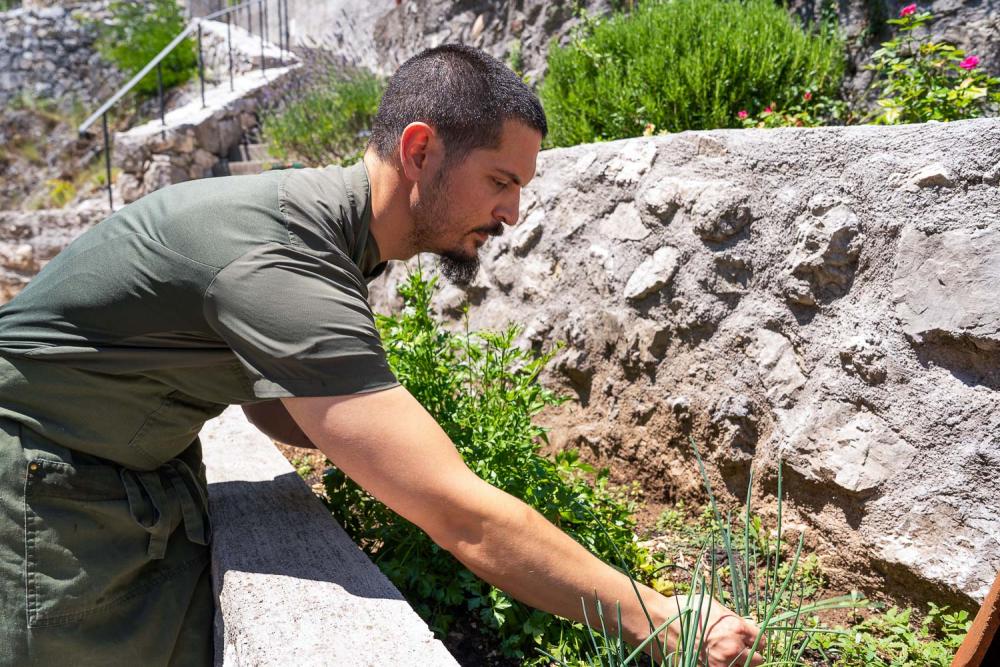
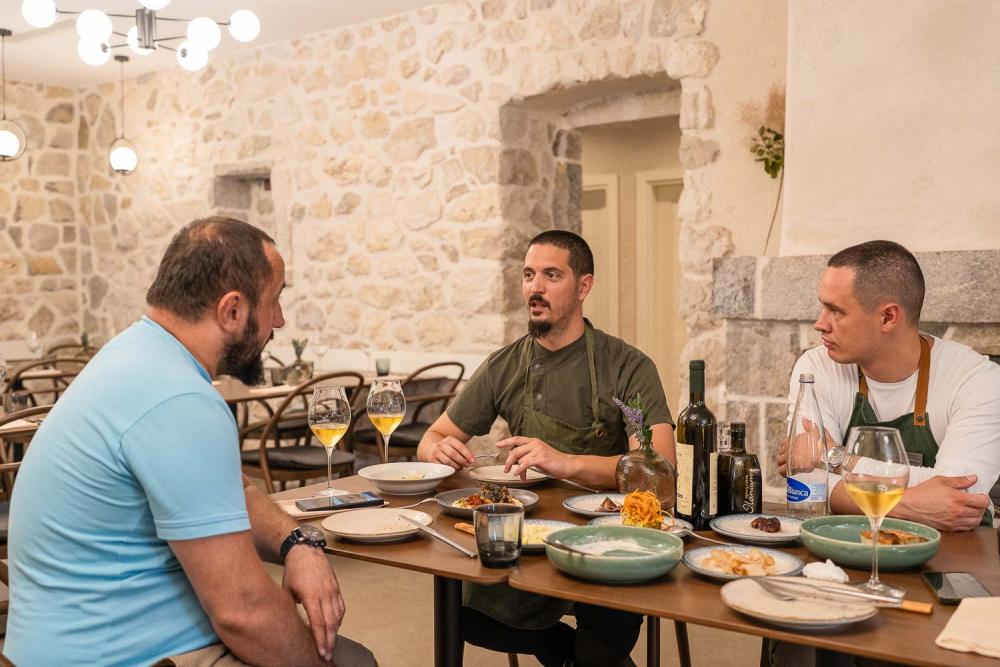
At Casarogna Culinary Escape, seasonal menus are carefully designed using the finest local ingredients with Mediterranean inspiration, perfectly paired with carefully selected local wines alongside distinguished international labels.
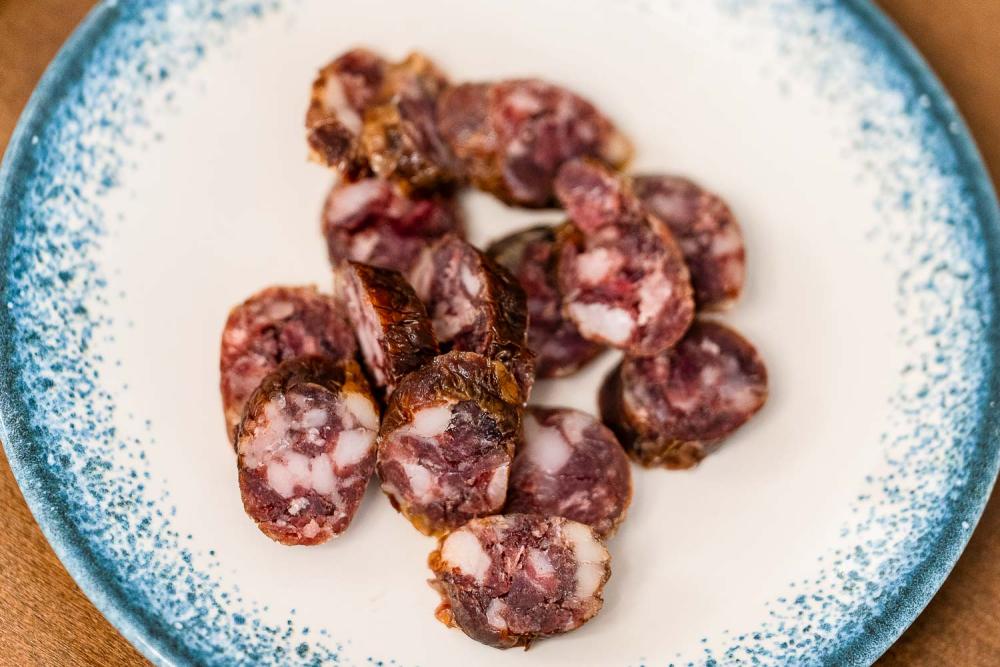
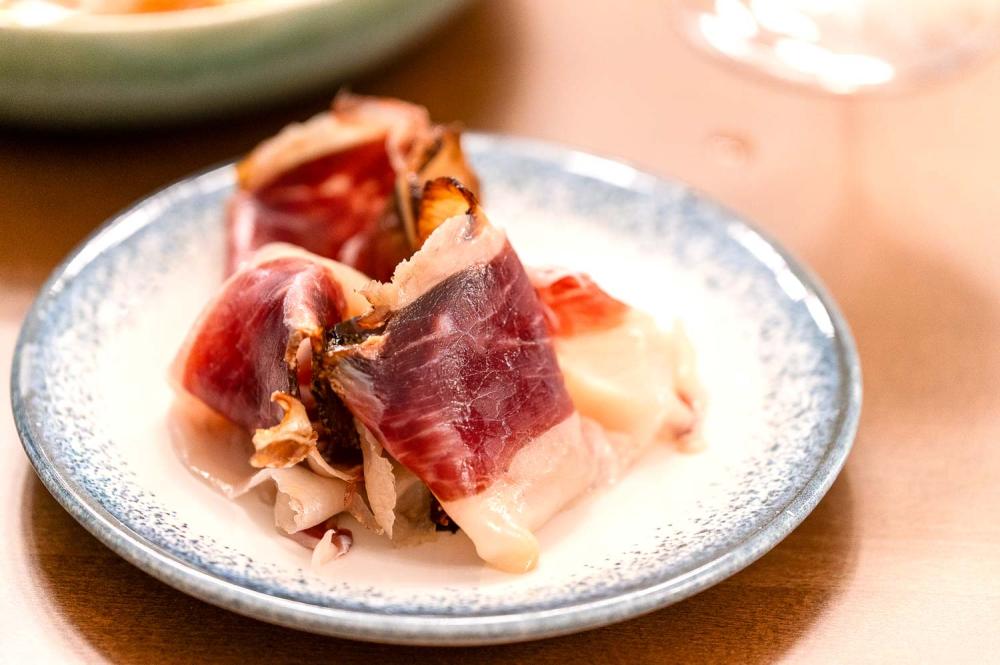
"These are the ingredients that have always been found on Montenegrin tables—foods people here have enjoyed for centuries. We have beef, pork, trout, and of course homemade bread. What I'm particularly proud of is our cold platter. The cheeses, bacon, prosciutto, and sausages each tell their own story. The suppliers I work with put tremendous effort into creating these exceptional products. The young goat cheese is outstanding. We serve a thin sausage made by Mr. Radovan Popović from Gornji Martinići, along with his prosciutto, which is the Louis Vuitton of prosciuttos. I can honestly say that, in Montenegro, it is among the very best. This is not industrial production—it is an authentic homemade product you can only find from dedicated artisans," Vukićević explains, adding that he sources trout from the village of Tušina near Boan.
That trout was exactly what we tasted.
As we savored every bite, Željko explained how it was prepared.
"The farmer raises salmon trout, and I personally go there to select every single fish. I bring them to the restaurant, clean and salt them, then serve them with yogurt, trout roe, wild fennel, a touch of lemon, and a hint of chili. When foreign guests begin their meal like this, they are amazed, because for them this is an exotic destination—a place at the edge of the world," Vukićević says while we fully appreciate every flavor and aroma.
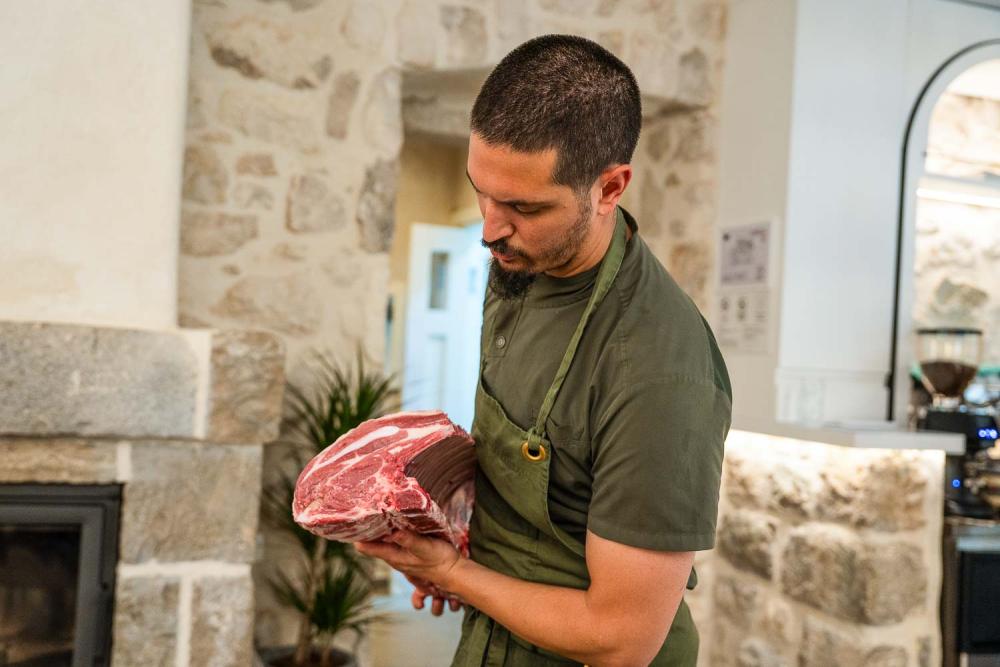
Željko and Stefan constantly emphasize the importance of ingredient quality. As they explain, they firmly believe every great dish begins with carefully selected ingredients. That is why they work with local producers they trust and whose products they know personally.
Stefan pours us another glass of elegant white wine with delicate aromas and flavors.
It is Žižak, an authentic Montenegrin grape variety from the Bay of Kotor, produced by the Nikaljević Winery in Gornji Brčeli, Crmnica.
"More than half of our approximately fifty wine labels come from Montenegrin wineries. We have Vranac, Kratošija, Lisica, and blends with international grape varieties. Of course, we also offer international wines to complete the selection. One thing our experience has confirmed is that foreign guests almost exclusively want to taste local wines. Žižak, in particular, has stood out as a truly authentic variety that has received outstanding reviews from our guests," says Knežević, adding that Montenegrin winemakers should focus even more on indigenous grape varieties.
As the season progresses, the number of international guests continues to grow.
Another confirmation that the Casarogna Culinary Escape concept has been exceptionally well received is reflected in guest reviews, which are almost always perfect five-star ratings.
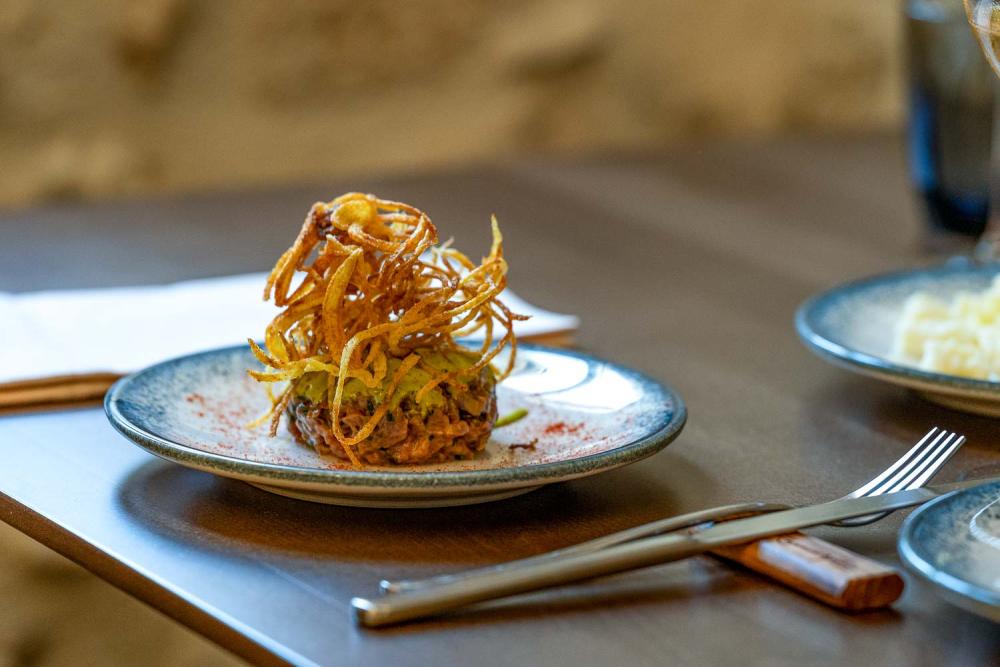
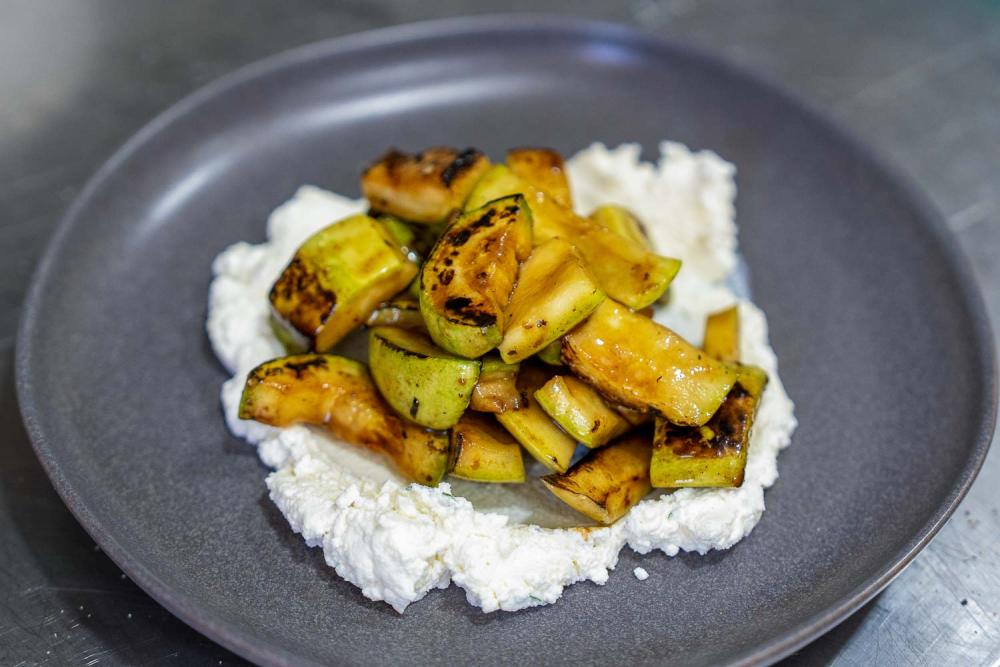
"Our menu is flexible, and so are we. If something isn't available, then it simply isn't available. We create separate summer and winter menus and continuously adapt them according to seasonal availability. Overall, we're extremely satisfied with the reactions from both local and international guests," Vukićević says with satisfaction, adding that they also offer four beautifully appointed guest rooms, which are mostly fully booked during the season, while interest remains strong throughout the rest of the year as well.
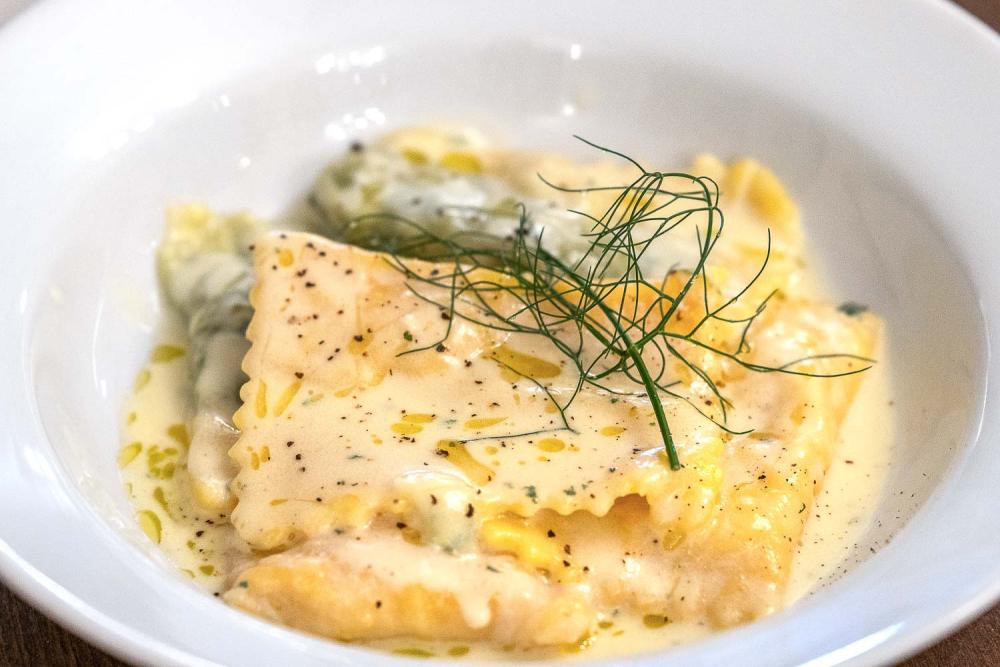
Željko then serves two types of agnolotti.
Fresh homemade pasta—one filled with trout from Tušina, the other with nettles—finished with wild garlic oil and a delicate lemon-butter sauce.
In one word—magnificent.
"Our grandmothers knew how to create incredible meals from almost nothing. They used everything nature had to offer—nettles, wild garlic, casarogna... Last year we harvested water chestnuts, cooked them, and froze them so we could use them little by little throughout the year. We first paired them with lamb, and now we use them with eel. There is no great philosophy behind it—whatever is available or can be foraged during the season becomes part of the menu," Vukićević explains.
As our conversation comes to an end, we ask about their plans for the future. "We simply want to continue doing what we're doing—to keep both ourselves and our guests happy, just as we have until now. That's the winning combination," our hosts reply in unison.
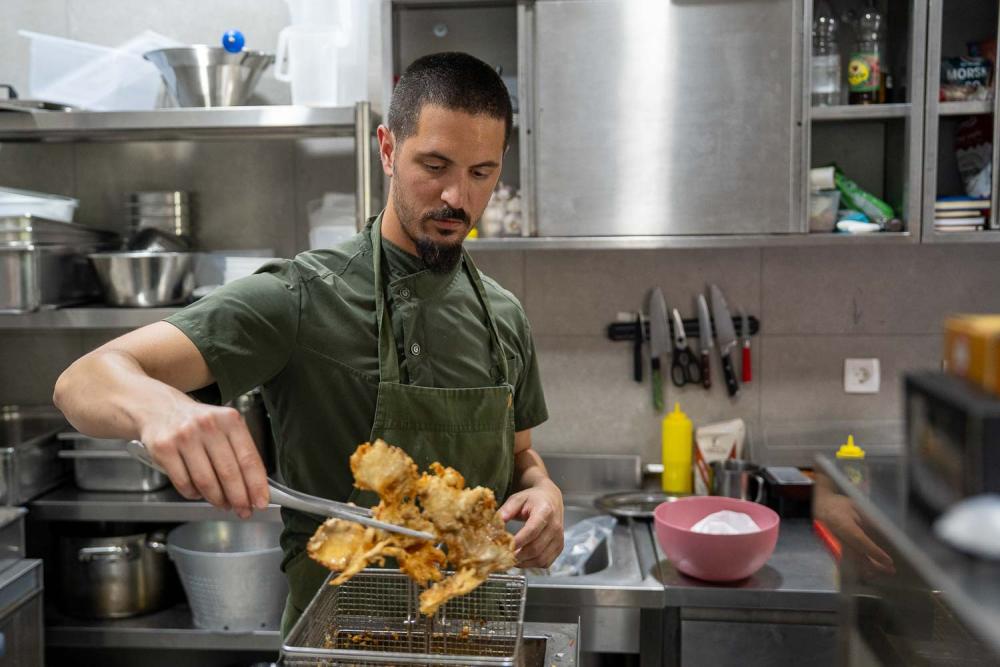
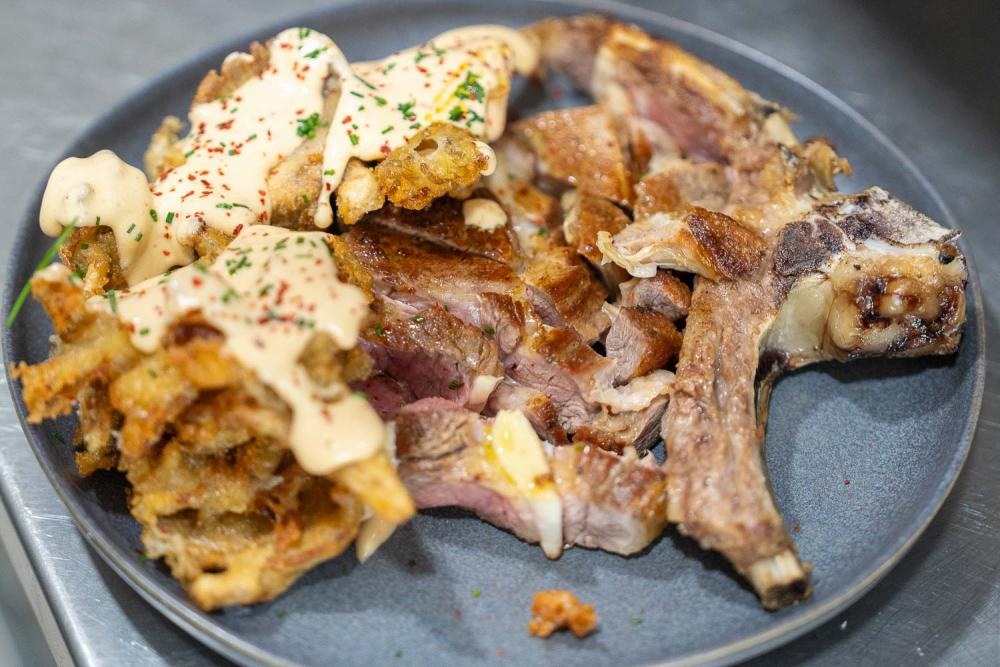
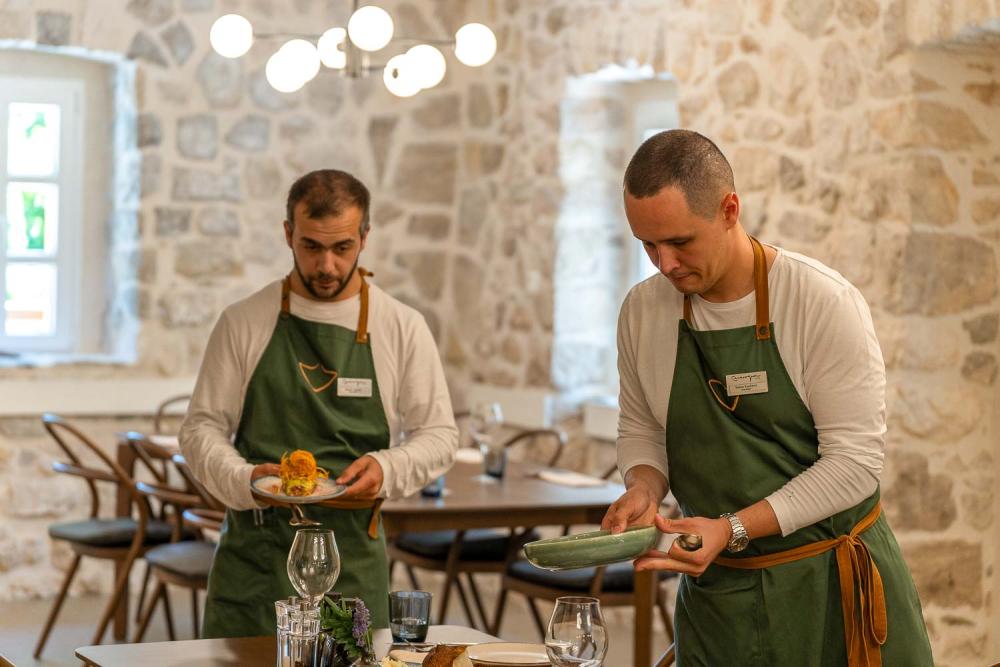
"Choosing the restaurant's name wasn't easy. I spent a long time searching for something local and authentic. Naming the restaurant Casarogna gives us endless inspiration to play with the ingredient itself and incorporate water chestnuts into different dishes.
In this eel specialty, for example, I use casarogna as well. The boneless eel is charcoal-grilled and served on almond cream with garlic, peppers, and capers. It is glazed with a sauce made from eel and sea bass bones. And, naturally, I finish the dish with a crispy casarogna crumble," says Vukićević.