

The published text was supported by funds from the Fund for the Promotion of Media Pluralism and Diversity, allocated by the Ministry of Culture and Media
A project that transforms plastic waste into a durable, sustainable material—proving how creativity, technology, and environmental awareness can shape a new generation of small businesses
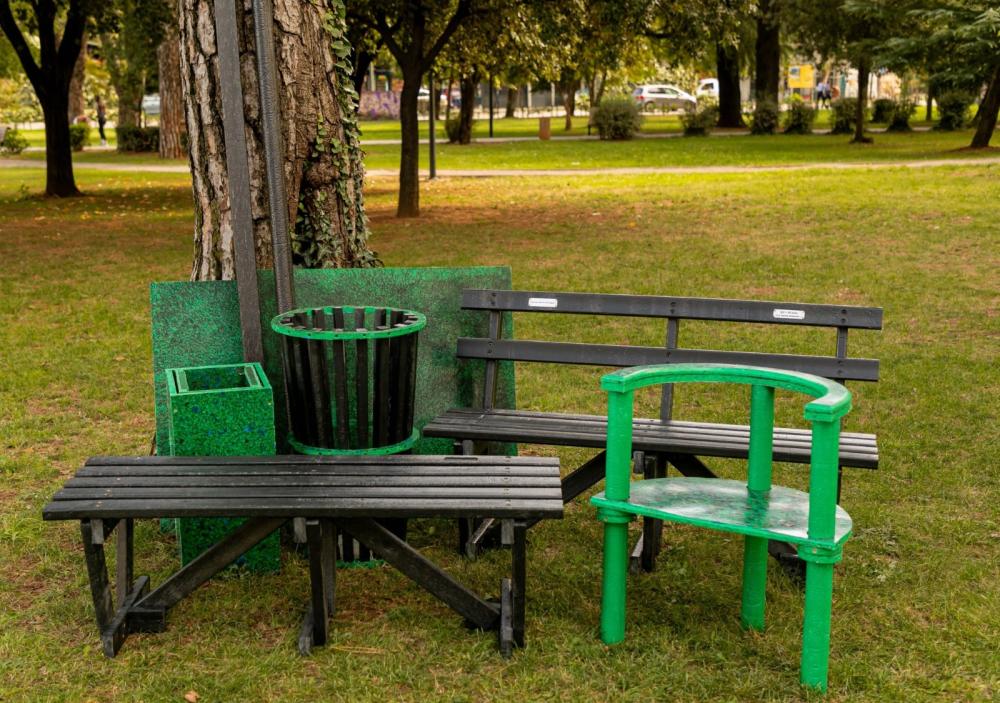
At a time when waste has become one of the defining environmental challenges of our era, a growing number of initiatives are proving that what we consider a problem can, in fact, become a valuable resource. Built on precisely that idea is the Eco Board project, led by Danilo Grbović and the team behind the company 3D Soba. By merging technology, innovation, and ecology, they have created tangible products that give plastic waste an entirely new life.
3D Soba specializes in 3D technologies, innovation, and education.
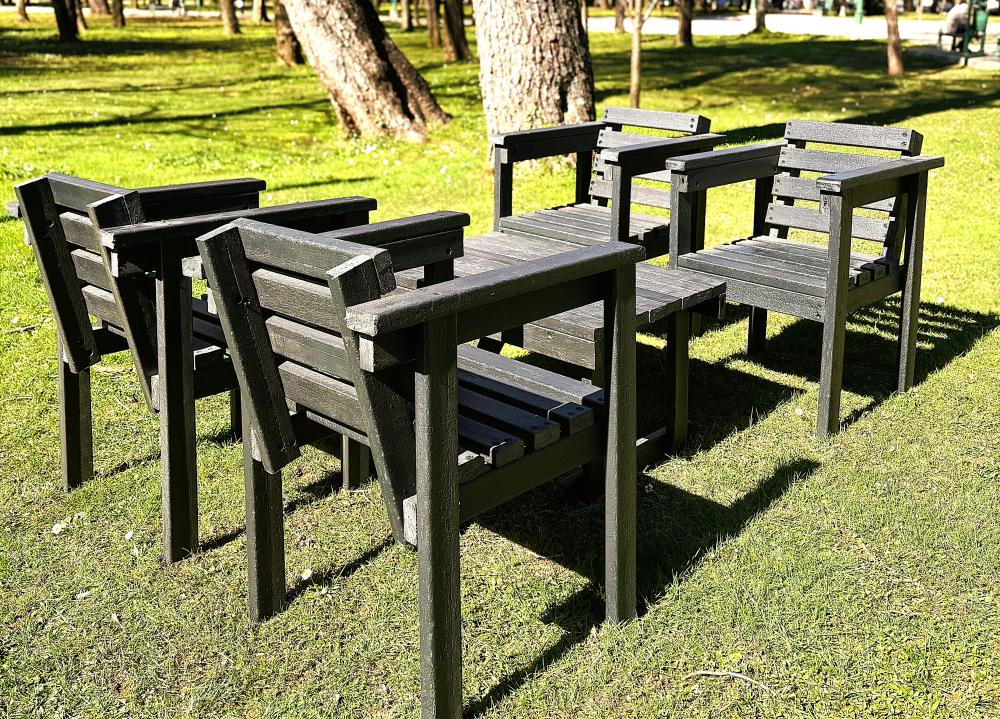
“Through our work with emerging technologies and sustainability projects, we began thinking about how to connect tech with ecology. That’s how the idea for Eco Board was born—a material that gives plastic waste a second life by transforming it into functional products like benches, tables, and urban furniture,” explains Grbović.
The starting point was simple: plastic is everywhere. While it often ends up in landfills or nature, it is an exceptionally durable material—one that can have a much longer and more useful lifespan.
“Plastic is a major environmental issue, but at the same time it’s incredibly resilient. Instead of letting it end up in landfills or nature, we decided to turn it into something useful and long-lasting. In doing so, we aim to show that a circular economy can work in practice—not just as an idea,” he says.
In the early stages, the biggest challenge wasn’t the technology—it was perception. People were skeptical of recycled materials, but that changed quickly once they saw the final products.

“Many initially viewed plastic as cheap or short-lived. But when they see the durability of our products, their perspective shifts. They realize this material can be a high-quality alternative to traditional ones,” he adds.
Launching an eco-focused business in a small country like Montenegro comes with its own set of challenges—but also opportunities.
“Every innovative project in a small market faces obstacles, but Montenegro has strong potential for ideas like this. We need more education and support, but interest in sustainable solutions is constantly growing,” says Grbović.
The journey of a plastic bottle to a finished product involves a multi-stage technological process.
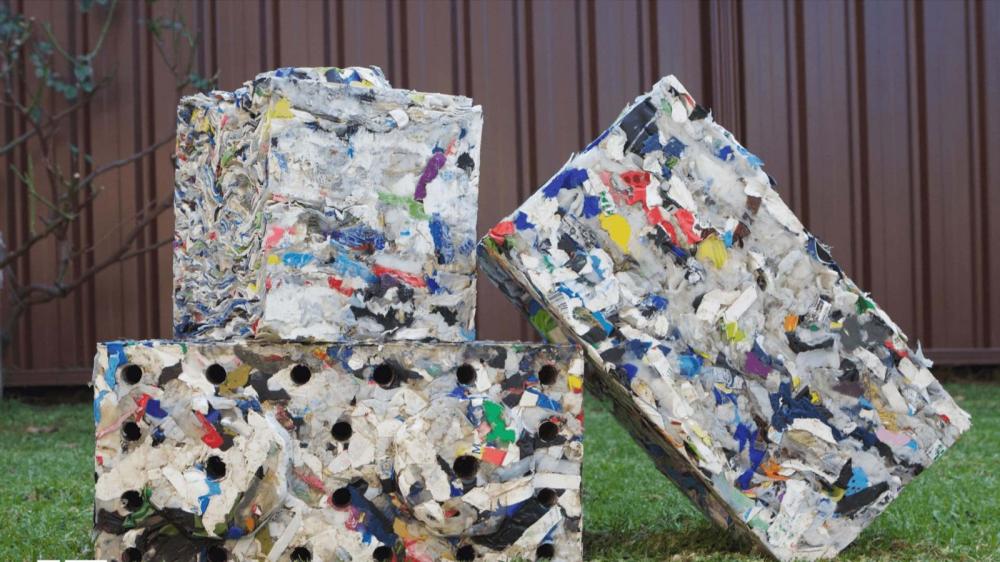
“It begins with collecting plastic, which is then sorted and shredded into smaller pieces. After that, it goes through extrusion, where high temperatures transform it into a new material—Eco Board. From there, we produce items like benches, tables, and other elements of urban furniture,” he explains.
While part of the process relies on standard recycling technologies, much of the system has been developed and refined through their own experimentation.
“We had to adapt and develop a large part of the process ourselves to achieve the desired material properties. That combination of technology and local innovation adds significant value to the project,” Grbović notes.
The environmental impact becomes particularly clear when looking at the amount of plastic used per product.
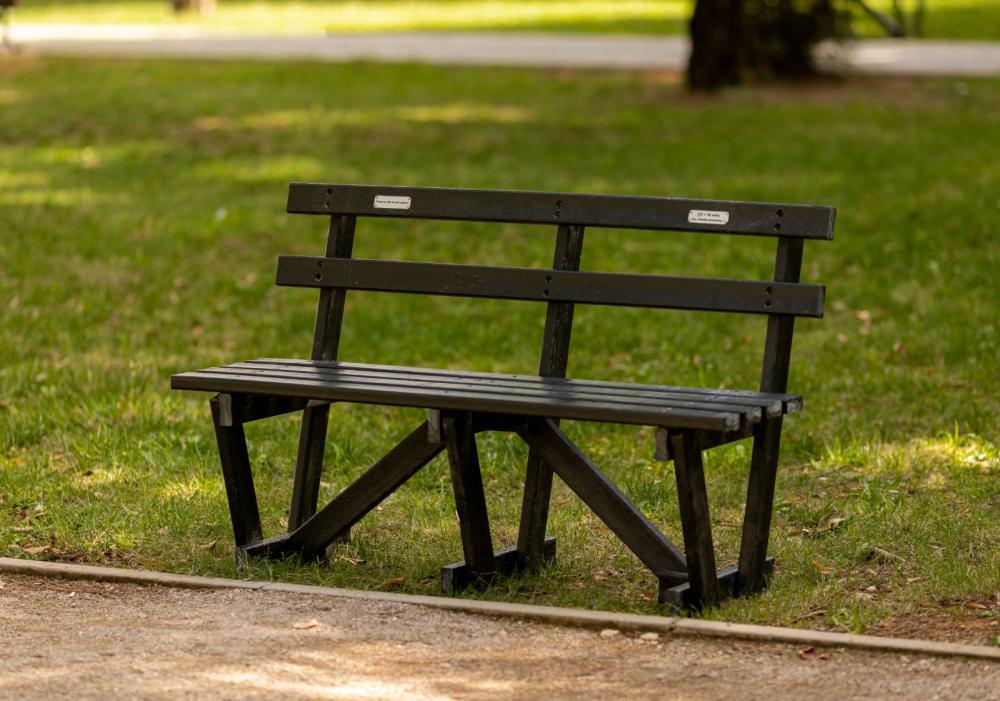
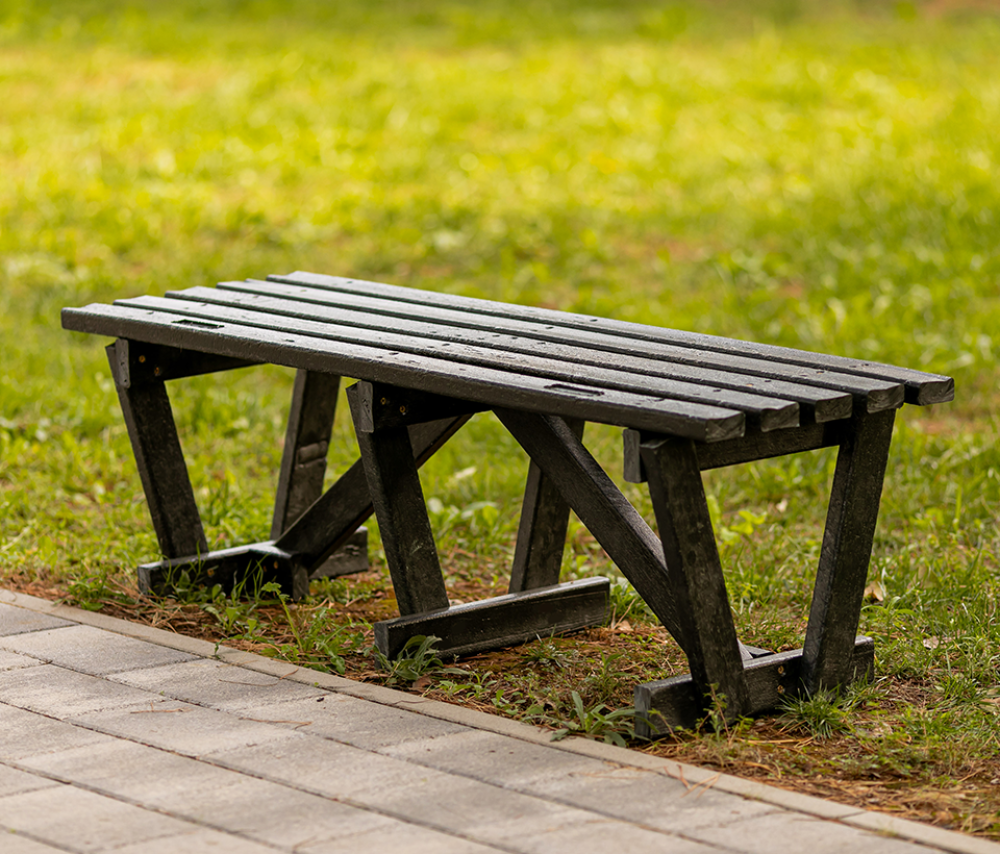
“On average, one bench requires about 50 kilograms of recycled plastic. That means every single product directly removes a substantial amount of waste from the environment,” he says.
Developing the material required extensive testing to ensure strength and durability.
“We needed to find the right material ratios and production parameters to make the product both strong and long-lasting. That testing process helped us create a reliable, high-quality material,” he adds.
As production grows, so does the volume of waste that can be repurposed.
“Each bench removes around 50 kilograms of plastic from the environment. Multiply that by a larger number of products, and the ecological impact becomes significant,” Grbović explains.
At the same time, public awareness of plastic pollution is gradually increasing.
“I think awareness is especially growing among younger generations. More people understand how plastic affects nature and the environment,” he says. This shift in mindset is key to integrating such solutions into future urban planning.
“Cities are increasingly thinking about sustainability. Recycled plastic materials could become standard in designing public spaces,” he adds.
The main clients are institutions, municipalities, and companies investing in sustainable solutions, though private interest is also rising.
“More organizations want to demonstrate social responsibility through projects like this,” he notes.
Interest is already extending beyond Montenegro’s borders.
“The circular economy is becoming a major topic across Europe, so demand for these solutions is growing. We’re already seeing interest from the region,” says Grbović.
Being an innovator in a small market has its challenges—but also advantages.
“The market is small and resources are limited, but ideas can be tested and developed more quickly, which creates a strong foundation for expansion into larger markets,” he explains.
For Grbović, the project is driven by a combination of innovation, environmental responsibility, and a desire to create something meaningful at home.
“A major motivation is to build something useful and innovative in our own country—and to show that even small countries can develop sustainable projects,” he says.
Eco benches have become the project’s most recognizable symbol.
“We’re especially proud of the benches, because they clearly illustrate the concept of a circular economy—how plastic waste can be turned into something lasting and beneficial for the community,” he explains.
At its core, Eco Board is designed as a sustainable alternative to wood.
“One of its biggest advantages is that it doesn’t require cutting down trees, making it a more environmentally friendly option. Products made from it can last over 30 years and require minimal maintenance—no sanding, varnishing, or painting,” says Grbović.
The material is particularly suitable for outdoor use.
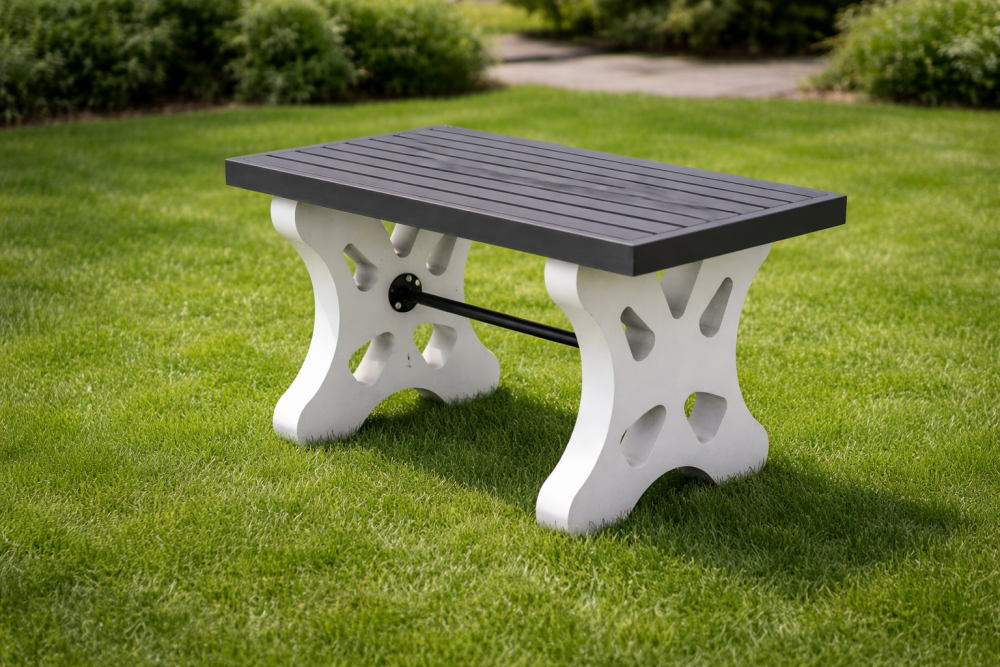
“Unlike wood, it doesn’t absorb water, rot, or crack due to moisture or temperature changes. It’s resistant to sun, rain, and snow, and can remain outdoors for years without structural changes,” he explains.
The estimated lifespan is around three decades, with minimal upkeep.
“With basic care, products can last even longer, making them a highly cost-effective long-term solution,” he adds.
An important feature is that the material itself can be recycled again at the end of its lifecycle.
“After use, the product can be processed again and turned into a new Eco Board. That’s how we close the loop of the circular economy,” Grbović explains.
Collaboration with local communities and waste collection organizations plays a key role.
“This cooperation helps increase the amount of plastic that can be reused and supports the development of a more efficient recycling system,” he says.
Products made from Eco Board are already installed in several Montenegrin cities.
“In Podgorica, you can find them in the Children’s Park and Moscow Park, as well as in several educational institutions. They’ve also been installed or planned in cities like Herceg Novi, Bar, Budva, Kolašin, Žabljak, Ulcinj, and Nikšić,” he notes.
Education—especially among young people—is crucial for broader success.
“When people understand how much waste they can reduce, they’re more willing to embrace change. That’s why we involve schools and local communities through workshops and projects,” Grbović explains.
Asked where he would most like to see an eco bench placed somewhere in the world, his answer is symbolic.
“Probably somewhere in nature or a national park—that would best reflect the message of the project: the connection between ecology and innovation,” he says.
Looking ahead, the team sees even broader possibilities.
“It would be exciting to develop entire sets of urban furniture from recycled plastic—or even small structures and pavilions,” he adds.
Future plans include expanding production and developing new products.
“We see this project as an important part of the circular economy in the region, and we aim to expand cooperation with institutions and cities,” he says. Collaboration with architects and urban planners could open entirely new possibilities.
“Such partnerships can lead to innovative solutions in city planning,” Grbović emphasizes.
In conclusion, he believes Montenegro has the potential to become a regional example of circular economy success.
“Montenegro is a small country, and changes can be implemented relatively quickly. With strong cooperation between institutions, companies, and citizens, significant progress is possible,” he concludes.
Projects like this prove that innovation doesn’t have to come from major tech hubs. Sometimes, it emerges exactly where it’s needed most—in communities searching for practical, sustainable solutions to everyday challenges.