

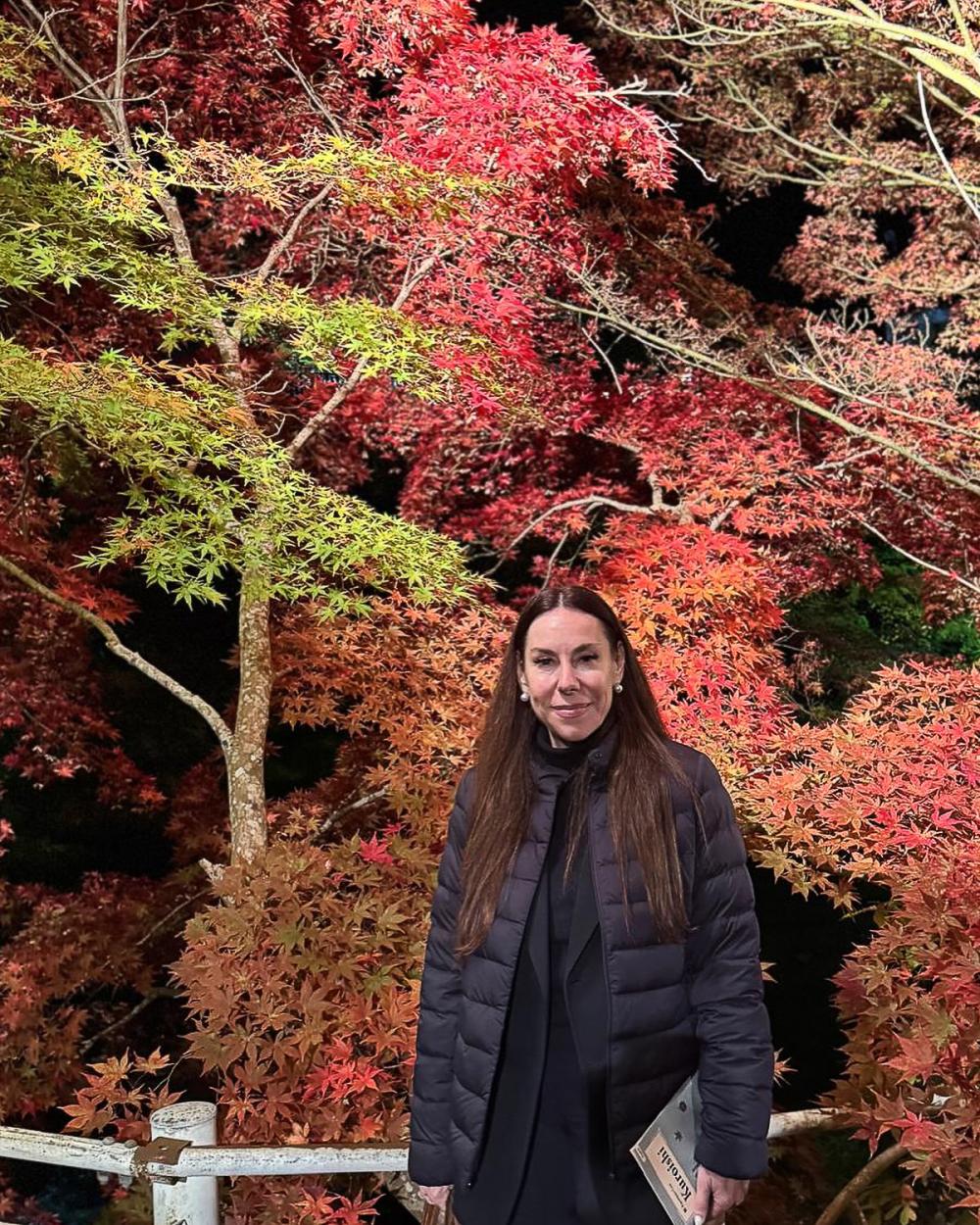
If Montenegro wants to have year-round tourism, it has to offer a reason for tourists to visit it even outside the summer season – and the reasons are authentic experiences, gastronomy and strong local identity. Gastronomy is the sincerest way to tell the story of a country – Montenegro, too, has a story that Europe has not yet heard well – said Yolanda Perdomo Aparicio to our magazine.
Her views represent a valuable framework for deliberating future development of Montenegrin tourism – not only through the prism of growth and increase of arrivals, but also through sustainability, more balanced regional development and long-term strengthening of reputation of the destination.
MANAGEMENT OF TOURIST FLOWS
The experience of Spain, one of the most developed tourist countries of the world, shows that mass tourism is not inevitability but a consequence of poor management of tourist flows. As Perdomo Aparicio explains, mass tourism does not happen when the flows are managed efficiently and strategically.
- In Spain, at very short distances from overcrowded locations, one can find the places in which local population has difficulties in attracting visitors, where the economy does not thrive and where they would gladly accept part of the tourists whom other destinations are unable to respond adequately. Positive impact of tourism is not distributed evenly – and this is exactly what should be encouraged through strategic planning. This requires well-designed tourist product and its high-quality realization so as to ensure attractive and well-organized offer at the level of the entire destination and not only in certain regions. Technology plays a critical role in that process, since it provides data and recommendations in real time, ensures better tourist guidance and brings relief to the busiest sites - says Yolanda.
However, technology alone is not sufficient. There is a need for leadership, joint effort of all the stakeholders and the ability to take a “bird’s-eye look” at the destination, in order to be able to understand the harmony between all the sites within a country. Such approach, she warns, cannot be short-term one. Another important lesson learnt from the Spanish experience is that the goal should not be in figures but in attracting the right guest. In that segment, she thinks, there is still great room for improvement and Montenegro can benefit from that experience and achieve thorough success.
- One of the key challenges which Mediterranean countries face, including Montenegro, is prominent seasonality. Spain has found efficient mechanisms for the extension of tourist season through diversification of its offer, where culinary-tourism and sport have become central elements of the strategy - says Yolanda.
Gastronomy is, she says, a powerful and growing driver of tourism and it is not dependent on fine weather. On the contrary, seasons constitute an added value, since the visitors search for rich culinary stage and seasonal produce. Autum, winter or spring can be equally attractive as summer in case authentic experience is offered rooted in the local tradition and ingredients.
- Food and wine provide additional positive effect since they offer opportunities to a large number of stakeholders along the entre value chain – farmers, fishermen, local produce markets, wineries and numerous other producers. In this way, it is easier to achieve the goal of creating attractive and immersive offer at the level of entire destination all year round, with the benefits which are distributed wider in the society. Gastronomy also differs from one place to another and serves as a powerful means of differentiation, offering authenticity and local, human touch which ever so often sought by contemporary travellers - says Yolanda.
When it comes to successful development models, she mentions the example of Canary Islands which clearly shows how decisive air connectivity is. These islands, with just over two million inhabitants, are visited by about 18 million tourists a year, and tourism is their principal economic sector. Without proper air connectivity, such success would not be possible. There are direct flights towards more than 140 destinations in Europe, with numerous daily flights and ferry lines which connect eight islands. Fostering air connectivity is, therefore, central element of promotional activities.
GOOD FOOD AND EXPERIENCE
Equally important is the announcement that Air Iberia is going to start with the direct Madrid–Tivat line twice a week. As many as 35 percent of Spanish passengers choose international holiday destinations, ever so often looking for the premium, less crowded Mediterranean locations which offer balance among culture, nature, gastronomy and carefully designed experiences. “Spaniards are true lovers of good food and seek experiences which exceed the sun-and-beach concept” - says Yolanda.
Nevertheless, Montenegro is still rather unknown on the Spanish market. This is exactly where it sees a clear, short-term opportunity to be used in order for the new air-route to be successful and to remain in operation even after the summer season. It can be a quick win in the fight against seasonality, especially having in mind that, according to the IMF data, Spanish economy is going to twice as fast as the Eurozone and be at the forefront of developed economies. In the next ten years, about five million Spaniards are expected to be retired, and a large number of them will have sufficient funds and desire to embark on shorter trips all over Europe. In addition, Madrid leads the country’s economic growth and stands for one of the leading European entry points for high-spending travellers from Latin America. In that sense, marketing activation in Spain in this moment will be timely and extremely useful.
- When it comes to the positioning of Montenegro as a destination with greater added value, such model is not only realistic, but also necessary. Superior standards of accommodation and offer in Boka Kotorska Bay, which she has had the opportunity to see through Montenegro Luxury Association, indicate that such direction already exists. The conviction that this model can be expanded to other parts of the country through immersive, authentic and exclusive activities has been additionally supported with the analyses of the premium segment at the recent conference of the Committee for Tourism and Hospitality Industry of the Chamber of Economy of Montenegro – says Yolanda.
As an example of the possibility of transformation, she mentions the example of Madrid, which several years back had not been perceived as a premium holiday destination, but mainly as a transit point towards other Spanish cities. Thanks to the investments of international luxury hotel chains, targeted tourist strategy and efficient model of public-private cooperation, the perception has changed dramatically. Today, Madrid has a leading role in the number of arrivals and tourist spending in Spain, which clearly shows that such a goal is achievable.
Her key strategic recommendation to Montenegro is to position itself as a culinary destination and to present its energy, culture, history, art, music and heritage through its culinary richness, local drinks, ingredients and wineries. Such approach would create opportunities for entire population and all destinations in the country, helping the overcoming of seasonality, strengthening the brand and reputation of Montenegro and expanding the export beyond tourism itself.
At the same time, this approach would enable easier awareness raising access to new emissive markets and profiles of high value guests, through targeted communication and carefully designed content which really resonates with potential visitors and which is capable of achieving positive impact on the destination.
Tourism is, concludes Perdomo Aparicio, a powerful tool for positive transformation – but only if it is planned well, if there is a consensus among the stakeholders and if it functions as an efficient model of public-private cooperation. When this is achieved, results come lot faster than people think.