

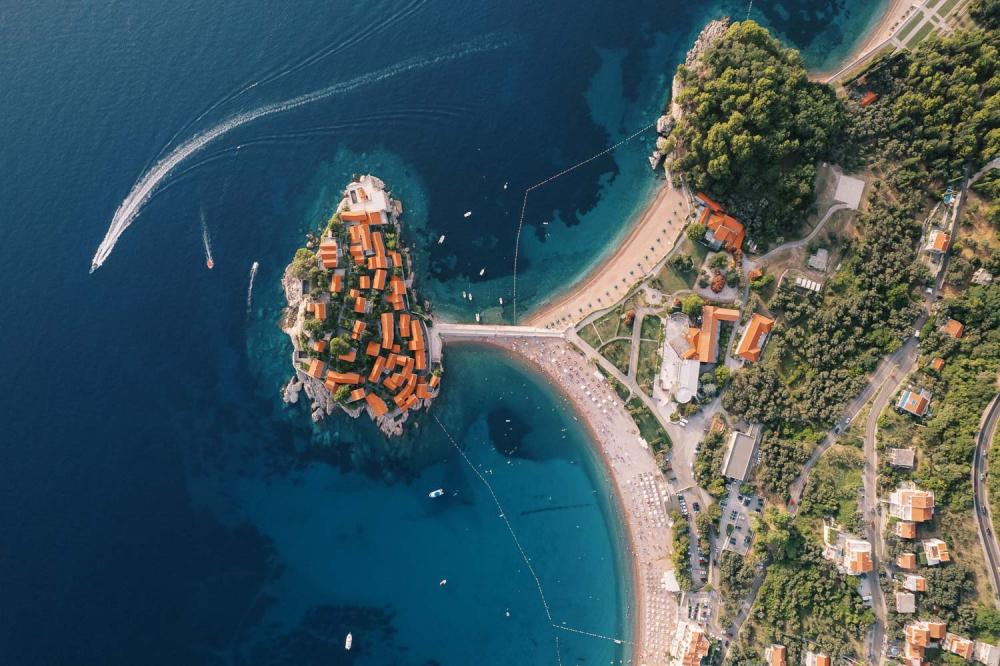
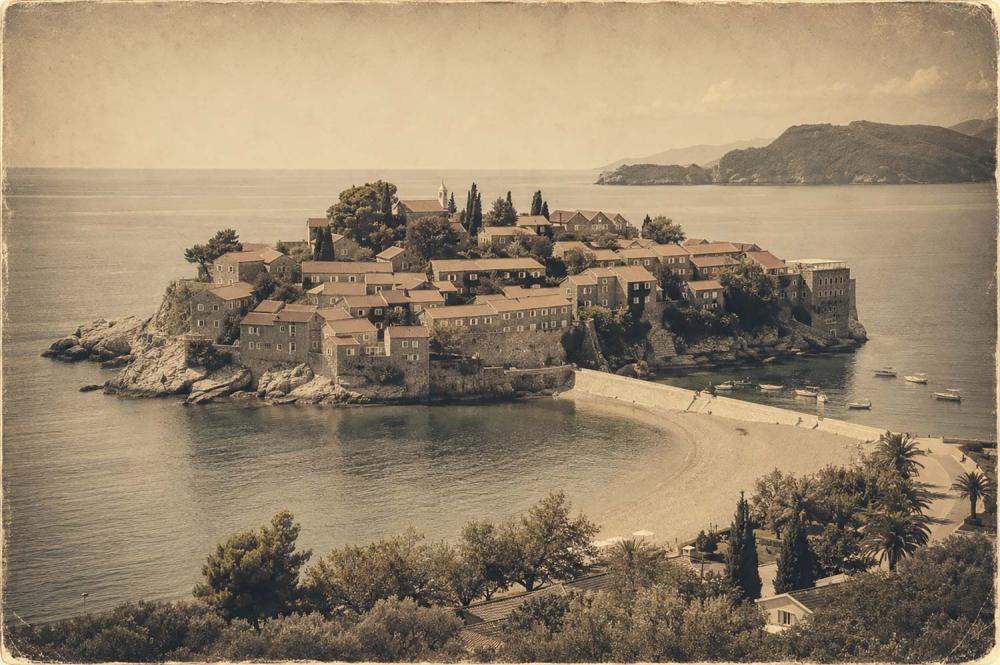
Since opening on 13 July 1960, following almost nine years of reconstruction and adaptation of the former settlement to the needs of luxury tourism, Hotel Sveti Stefan was conceived as an exclusive hotel complex. As such, it strongly shaped Montenegro’s tourism identity, meaning that the special access regime associated with this concept was not introduced with the arrival of “Aman”.
Former director of the company “Hoteli Sveti Stefan”, Dragan Miković, and long-time tourism professional Marko Pribilović agree that Sveti Stefan represents a unique tourism legacy that must be preserved.
A visionary project launched more than six decades ago
The Sveti Stefan hotel project formed part of a broader strategy to present the country at the time as an open and luxurious tourism destination. Its development was financed by the Republic of Montenegro, even though the country had numerous other development needs and only a limited number of professionals experienced in high-end hospitality.
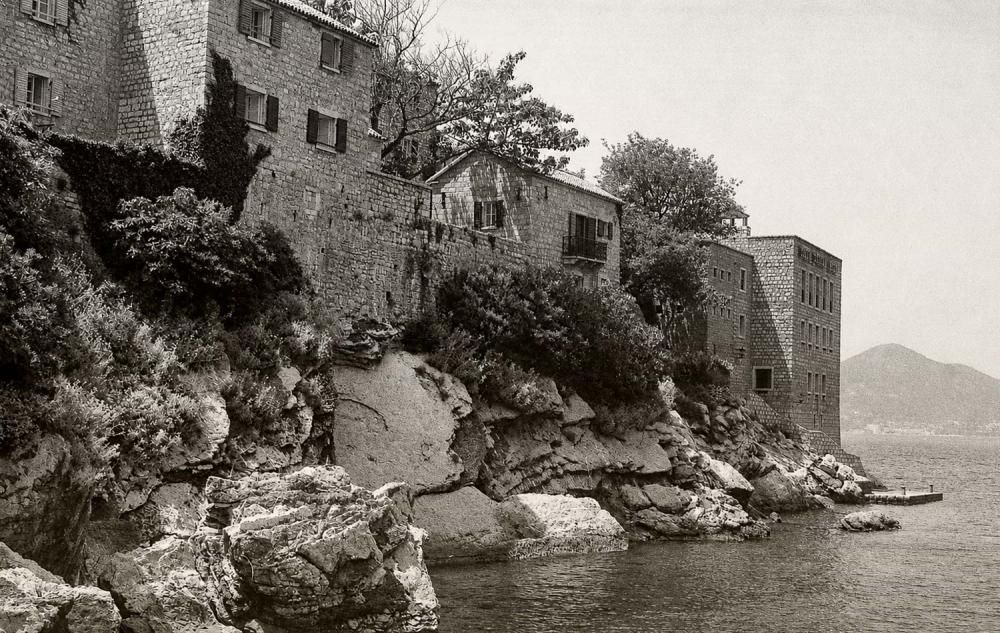
The idea was to preserve the authentic stone architecture while adapting the interiors to meet the needs of the most discerning guests. The result was a hotel complex unlike the large, standardised properties associated with mass tourism. Guests were offered the experience of staying in a self-contained Mediterranean town, complete with stone houses, narrow streets, squares, and views of the Adriatic Sea.
A shortage of qualified staff was one of the greatest challenges following the hotel’s opening.
“Thanks to the company’s first director, Anastas Popović, and with the assistance of experienced hospitality professionals, a generation of young people was trained, most of them local residents. At the time, the hotel served as a kind of school for hospitality and high-end tourism. That pioneering venture succeeded thanks to people who had vision and believed in the development of tourism in Montenegro,” Miković points out.
Generations of receptionists, waiters, chefs, housekeepers, managers, and other tourism professionals developed their careers within the complex. The knowledge they acquired was later transferred to other hotels along the Montenegrin coast, meaning that Sveti Stefan’s importance extended far beyond the boundaries of the resort itself.
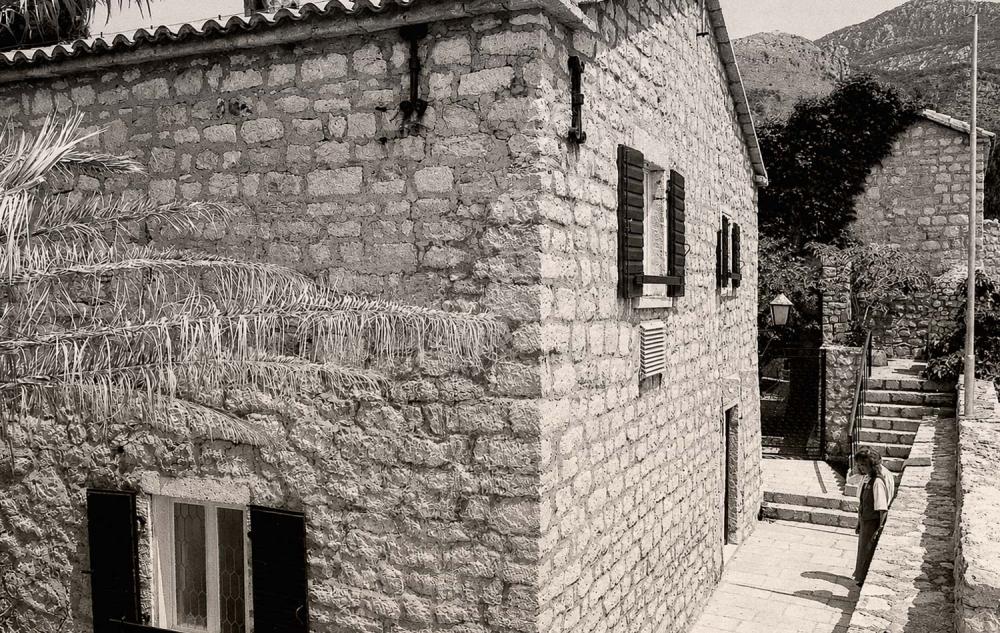
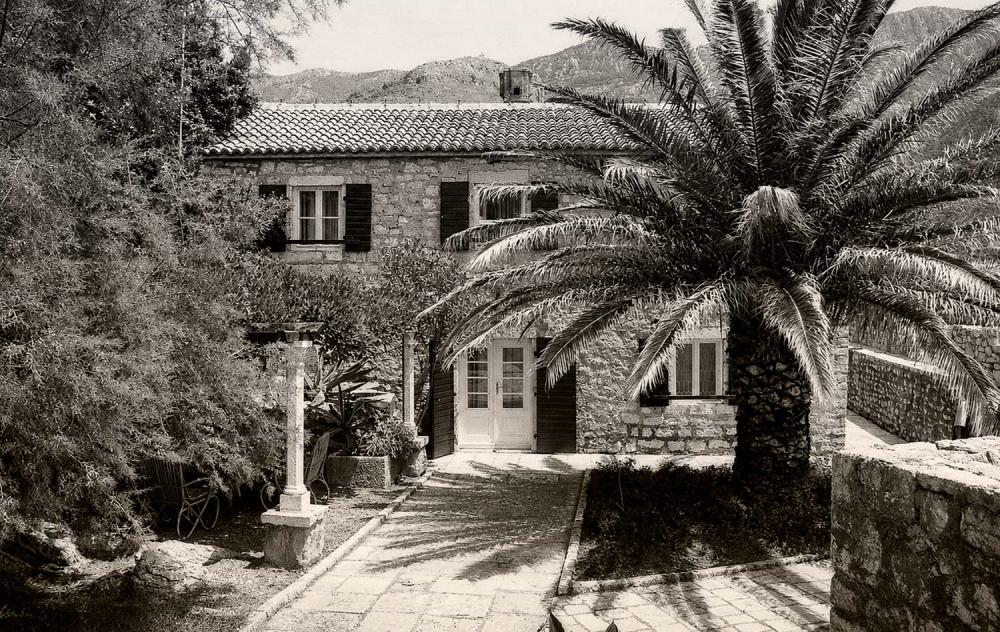
The hotel was an economic engine for the entire area, providing more secure employment, opportunities for professional advancement, and growth in activities directly or indirectly connected with tourism.
Miković recalls that the company received support from public institutions, as well as from local residents, who were proud to participate in creating one of the best-known tourism products of the former Yugoslavia.
Such development also required certain compromises. From the outset, the hotel was designed as an exclusive destination, and its organisation could not be based on the principles of mass tourism. Guest privacy, peace, and controlled use of hotel facilities were integral parts of the offer.
The local community largely accepted these rules because it recognised the hotel’s broader significance. The interests of the hotel were also the interests of the surrounding area, its employees, the tourism industry, and the state.
During the 1960s, 1970s, and 1980s, Hotel Sveti Stefan became one of the best-known luxury destinations in the Mediterranean. Its guests included prominent figures from the worlds of film, literature, politics, science, culture, and business. Among those associated with the hotel during its golden era were Sophia Loren, Josip Broz Tito, Alberto Moravia, Yuri Gagarin, and many other internationally renowned personalities.
The arrival of such distinguished visitors promoted Montenegro and demonstrated that the country was capable of meeting the expectations of the world’s most famous and demanding guests.
“The former Yugoslavia presented its tourism product to the world through two great names – Dubrovnik and Sveti Stefan. Posters of Sveti Stefan were displayed at every major international tourism fair,” Miković recalls.
For Montenegro, this was a form of promotion whose value would be extremely difficult to replicate today.
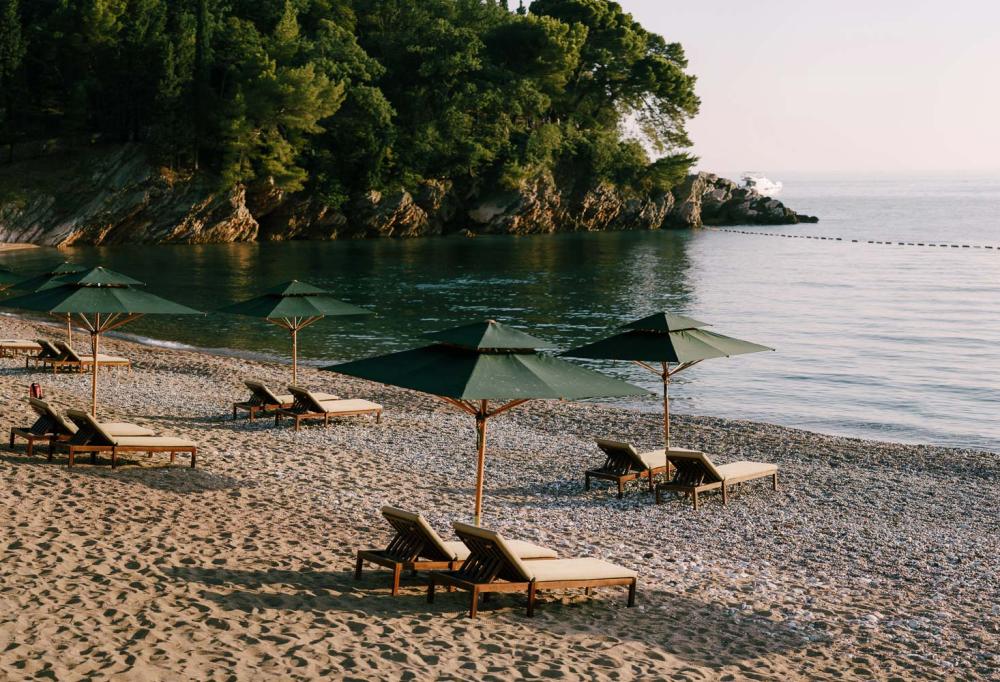
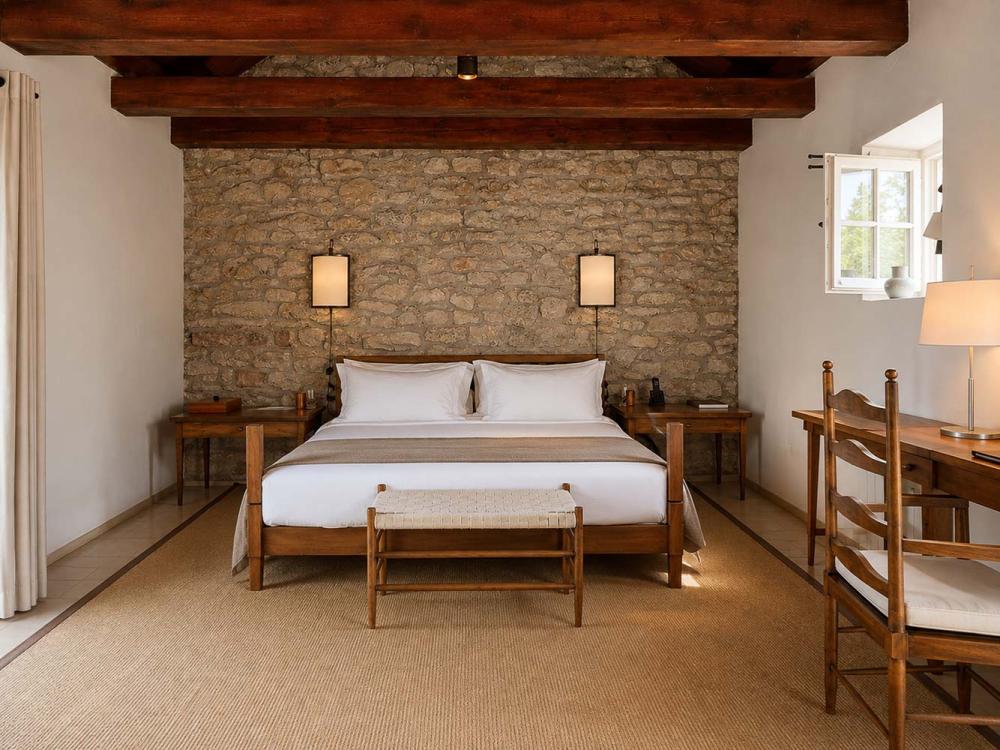
Access to the island had been controlled since the hotel first opened, ensuring that guests were not disturbed. Individual visitors and organised groups were permitted access during designated periods. Visitors were charged an entrance fee, while mandatory spending within the hotel was introduced later. Entry was free during certain religious holidays.
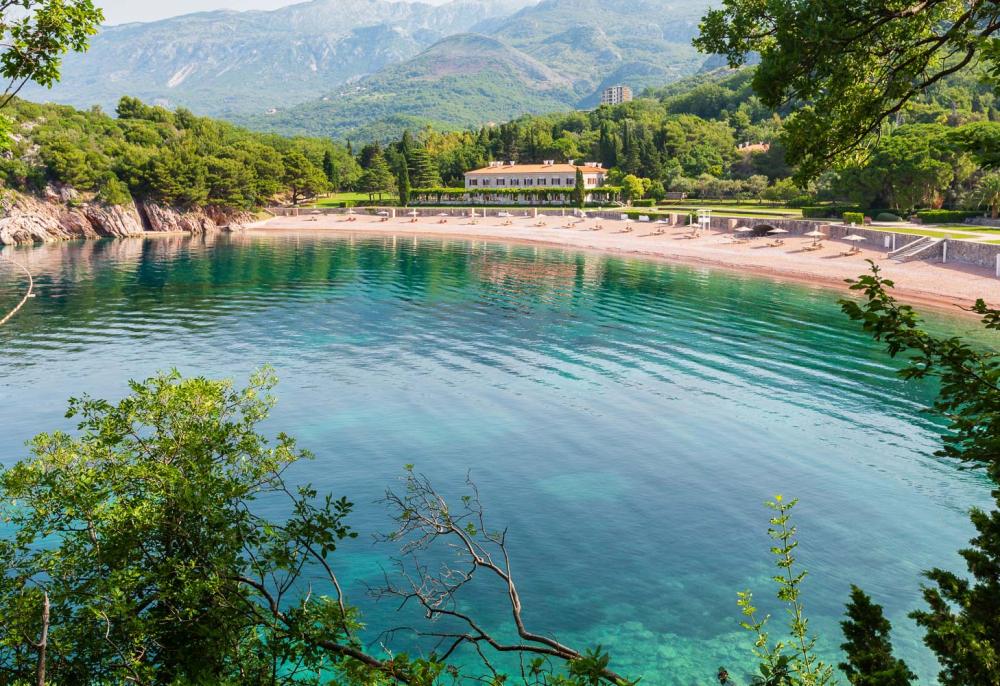
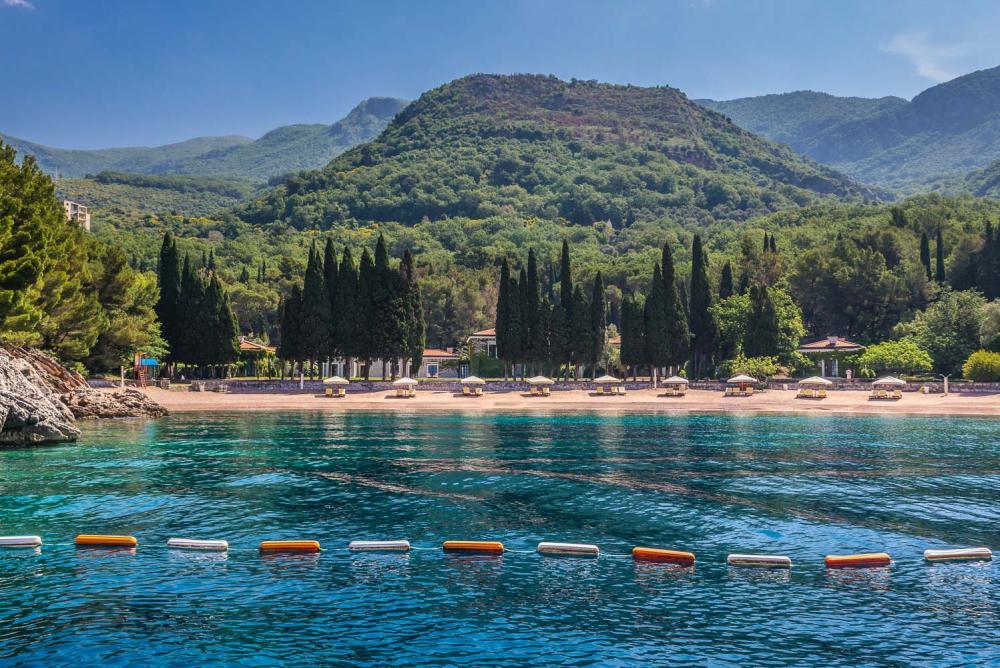
Special rules also applied to the hotel beaches. Miković explains that certain sections of the beaches near Sveti Stefan and Miločer were reserved for hotel guests, who were not charged separately for access or the use of sun loungers and other beach facilities.
Pribilović, who began his professional career in the hotels of the former Budvanska Rivijera company in the late 1980s, confirms that this was standard practice.
The western beach in front of Sveti Stefan, in the direction of Budva, was known as the “guest beach”. Access was controlled, and hotel guests identified themselves with a card or a special document bearing their room number and the hotel’s stamp.
“It was not called the ‘guest beach’ without reason. It was reserved for hotel guests. Access was controlled, and only hotel guests could use it in the regular manner. Exclusivity therefore existed long before ‘Aman’ arrived,” Pribilović explains.
According to him, similar rules applied in the area in front of Villa Miločer. He therefore believes that some present-day claims about the entire complex once being fully accessible are based on experiences from the 1990s, when the original standards had already been weakened.
The beginning of the 1990s marked a major turning point in the history of Sveti Stefan. The wars and the dissolution of the former country almost immediately brought the arrival of traditional foreign guests to a halt. Pribilović recalls June 1991, when guests travelling through major tour operators were informed that they had to leave the hotels urgently.
“Within a single day, the hotels were almost empty. We were stunned. Tourism formally continued afterwards, but it no longer resembled the model for which Sveti Stefan had been known,” Pribilović says.
In the years that followed, the guest profile, business model, and standard of service changed, while access rules were applied with decreasing consistency. This period gradually displaced the memory of the original hotel-town concept. Today, it is sometimes mistakenly presented as Sveti Stefan’s traditional operating model, even though the interviewees argue that it was a consequence of crisis rather than the system in place during the resort’s greatest years.
The arrival of “Aman Resorts” created an opportunity for the complex to reclaim its place among the world’s leading luxury destinations. Aman is a hotel brand known for exclusive properties, discretion, personalised guest service, and carefully selected, exceptional locations.
Villa Miločer opened in 2008, while Sveti Stefan began operating in 2010 through a so-called “soft opening”. The complex became fully operational in 2012.
Its return to the international market brought high-spending guests from the worlds of business, art, entertainment, and the global elite, placing the resort once again in the international tourism spotlight.
Pribilović believes that “Aman” did not attempt to preserve the model that had emerged during the crisis-ridden 1990s, but instead sought to restore the standards of Sveti Stefan’s finest period.
“Aman“ restored the status Sveti Stefan had enjoyed in its golden age. It did not revive the model of the 1990s, when the reputation and standards of the complex had been seriously damaged, but the system from the period when Sveti Stefan was a global hotel icon,” Pribilović says.
According to him, the arrival of a renowned international hotel brand also had a positive effect on the reputation of the entire country. Guests who choose “Aman” once again began to view Montenegro as a destination capable of delivering service at the highest level.
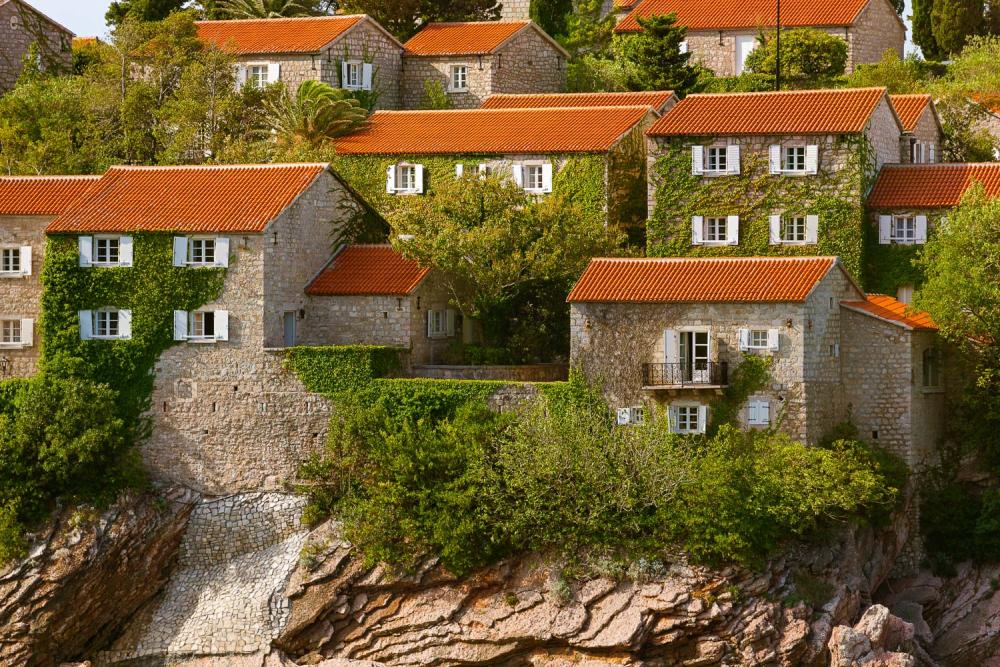
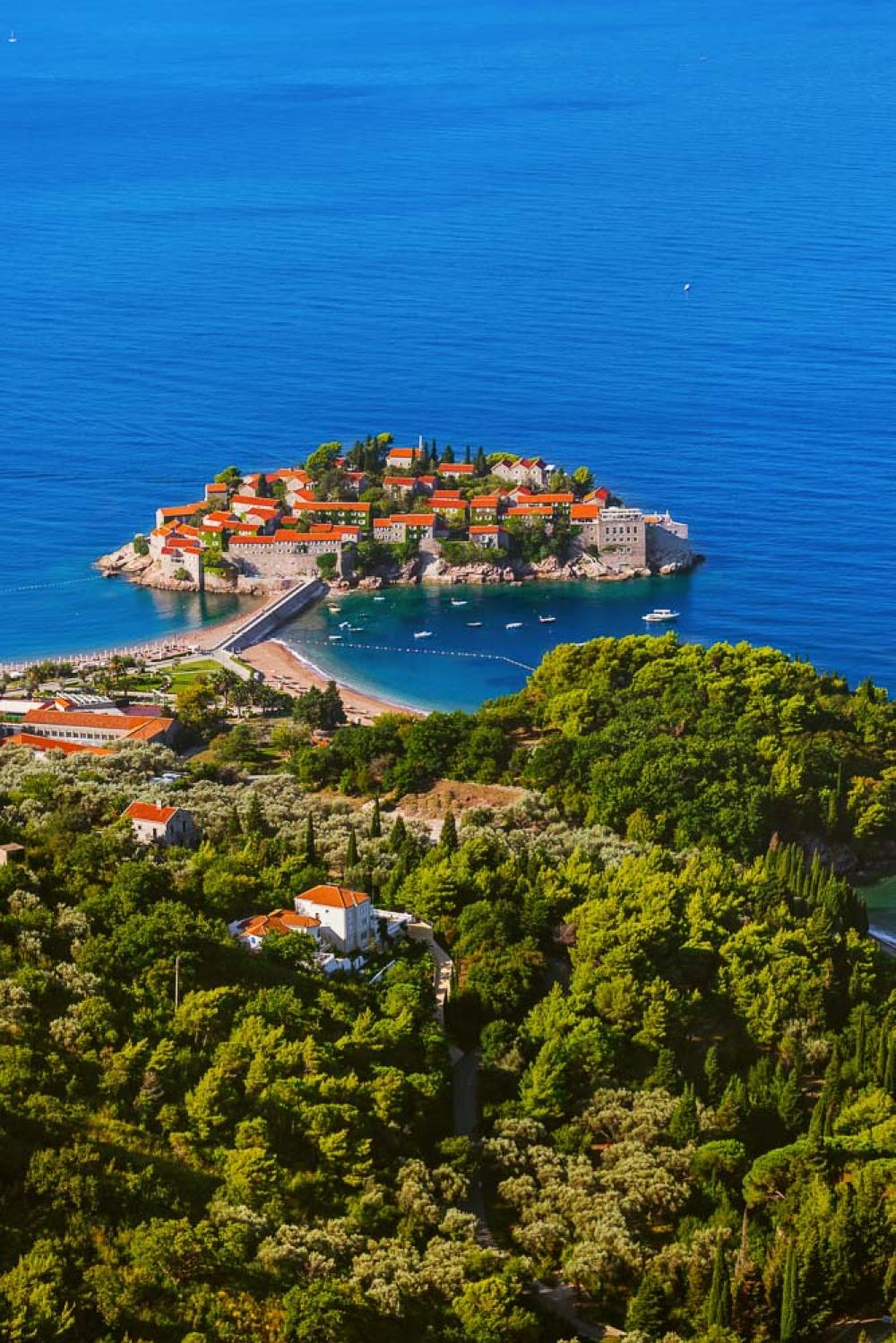
One of the particular strengths of Aman’s concept was that Sveti Stefan was not to be transformed into a conventional contemporary hotel without a distinctive identity. Its strength lay precisely in the combination of historic stone architecture, a Mediterranean atmosphere, and luxury service.
The restoration was therefore intended to preserve the appearance of the hotel-town, its streets, squares, and authentic atmosphere, while adapting the interiors to modern standards of luxury hospitality. This approach enabled the complex to retain the qualities that made it unique, while also meeting the expectations of guests accustomed to the highest international standards.
The presence of the “Aman” brand further increased the destination’s value, as guests came not only for the sea and climate, but also for the opportunity to stay in one of the world’s most unusual hotel complexes.
Although “Aman” reinstated the rules of exclusivity, the interviewees say that it also introduced benefits for local residents that had not previously existed in the same form. Special passes were issued to residents, access to part of the coastline was provided, and a certain number of complimentary sun loungers were made available on the western beach.
“As far as I know, ‘Aman’ provided several free sun loungers on the western beach for local residents, even though the regular price was around 100 euros. Such an arrangement did not exist even during the period of the former Yugoslavia, when the ‘guest beach’ was reserved exclusively for hotel guests,” Pribilović says.
The eastern beach, in the direction of Petrovac, remained accessible to the public, while visits to the island were organised during religious holidays. Processions and larger groups of visitors were permitted entry for St Peter’s Day, the Transfiguration, and the feast of St Stephen on 15 August.
“Aman” also reintroduced organised island tours involving an entrance fee and mandatory spending, following a model that had existed previously. Tours were held at designated times and accompanied by a guide, allowing visitors to learn about the history of the hotel-town while preserving the privacy and tranquillity of guests.
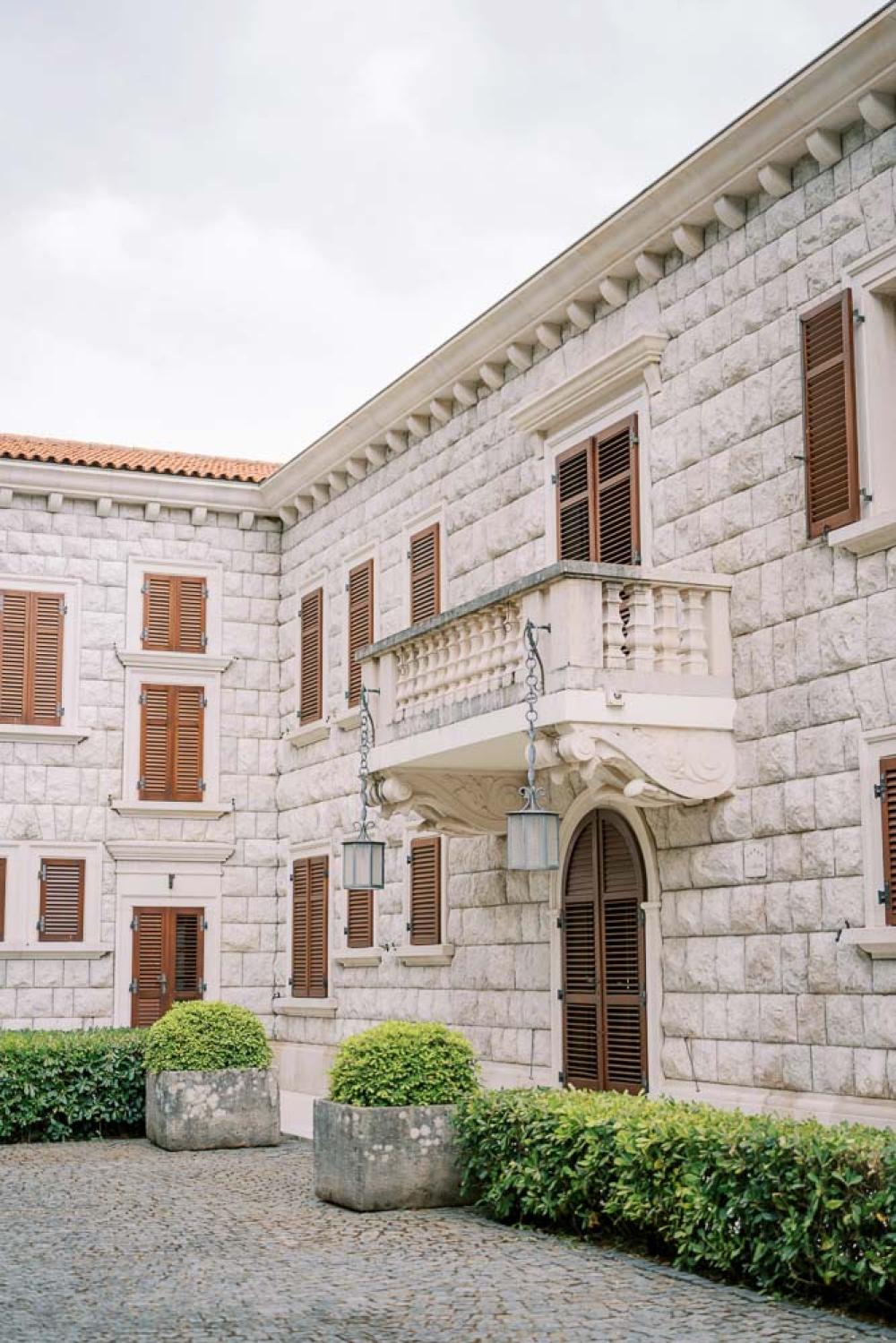
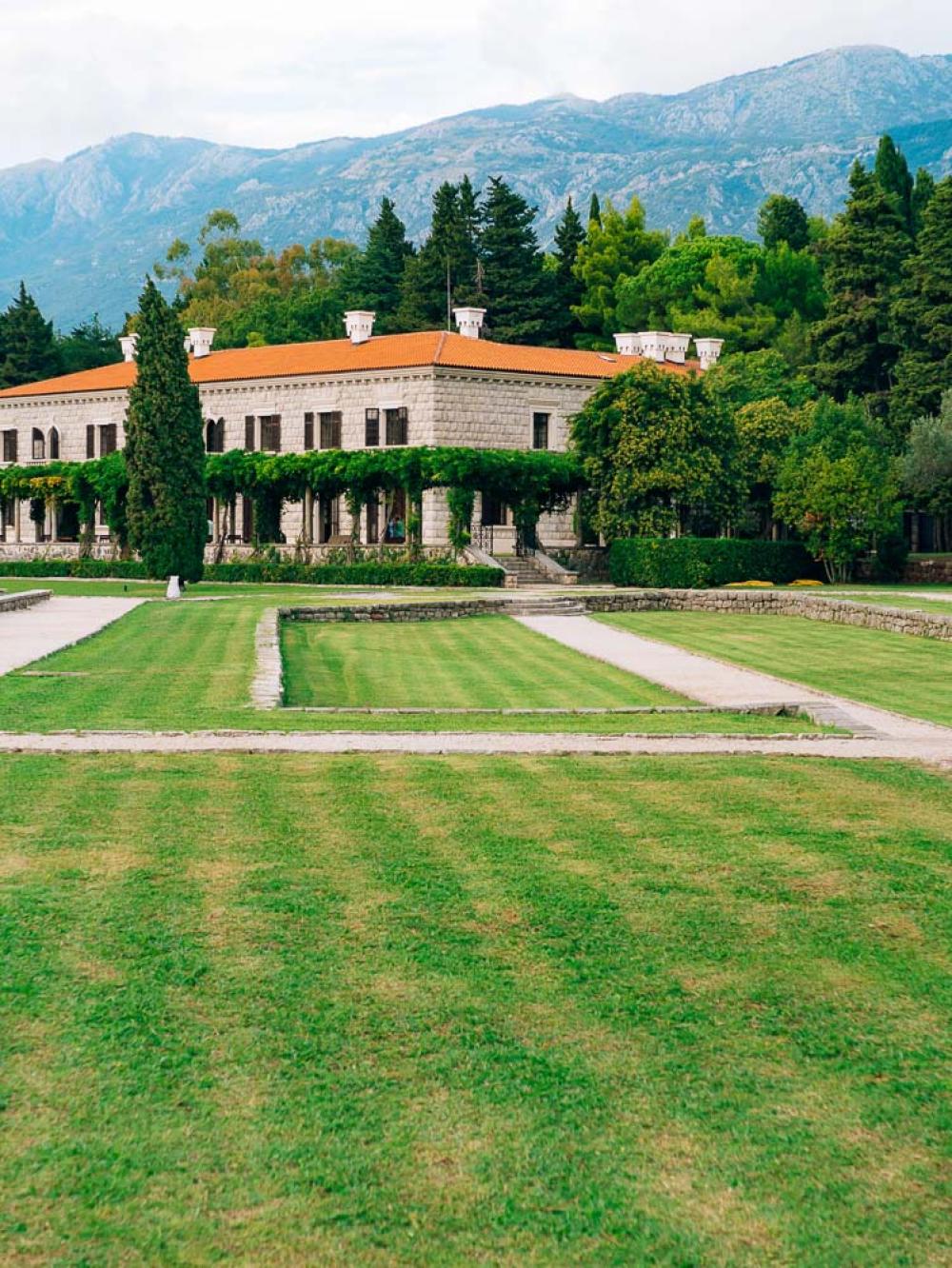
One of the important issues during negotiations with the tenant concerned the use of roads and footpaths through Miločer Park. Miković, who participated in the negotiations in 2006 as executive director of HTP “Miločer”, explains that Aman’s representatives initially requested a higher level of privacy, in keeping with the practices applied at the company’s other luxury resorts.
The state did not accept a complete restriction of access, and a compromise was reached through negotiations. It was agreed that the paths and passageways would remain open to visitors, with the exception of a limited area around Queen’s Beach, where privacy had to be ensured for exclusive guests.
The tenant undertook to construct a new path behind the building during the development of the spa centre. Miković states that this solution was defined in the original lease agreement and an officially certified plan, and that “Aman” fulfilled its obligation during construction. This example demonstrates that dialogue made it possible to find a solution that respected both the public interest and the needs of a luxury hotel complex.
The positive effects of the complex’s operation extend far beyond the business of a single hotel. Its opening sends a message that Montenegro belongs on the map of high-quality luxury destinations worldwide. High-spending guests also use other services, visit restaurants, explore cultural and natural attractions, and contribute to the promotion of the entire country. The presence of a prestigious international brand also encourages other investors and hoteliers to improve the quality of their own offerings.
Thanks to its history and appearance, Sveti Stefan possesses a promotional value that would be difficult for any newly built hotel to achieve. For that reason, its closure over a period of several years represents a serious problem for Montenegro’s overall tourism reputation.
“It is scandalous that a prestigious brand, built by generations through hard work and enthusiasm, remained closed for five full years. Trust and reputation are difficult to earn in tourism, and once lost, they are even harder to restore,” Miković warns.
Pribilović, who has participated in numerous tourism fairs across Europe and the United States during his career, stresses that Sveti Stefan is viewed internationally as far more than merely a hotel.
“The reopening of Sveti Stefan is of extraordinary importance to Montenegro’s tourism industry. It is one of our most recognisable symbols, and its reputation extends far beyond local and national boundaries,” Pribilović says.
The future of Sveti Stefan should not be built on conflict or on a distorted representation of its past. Historical facts demonstrate that the complex was based from the beginning on controlled access and the protection of guest privacy.
At the same time, the rights of local residents and the public interest must be clearly defined and protected. The state should present the relevant contracts and certified plans, specify which paths and sections of coastline must remain accessible to the public, and ensure that all parties honour their obligations.
The experience of previous negotiations shows that compromise is possible. “Aman” brought a powerful international brand, a return to the luxury tourism market, and guests who promote Montenegro around the world. The local community, meanwhile, received certain benefits and access arrangements that had not existed during every period of the former Yugoslavia.
The goal should therefore not be to abandon the exclusive hotel concept, since it was precisely this concept that established Sveti Stefan’s international reputation. What is needed is a balance between the interests of a luxury hotel, the rights of local residents, the responsibilities of the state, and the development of Montenegro’s tourism industry.
After nearly five years of closure, Aman Sveti Stefan reopened this season. The island section of the resort welcomed its first guests on 1 July 2026, while Villa Miločer reopened slightly earlier, at the end of May. The island is once again operating as the luxury Aman Sveti Stefan hotel.