

From the wavy titanium sculptures scraping the horizon to the villages made of stone and clay nestled in between the mountains and the sea — 21st century luxury asks for character. It asks for a story, for a space to be remembered. In that spirit, we are presenting two architectural worlds: one being a spectacle and futurism, the other silence and reinterpreted tradition.
Architecture was once in the background. Today, it is a protagonist.
In the global competition of destinations, architecture is becoming a differentiator.
The cities and regions which hire renowned architects do not invest only in buildings, but in the long-term perception of the brand. Some projects use architecture as a signal of modernity and ambition. However, in parallel with that spectacle, another movement is growing — the one putting emphasis on responsibility, sustainability and local identity.
In the 21st century tourism, space is not any more a neutral frame used for holidays – it is a central factor of experience. Hotels and restaurants become sceneries, but also philosophical statements. They shape the way in which we perceive landscape, luxury and even time.
Modern traveller does not seek comfort alone. He/she seeks purpose. He/she seeks the architecture with a stance. In that context, there are two distinctive trends that shape global scene of luxury tourism: spectacular, sculptural architecture of deconstructivist expression and silent, sustainable reinterpretation of tradition. One trend is a gesture, the other a whisper. One transforms the horizon, the other respects it. In that spirit, we are presenting two architectural worlds: one is a spectacle and futurism, the other is silence and reinterpreted tradition.
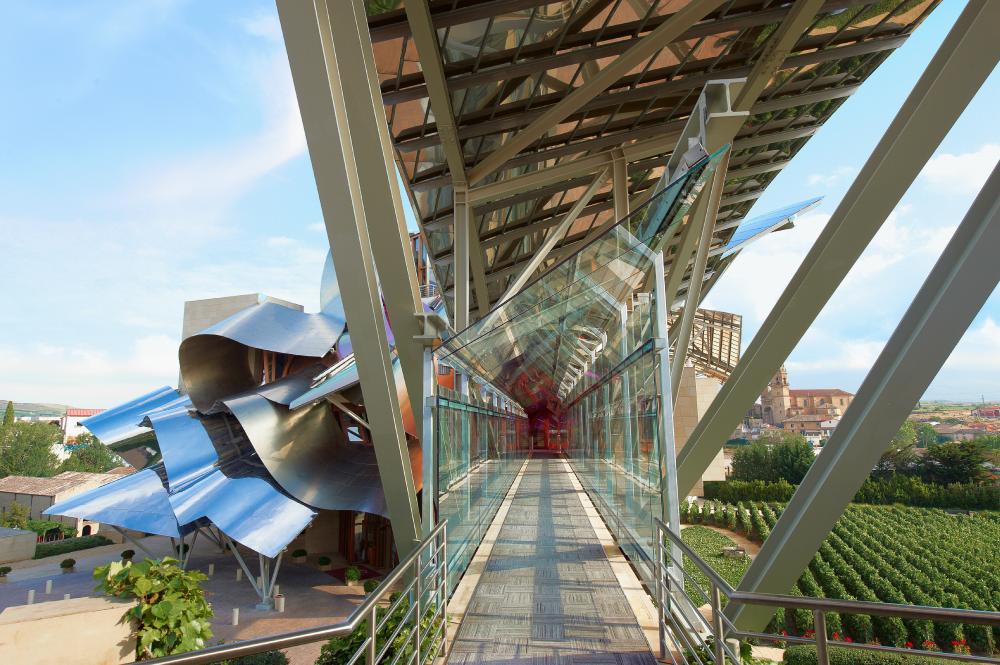
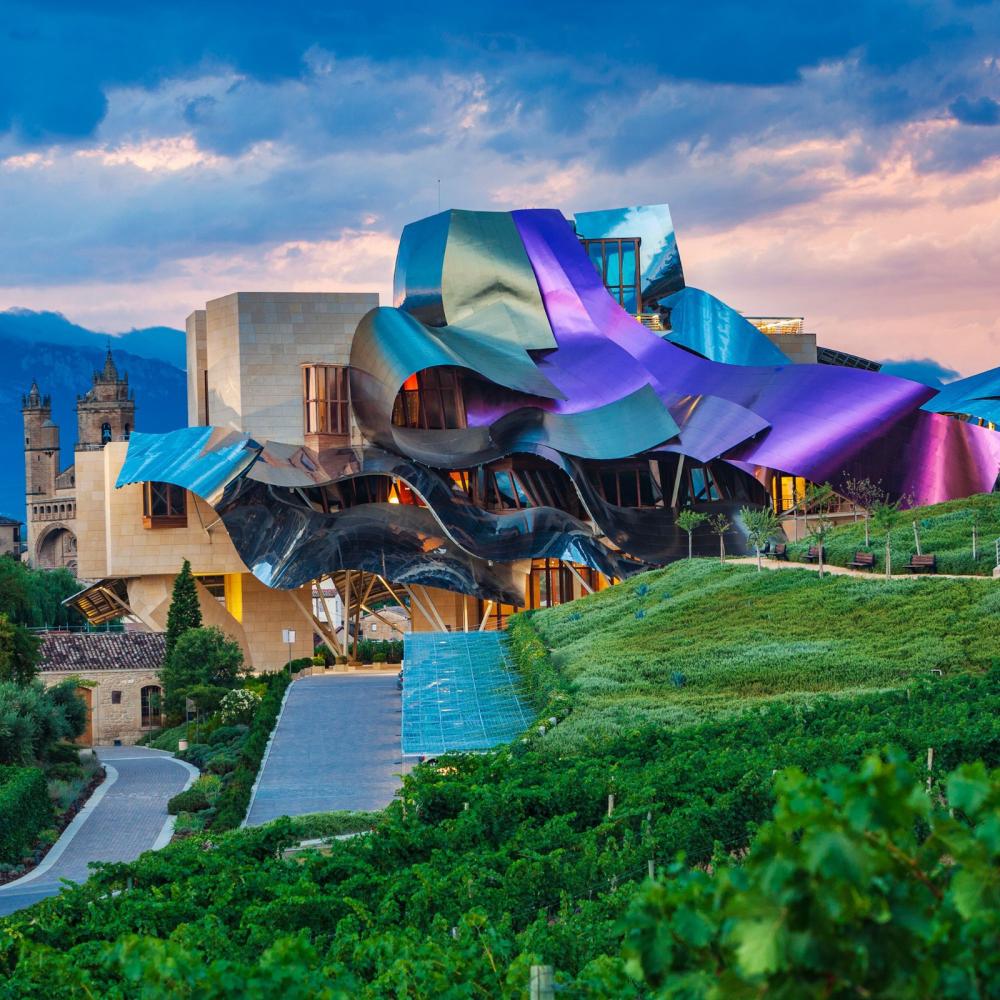
The “Hotel Marqués de Riscal” is located in Elciego, in La Rioja, in Spain. It is a region known for winemaking, and the Hotel is a part of the “City of Wine” complex.
In the Spanish region of Rioja, landscape is horizontal. Vineyards stretch in straight lines; they are rhythmical and almost meditative. It is exactly in that peaceful grid that the architectural event appears.
Frank Gehry, Pritzker Architecture Prize laureate – the most prestigious award in the world of architecture – designed a hotel which has become a symbol of enotourism, but also of a contemporary architectural spectacle. The Pritzker Prize, often called “Nobel Prize for Architecture”, is awarded to the authors who have permanently changed the face of the cities and the perception of space. This undoubtedly applies to Gehry. The Pritzker Prize, established in 1979, is often called the highest award in the world of architecture. It is awarded to the authors whose work shows a combination of talent, vision and social responsibility.
The Hotel in Elciego belongs to the theoretical framework of deconstructivism – trend which at the end of the 20th century called into question straight-line stability of modernism. Instead of symmetry – fragmentation. Instead of rigidity – motion. Instead of rational geometry – emotion of the form.
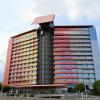
Titanium strips which hover above the stone volume seem frozen in motion. Violet colour reminds of grapes, golden a network of wine bottles, silver reflection of steel in wine cellars. The material reflects sunlight, but also changes its shade with every cloud. The building is never the same.
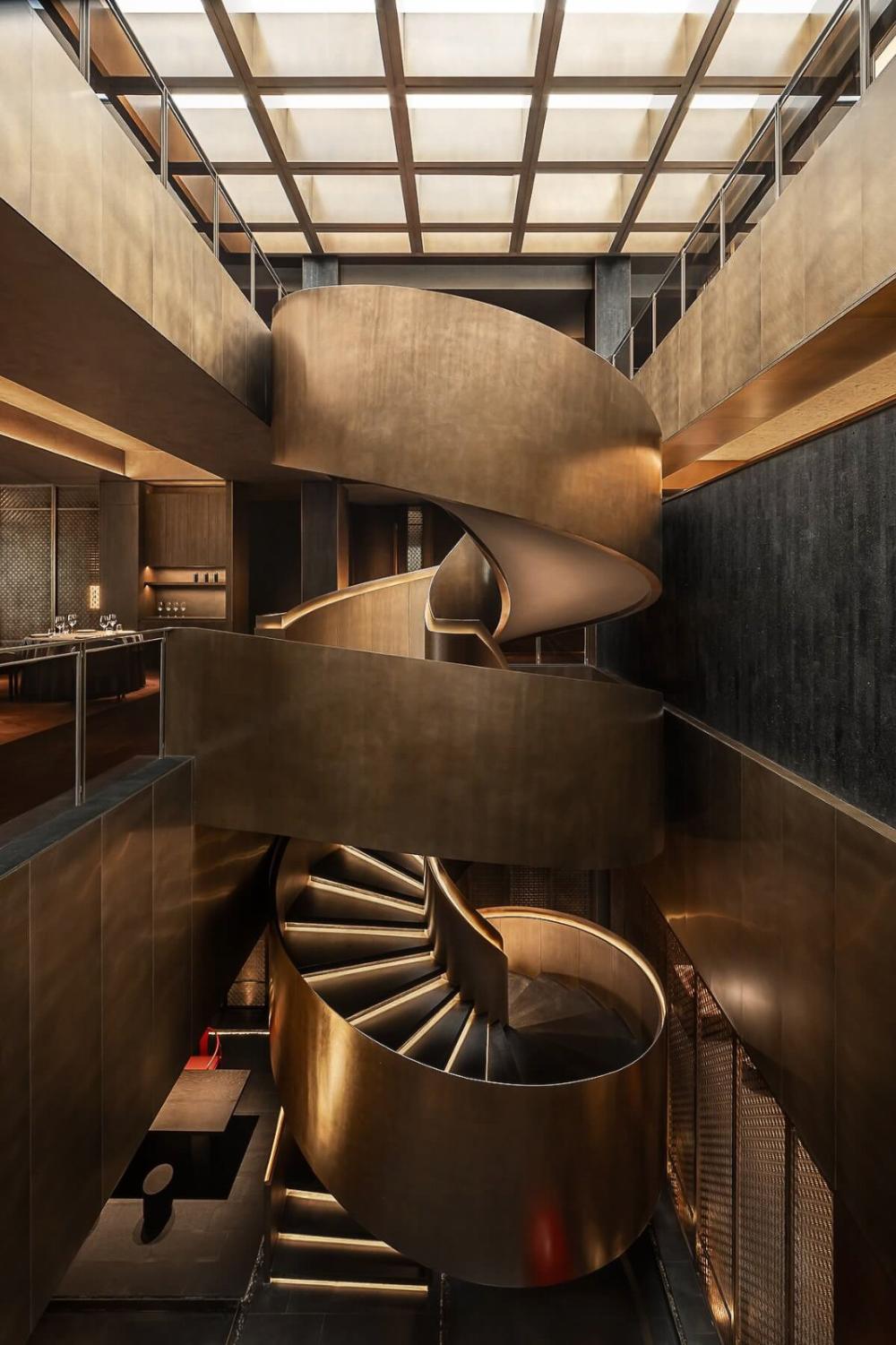
Although radically modern, the Hotel is deeply linked to its geographic setting. It is not an edifice which ignores the context – but of the one which reinterprets it through contemporary expression.
The interior matches the dynamics of the exterior. The curvatures of the walls and ceilings guide your eyes. The space is not linear, it is gradually revealed. The windows frame the vineyards like living paintings. Wood and leather appease the metal dramatics of the façade. Light is filtered, soft, almost theatrical.
The Michelin star restaurant extends architectural philosophy to the plate. Tasting menus are layered, precise, bold. Gastronomy becomes the extension of deconstructivism – breaking of traditional form, but with respect for ingredients.
This design shows the power of architecture as a brand. The Hotel is not the accompanying content of the winery anymore. It is a global destination. Architecture generates tourism.
Deconstructivism in hotel industry has become a synonym for boldness. Iconic edifices attract attention, create brand recognition and media identity of a destination.
However, behind the form there is serious construction and engineering precision. Complex curves require advanced software models and precise craftsmanship. Technology enables what was once impossible.
In that sense, “Marqués de Riscal” is not just an aesthetic experiment. It is a combination of art and engineering, a symbol of the epoch in which architecture uses digital tools to achieve almost sculptural visions.
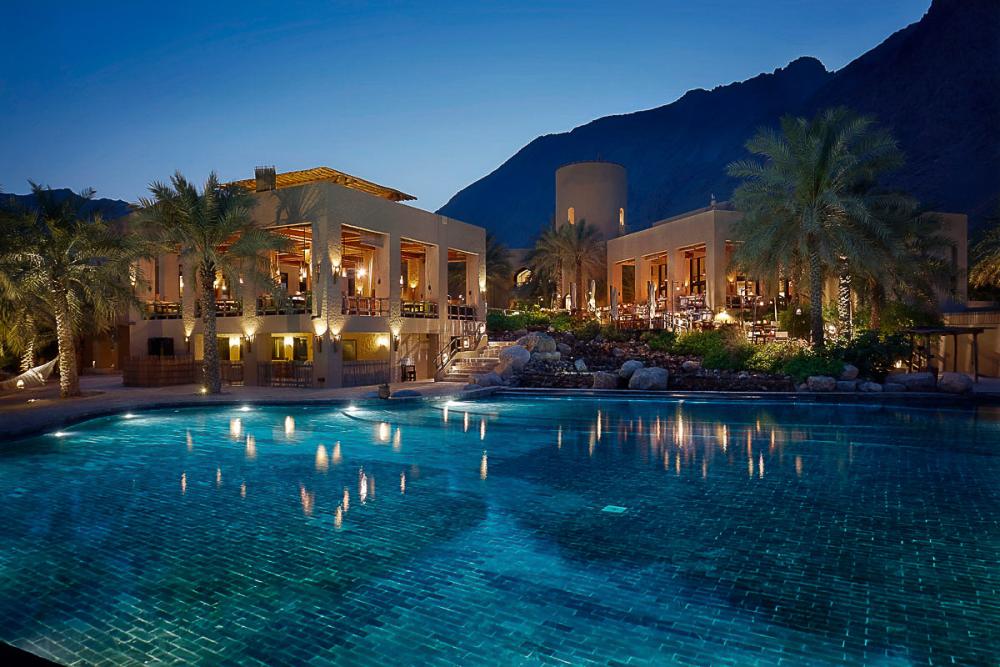
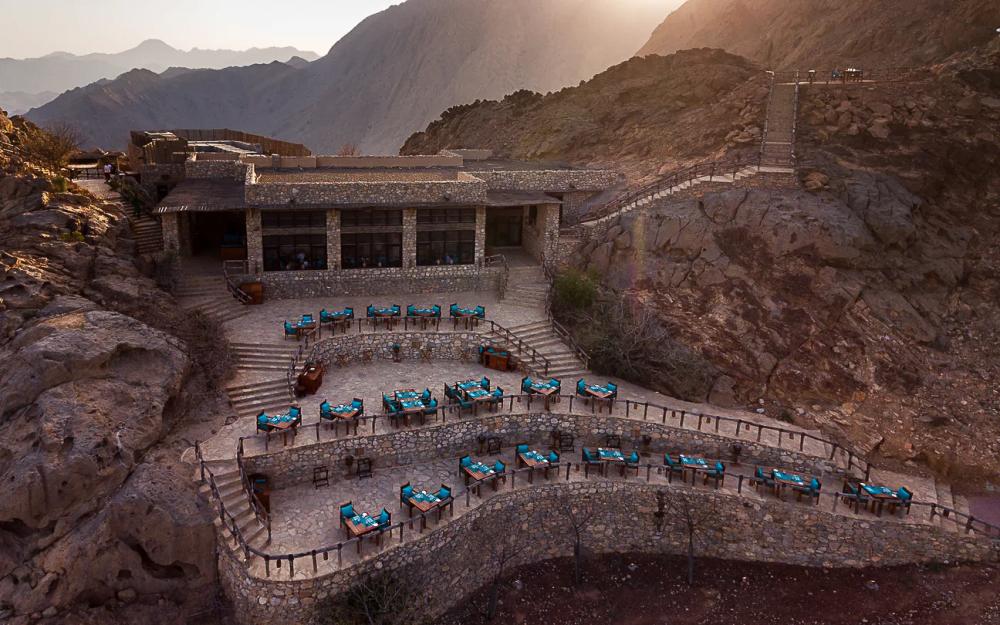
Six Senses Zighy Bay is located in Zighy Bay on Musandam peninsula in the Sultanate of Oman – on the shores of the Arab Sea, surrounded by dramatic mountains.
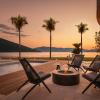
The resort is located between dramatic mountains and the calm sea. The landscape is rough, almost archetypical. It is exactly for this reason that architecture chooses modesty.
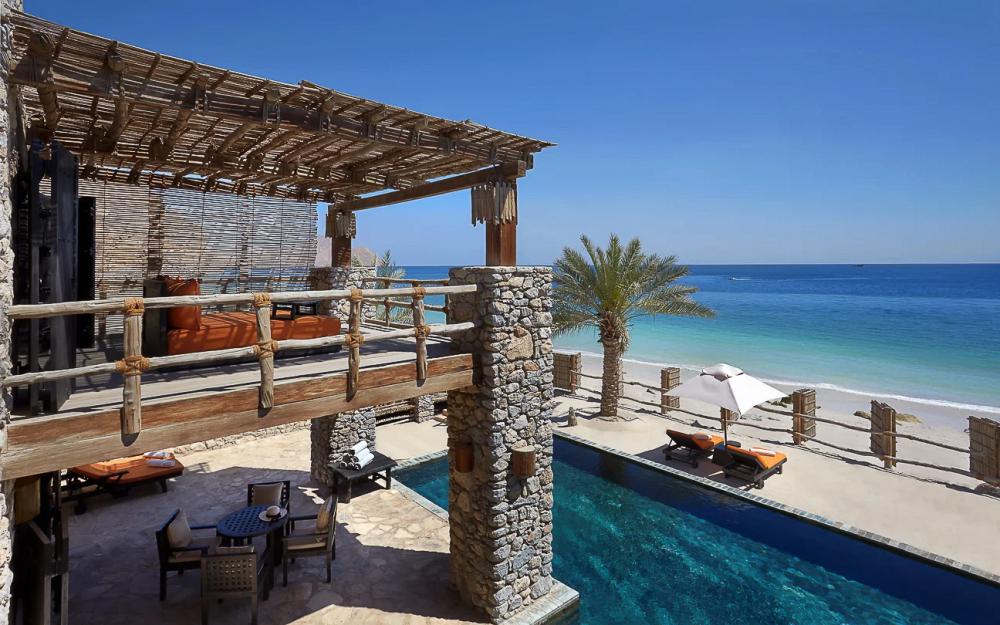
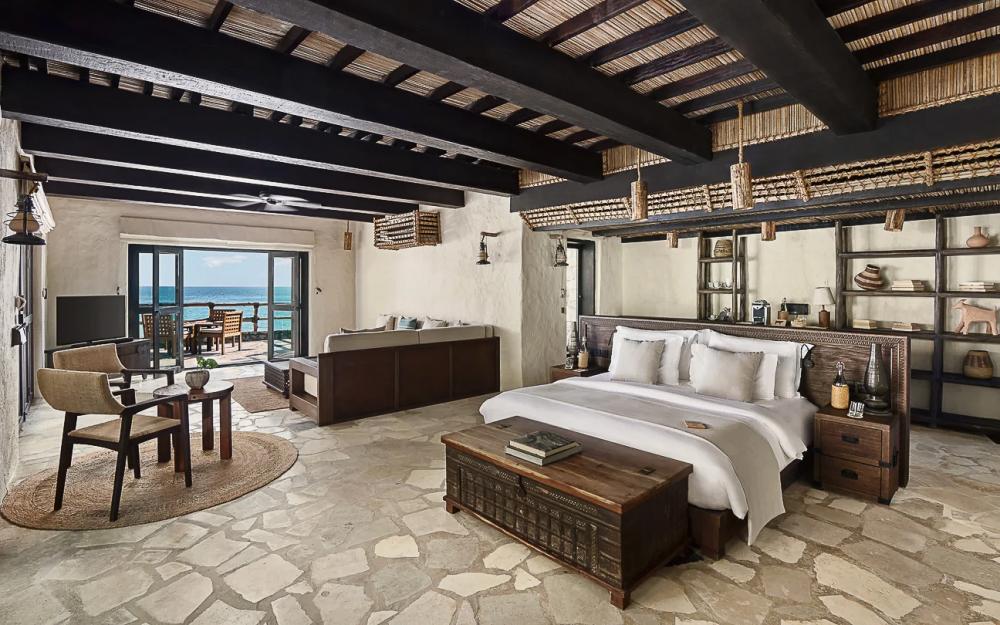
The “Six Senses” is a brand which has built its reputation on sustainability, local identity and the philosophy of “slow luxury”. In the Zighy Bay, design was inspired by traditional Oman villages. Stone, clay, wooden beams and warm shade fabrics make the resort seem as though it has always been there.
However, behind that rustic aesthetics there is a highly sophisticated system of sustainable management of energy, water and waste. Sustainable architecture here is not a trend, but the operational basis. Because: “The best buildings are the ones which look as though they have always belonged to a place.”— (principle of regionalism in modern architecture).
This approach reminds of the theory of critical regionalism – architectural concept which advocates for modern design rooted in the local context. Instead of global uniformity, the emphasis is on the specificity of climate, materials and culture.
The villas are distributed in such a way as to protect privacy, but also to make maximum use of natural ventilation. Thick walls regulate temperature. The inner courtyards create microclimate. The pool reflects the sky and brings light into the space. The scent of warm stone under the sun. The sound of wind passing through palm trees. The shade of the arcade at noon. In the evening – candles throwing golden shadows over the wall texture.
Luxury is not in spectacle here, but in details.
In the era of climate-related challenges, luxury cannot ignore ecology anymore. Modern guests become more and more aware of the impact travels have on environment.
The Six Senses concept shows how sustainability can be integrated in architectural identity. The use of local materials reduces transport operations. Traditional building techniques improve energy efficiency. Space becomes the extension of the landscape, and not its competition.
It is exactly where its strength lies: in the ability to redefine luxury as harmony and not as domination.
Perhaps crucial question for Montenegro is not whether we want a spectacle or silence — but whether we have courage for authenticity.
Our coast already has a scenery. Our mountains already have monumentality. What they need is architecture which knows the measure.
Perhaps a small Montenegrin winery in Crmnica region can be modern and bold, but with respect for the horizon. Perhaps a mountain hotel can reinterpret a “katun” (temporary shepherds’ settlement in the high mountains) without folklore romanticism. Perhaps a seaside resort can use stone which already exists in the landscape, but in a modern, precise form.
Architecture of the future will not be competing with nature. It will be cooperating with it.
Between the titanium wave and stone arcade, between deconstructivism and sustainable regionalism, there is a space for new Mediterranean aesthetics. Perhaps it is exactly there where the next big story starts. Spectacle or silence? Sculpture or village? Metal or stone? Perhaps the answer could be – both, but with a right measure.
Montenegro has got a landscape which is already dramatic. Mountains which drop sharply into the sea. Vineyards under the strong sun. Stone villages in the north. Question is: what kind of architecture does this landscape deserve? Architecture which understands mountains and the light of the Adriatic. Architecture which shows respect for tradition. Architecture which does not scream, but which has its voice.
Can a new winery in Crmnica region be a modern icon, but with a measure? Can a hotel by the sea reinterpret the Mediterranean stone without folklore pathos? Can a mountain resort use wood and shingles in a modern, yet not aggressive manner?
Between deconstructivist spectacle and sustainable silence, there is a space for an authentic Montenegrin expression. We need architecture which speaks about its time and place, abut to strive to achieve timelessness. Because luxury of future will not be measured with the height of an edifice, but with the debt of the experience.