

Developed in Montenegro, SHARP is an educational platform that brings together technology, cultural heritage, teamwork, and children’s natural curiosity. More than just an app, SHARP is an experience that encourages children to learn differently—through play, exploration, and discovery.
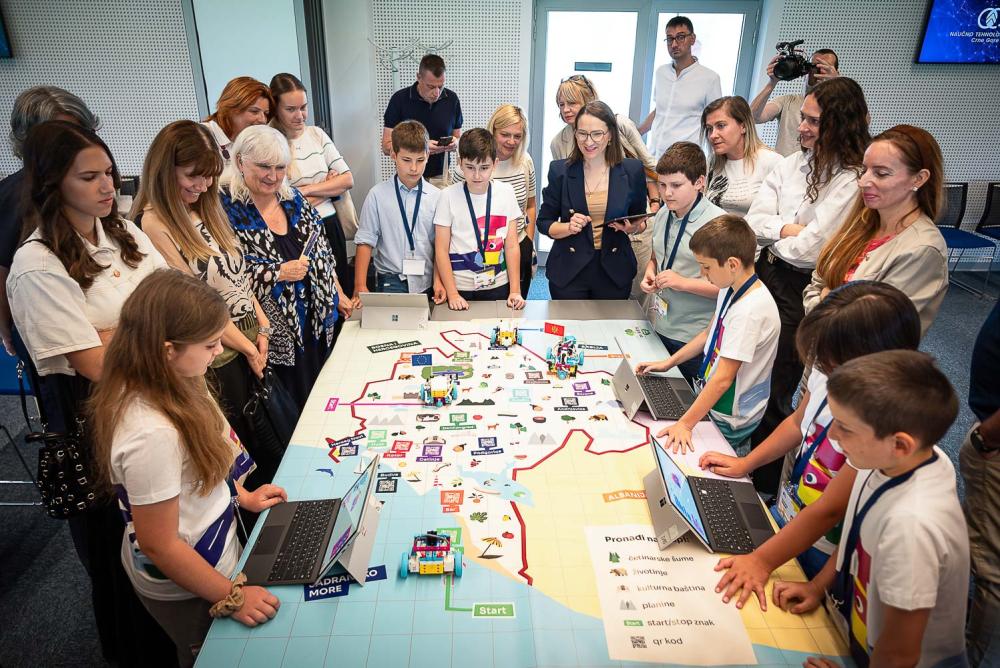
At a time when children are growing up surrounded by screens, algorithms, and instant answers, one question becomes increasingly important: how can we teach them not only to use technology passively, but to understand it, shape it, and use it to discover the world around them? That very question gave birth to SHARP—an innovative educational platform that transforms learning into an adventure and knowledge into an unforgettable experience.
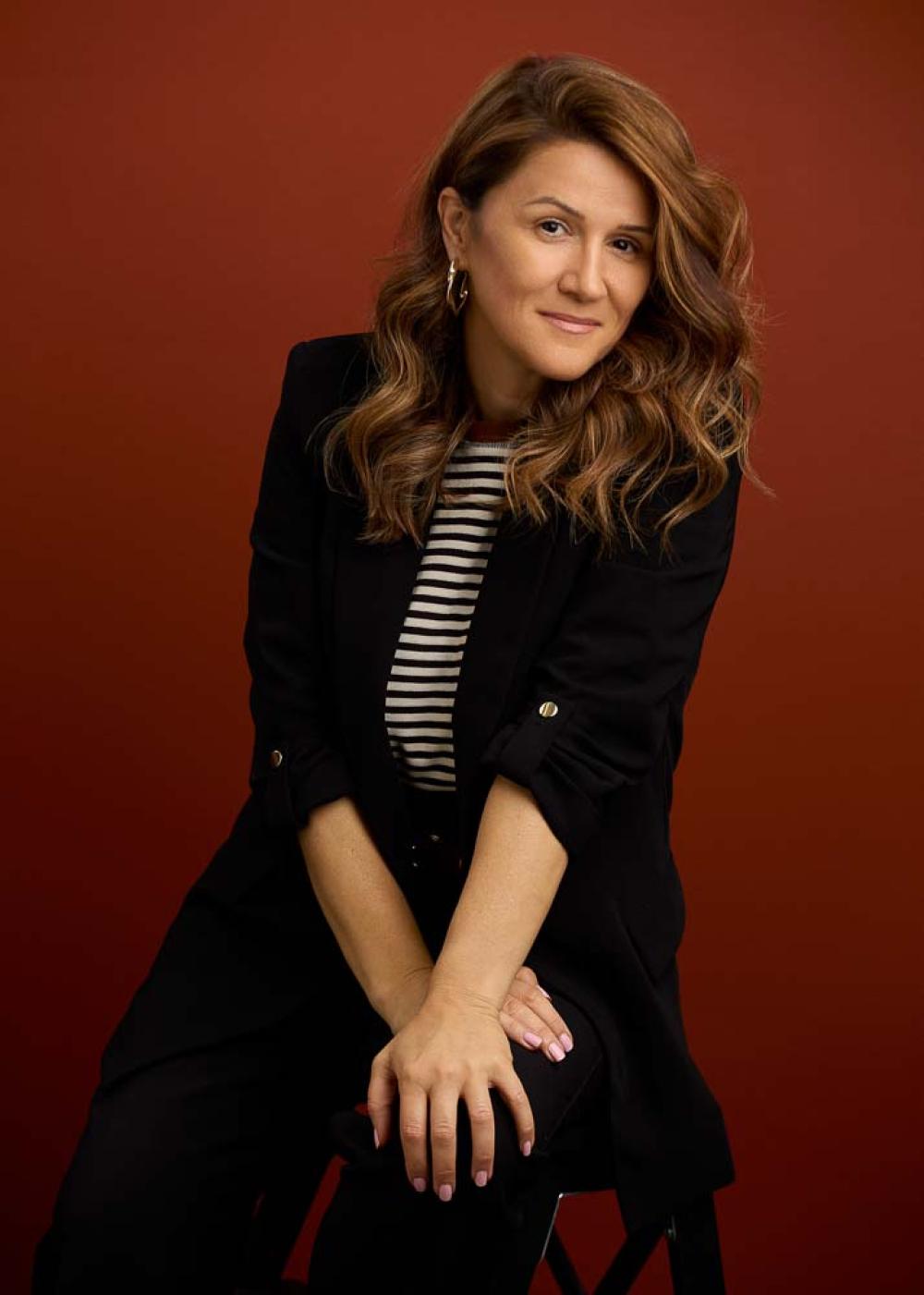
Behind this idea stands Milica Gogić, a woman who describes her professional journey as a bridge between technology and education. With more than two decades of experience in software development and digital transformation projects, combined with extensive work with children, Milica recognized a unique space where technology and pedagogy could meet in the most meaningful way.
"I believe that the greatest innovations emerge at the intersection of different fields," she says, explaining that IT, education, and parenthood naturally converged in her own life. That combination opened the door to an idea that now has the potential to change the way children learn about the world, their country, culture, history, nature, and the values that surround them.
SHARP was not born in a laboratory or from a purely technological vision. It was born among children. In classrooms, workshops, and at Dvorište, an educational space where children’s learning processes are observed every day. And, as Milica explains, children do not learn best when something is simply explained to them. They learn best when they explore, connect ideas, ask questions, and discover answers for themselves.
"SHARP was never intended to be just another digital application. It was designed as a tool for learning through play, exploration, and experience," Milica explains.
-1000x600-fixwidth.jpg)
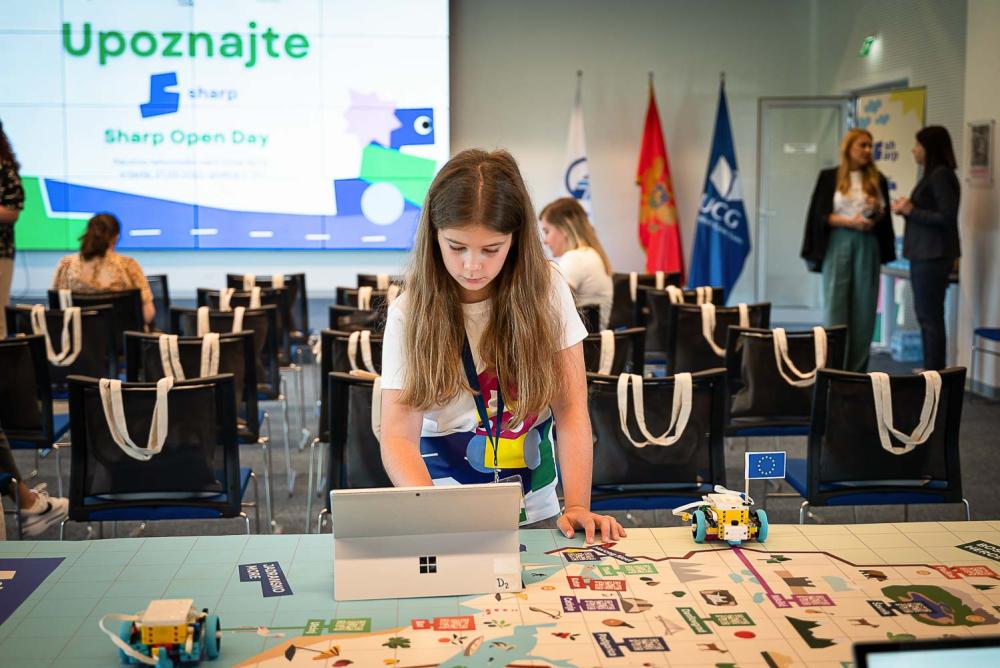
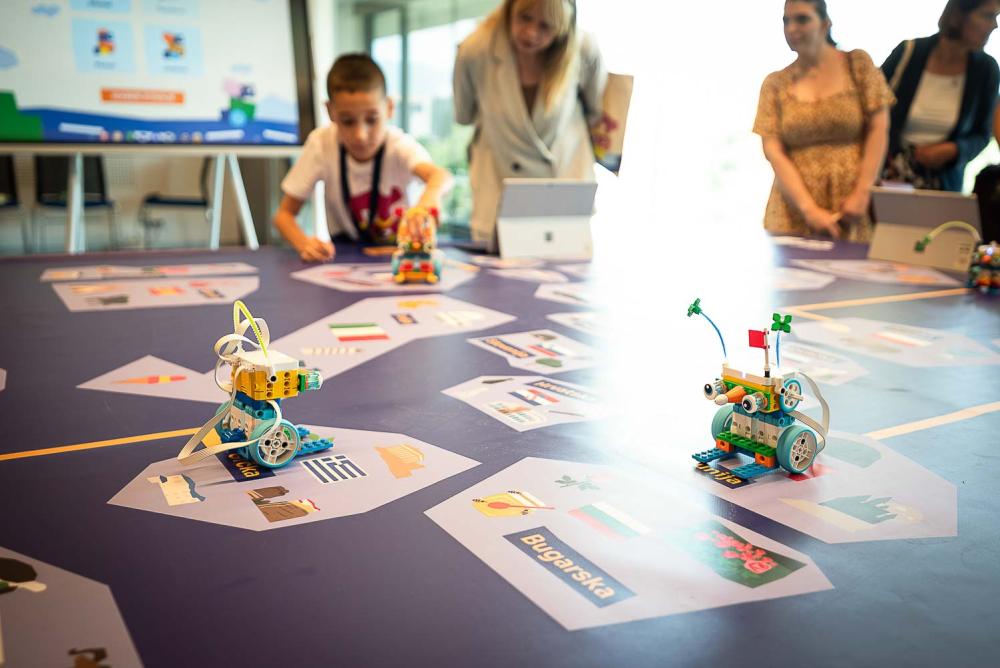
The first moment when the concept truly demonstrated its potential happened during a summer camp at Smart Hub Dvorište. Children programmed robots, solved logic challenges, and navigated across a giant map of Montenegro. What started as an experiment quickly turned into excitement. Voices echoed from every direction:
"I've reached Nikšić!"
"Wait, let me read the question!"
"Can I choose another city?"
Those moments revealed the exact point where learning stops feeling like an obligation and becomes a game. Where a map is no longer just a map but a landscape for adventure. Where a robot becomes more than a technical toy—it becomes a guide through destinations, stories, and questions. It was then that it became clear SHARP could be much more than a workshop—it could become a completely new way for children, families, and even tourists to travel virtually through Montenegro, discover its stories, and feel inspired to explore them in person.
Today, SHARP combines robotics, programming, physical maps, 3D models, teamwork, and cultural heritage. Yet its essence is not technology—it is the child. Technology simply enriches the experience, making it more engaging, interactive, and relevant for generations growing up in a digital world.
"Technology should not be a subject we study—it should be the tool through which we learn everything else," Milica emphasizes.
A SHARP experience begins very simply. Children are divided into teams. Each team builds its own robot using LEGO bricks and chooses the direction from which it will enter Montenegro. The robot then begins its journey toward a designated destination. To reach it, the children must program, collaborate, negotiate, think critically, and solve challenges. Once they arrive, new questions, stories, tasks, and discoveries unfold.
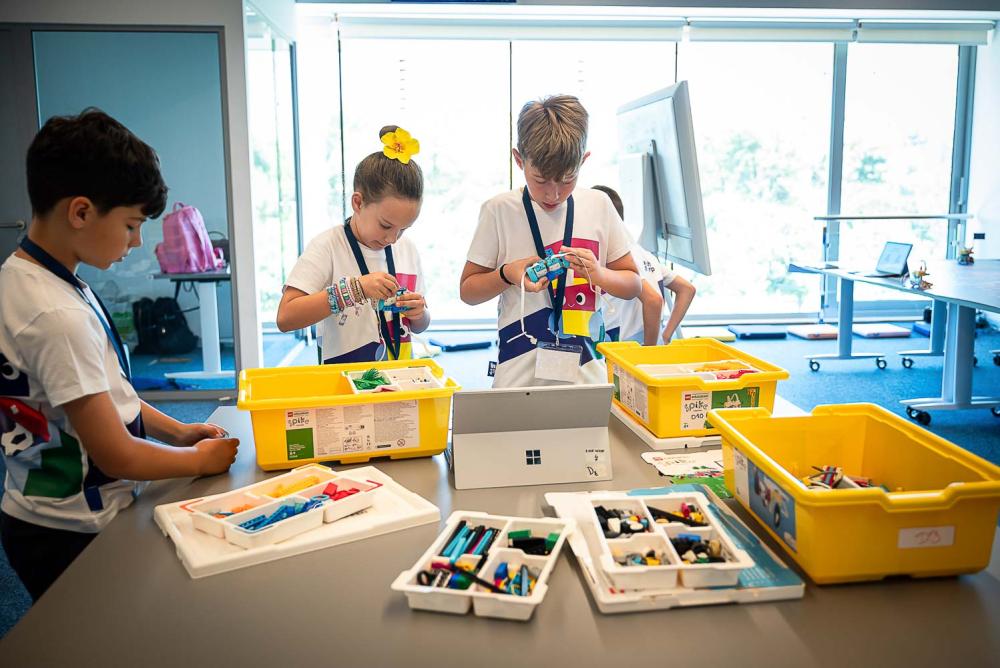
Very quickly, they forget they are participating in an educational activity. They cheer for their robot, celebrate every new destination, discuss possible answers, encourage one another, and search together for the best path to success. At the end there is, of course, a winning team—but the real victory is something far more valuable: the feeling of having discovered something on their own.
"Far more important than who wins is that every child goes home feeling they have discovered and learned something independently," says Milica.
One of SHARP's greatest strengths is that it is not designed only for children who already know programming or robotics. Quite the opposite—it was created so that complete beginners can enjoy it as well. The objective is not to test technological knowledge but to use technology to awaken curiosity, critical thinking, and teamwork. Every child has something to contribute: logical thinking, knowledge, creativity, resourcefulness, or simply the ability to listen and connect ideas within the team.
That is why SHARP is not a programming competition. It is a shared learning experience.
At a time when artificial intelligence, automation, and digital solutions are increasingly capable of performing tasks for us, SHARP reminds us of something invaluable: education is not simply the transfer of information. It is about relationships. Presence. Support. Encouragement.
Within SHARP, the mentor is never a secondary figure but an essential part of the experience. They understand the group's dynamics, recognize when a child needs support, know when to involve a quieter participant, when to praise effort, and how to ensure that competition remains healthy and motivating.
"Education must preserve what no technology can replace—the presence of another human being," Milica says.
One of the platform's most inspiring dimensions is the way it presents Montenegro's cultural heritage. SHARP does not choose content simply because it is famous, but because it can spark children's curiosity. Sometimes that means telling a major historical story; other times it means sharing a legend, an unusual fact, or a question that naturally leads to another question. The goal is not for children to memorize as many facts as possible but to inspire them to visit these places with their families and experience them in a completely new way.
This is also where SHARP reveals its tourism potential. In hotels, it can become a family activity through which guests discover the destination they are visiting. In museums, it can transform exhibitions into interactive adventures. In national parks, it can inspire children to explore nature, wildlife, and plant life. In schools, it can serve as an introduction to a new topic or an engaging way to review and connect knowledge.
In fact, wherever there is a story that deserves to be shared with children, SHARP can transform it into an unforgettable experience.
"Our partners provide the content, and SHARP turns it into an experience that motivates children, inspires them, and stays with them long after the activity ends," Milica explains.
Today, SHARP is developed by a team of women who have each contributed expertise, energy, and vision from different professional backgrounds. Alongside Milica are Sonja Zarubica Paunović, responsible for marketing and brand development; Ivana Ivanović, representing the education sector; and Biljana Sekulić, specializing in project management. Together, they transformed an idea into a scalable platform capable of adapting to different themes, environments, and partners.
The development of SHARP has been supported by the Innovation Fund of Montenegro, the Technopolis Innovation and Entrepreneurship Center, and the Ministry of Culture and Media of Montenegro, further confirming the value of innovations created locally but designed with international potential.
Future plans focus on expanding the platform with new content and partnerships throughout Montenegro and the wider region, including schools, museums, hotels, national parks, conferences, and events. The vision is for SHARP to become recognized in the coming years as a platform born in Montenegro but used far beyond its borders.
Not simply as another digital product, but as proof that even small countries can create innovations with global value.
Perhaps the most meaningful measure of success is the one Milica sees reflected in children themselves: that through SHARP they experience more than they memorize, and ask more questions than they seek ready-made answers.
Because true learning begins the moment a child asks a question.
And when learning becomes an adventure, knowledge stays with us for much longer.


111.jpg)